







-
 Agriculture
-
 Health-Care
-
 Environment
-
 Construction-Real-Estate
-
 Tools-Hardware
-
 Home-Garden
-
 Furniture
-
 Luggage-Bags-Cases
-
 Medical-devices-Supplies
-
 Gifts-Crafts
-
 Sports-Entertainment
-
 Food-Beverage
-
 Vehicles-Transportation
-
 Power-Transmission
-
 Material-Handling
-
 Renewable-Energy
-
 Safety
-
 Testing-Instrument-Equipment
-
 Construction-Building-Machinery
-
 Pet-Supplies
-
 Personal-Care-Household-Cleaning
-
 Vehicle-Accessories-Electronics-Tools
-
 School-Office-Supplies
-
 Packaging-Printing
-
 Mother-Kids-Toys
-
 Business-Services
-
 Commercial-Equipment-Machinery
-
 Apparel-Accessories
-
 Security
-
 Shoes-Accessories
-
 Vehicle-Parts-Accessories
-
 Jewelry-Eyewear-Watches-Accessories
-
 Lights-Lighting
-
 Fabric-Textile-Raw-Material
-
 Fabrication-Services
-
 Industrial-Machinery
-
 Consumer-Electronics
-
 Electrical-Equipment-Supplies
-
 Electronic-Components-Accessories-Telecommunications
-
 Home-Appliances
-
 Beauty
-
 Chemicals
-
 Rubber-Plastics
-
 Metals-Alloys


























































































































































































































































































































































































































































































































































































- Masonry Materials
- Curtain Walls & Accessories
- Earthwork Products
- Fireproofing Materials
- Heat Insulation Materials
- Plastic Building Materials
- Building Boards
- Soundproofing Materials
- Timber
- Waterproofing Materials
- Balustrades & Handrails
- Bathroom & Kitchen
- Flooring & Accessories
- Tiles & Accessories
- Door, Window & Accessories
- Fireplaces & Stoves
- Floor Heating Systems & Parts
- Stairs & Stair Parts
- Ceilings
- Elevators & Escalators
- Stone
- Countertops, Vanity Tops & Table Tops
- Mosaics
- Metal Building Materials
- Multifunctional Materials
- Ladders & Scaffoldings
- Mouldings
- Corner Guards
- Decorative Films
- Formwork
- Building & Industrial Glass
- Other Construction & Real Estate
- Wallpapers/Wall panels
- HVAC System & Parts
- Outdoor Facilities
- Prefabricated Buildings
- Festive & Party Supplies
- Bathroom Products
- Household Sundries
- Rain Gear
- Garden Supplies
- Household Cleaning Tools & Accessories
- Lighters & Smoking Accessories
- Home Storage & Organization
- Household Scales
- Smart Home Improvement
- Home Textiles
- Kitchenware
- Drinkware & Accessories
- Dinnerware, Coffee & Wine
- Home Decor
- Golf
- Fitness & Body Building
- Amusement Park Facilities
- Billiards, Board Game,Coin Operated Games
- Musical Instruments
- Outdoor Affordable Luxury Sports
- Camping & Hiking
- Fishing
- Sports Safety&Rehabilitation
- Ball Sports Equipments
- Water Sports
- Winter Sports
- Luxury Travel Equipments
- Sports Shoes, Bags & Accessories
- Cycling
- Other Sports & Entertainment Products
- Artificial Grass&Sports Flooring&Sports Court Equipment
- Scooters
- Food Ingredients
- Honey & Honey Products
- Snacks
- Nuts & Kernels
- Seafood
- Plant & Animal Oil
- Beverages
- Fruit & Vegetable Products
- Frog & Escargot
- Bean Products
- Egg Products
- Dairy Products
- Seasonings & Condiments
- Canned Food
- Instant Food
- Baked Goods
- Other Food & Beverage
- Meat & Poultry
- Confectionery
- Grain Products
- Feminie Care
- Hair Care & Styling
- Body Care
- Hands & Feet Care
- Hygiene Products
- Men's Grooming
- Laundry Cleaning Supplies
- Travel Size & Gift Sets
- Room Deodorizers
- Other Personal Care Products
- Pest Control Products
- Special Household Cleaning
- Floor Cleaning
- Kitchen & Bathroom Cleaning
- Oral Care
- Bath Supplies
- Yellow Pages
- Correction Supplies
- Office Binding Supplies
- Office Cutting Supplies
- Board Erasers
- Office Adhesives & Tapes
- Education Supplies
- Pencil Cases & Bags
- Notebooks & Writing Pads
- File Folder Accessories
- Calendars
- Writing Accessories
- Commercial Office Supplies
- Pencil Sharpeners
- Pens
- Letter Pad/Paper
- Paper Envelopes
- Desk Organizers
- Pencils
- Markers & Highlighters
- Filing Products
- Art Supplies
- Easels
- Badge Holder & Accessories
- Office Paper
- Printer Supplies
- Book Covers
- Other Office & School Supplies
- Stationery Set
- Boards
- Clipboards
- Stamps
- Drafting Supplies
- Stencils
- Electronic Dictionary
- Books
- Map
- Magazines
- Calculators
- Baby & Toddler Toys
- Educational Toys
- Classic Toys
- Dress Up & Pretend Play
- Toy Vehicle
- Stuffed Animals & Plush Toys
- Outdoor Toys & Structures
- Balloons & Accessories
- Baby Food
- Children's Clothing
- Baby Supplies & Products
- Maternity Clothes
- Kids Shoes
- Baby Care
- Novelty & Gag Toys
- Dolls & Accessories
- Puzzle & Games
- Blocks & Model Building Toys
- Toddler Clothing
- Baby Clothing
- Kids' Luggage & Bags
- Arts, Crafts & DIY Toys
- Action & Toy Figures
- Baby Appliances
- Hobbies & Models
- Remote Control Toys
- Promotional Toys
- Pregnancy & Maternity
- Hygiene Products
- Kid's Textile&Bedding
- Novelty & Special Use
- Toy Weapons
- Baby Gifts
- Baby Storage & Organization
- Auto Drive Systems
- ATV/UTV Parts & Accessories
- Marine Parts & Accessories
- Other Auto Parts
- Trailer Parts & Accessories
- Auto Transmission Systems
- Train Parts & Accessories
- Universal Parts
- Railway Parts & Accessories
- Auto Brake Systems
- Aviation Parts & Accessories
- Truck Parts & Accessories
- Auto Suspension Systems
- Auto Lighting Systems
- New Energy Vehicle Parts & Accessories
- Auto Steering Systems
- Wheels, Tires & Accessories
- Bus Parts & Accessories
- Auto Performance Parts
- Cooling System
- Go-Kart & Kart Racer Parts & Accessories
- Air Conditioning Systems
- Heavy Duty Vehicle Parts & Accessories
- Auto Electrical Systems
- Auto Body Systems
- Auto Engine Systems
- Container Parts & Accessories
- Motorcycle Parts & Accessories
- Refrigeration & Heat Exchange Equipment
- Machine Tool Equipment
- Food & Beverage Machinery
- Agricultural Machinery & Equipment
- Apparel & Textile Machinery
- Chemical Machinery
- Packaging Machines
- Paper Production Machinery
- Plastic & Rubber Processing Machinery
- Industrial Robots
- Electronic Products Machinery
- Metal & Metallurgy Machinery
- Woodworking Machinery
- Home Product Manufacturing Machinery
- Machinery Accessories
- Environmental Machinery
- Machinery Service
- Electrical Equipment Manufacturing Machinery
- Industrial Compressors & Parts
- Tobacco & Cigarette Machinery
- Production Line
- Used Industrial Machinery
- Electronics Production Machinery
- Other Machinery & Industrial Equipment
- Camera, Photo & Accessories
- Portable Audio, Video & Accessories
- Television, Home Audio, Video & Accessories
- Video Games & Accessories
- Mobile Phone & Accessories
- Electronic Publications
- Earphone & Headphone & Accessories
- Speakers & Accessories
- Smart Electronics
- TV Receivers & Accessories
- Mobile Phone & Computer Repair Parts
- Chargers, Batteries & Power Supplies
- Used Electronics
- VR, AR, MR Hardware & Software
- Projectors & Presentation Equipments
- Other Consumer Electronics
- Cables & Commonly Used Accessories
- Computer Hardware & Software
- Displays, Signage and Optoelectronics
- Discrete Semiconductors
- Wireless & IoT Module and Products
- Telecommunications
- Connectors, Terminals & Accessories
- Development Boards, Electronic Modules and Kits
- Circuit Protection
- Sensors
- Isolators
- Audio Components and Products
- Integrated Circuits
- Power Supplies
- Relays
- RF, Microwave and RFID
- Electronic Accessories & Supplies
- Passive Components
- PCB & PCBA
- Air Quality Appliances
- Home Appliance Parts
- Heating & Cooling Appliances
- Small Kitchen Appliances
- Laundry Appliances
- Water Heaters
- Water Treatment Appliances
- Refrigerators & Freezers
- Personal Care & Beauty Appliances
- Major Kitchen Appliances
- Cleaning Appliances
- Second-hand Appliances
- Smart Home Appliances
- Other Home Appliances
- Energy Chemicals
- Inorganic Chemicals
- Basic Organic Chemicals
- Agrochemicals
- Admixture & Additives
- Catalysts & Chemical Auxiliary Agents
- Pigments & Dyestuff
- Coating & Paint
- Daily Chemicals
- Polymer
- Organic Intermediate
- Adhesives & Sealants
- Chemical Waste
- Biological Chemical Products
- Surface Treatment Chemicals
- Painting & Coating
- Chemical Reagents
- Flavor & Fragrance
- Non-Explosive Demolition Agents
- Other Chemicals
- Custom Chemical Services

Is Air Freight the Right Choice for Fast Product Restocking?
When inventory is running low, the most economical shipping method is not always the one with the lowest freight quote. Air freight can justify its higher cost when rapid replenishment prevents stockouts, protects sales, or supports a time-sensitive product launch. Speed International logistics lists air freight with a minimum shipment of 100 kg and a delivery window of 3–7 days. By comparison, sea and railway freight require a stated minimum of 1 CBM and generally take 25–30 days.
How to Choose a Restocking Freight Method
The best option depends on more than transit time. Businesses should consider the urgency of the inventory, shipment volume, product value, destination, and the financial impact of waiting. If a delayed shipment causes lost orders or disrupts a sales campaign, the premium for air transport may be commercially reasonable. For larger replenishment orders with flexible delivery schedules, sea freight or railway freight can offer a better balance between capacity and cost.
Key Benefits and Service Options
- Air freight supports urgent inventory recovery with a listed minimum of 100 kg and an estimated delivery time of 3–7 days.
- Sea freight is suitable for larger shipments that can accommodate a 25–30 day delivery period, with a stated minimum of 1 CBM.
- Railway freight is available for Europe and Central Asia, also listing a 1 CBM minimum and a 25–30 day transit time.
- Additional logistics support may include sourcing, supplier collection, consolidation, packing, warehousing, customs clearance, and last-mile delivery coordination.
Why Air Freight Can Be Worth the Premium
The financial value of air freight is linked to the cost of delayed stock. A faster 3–7 day delivery window can help a company restore inventory before customers move to competitors or an online listing loses momentum. It may also be useful for seasonal merchandise, replacement components, promotional products, and goods needed for a scheduled launch.
Sea freight and railway freight, with listed delivery times of 25–30 days, are better suited to planned replenishment. They can be particularly effective when a business is moving consolidated cargo, has sufficient safety stock, or is ordering products that are less sensitive to market timing. In practice, many companies use a mixed strategy: air freight for immediate needs and sea or rail for the next larger restocking cycle.
Shipment Size Changes the Calculation
Volume and weight have a major influence on the most suitable transport method. The listed minimum for air freight is 100 kg, while sea and railway services specify 1 CBM. A relatively small but urgent shipment may therefore fit the air freight model more naturally. Larger cargo with less time pressure can often be consolidated for sea freight or rail transport.
Businesses should compare the transport premium with the expected cost of an empty warehouse, missed orders, lost advertising spend, or delayed production. This approach evaluates freight as part of the overall supply chain rather than as an isolated shipping expense.
Integrated Logistics Support from Speed International logistics
Speed International logistics can coordinate more than the main transportation leg. Its listed services include factory or supplier pickup, cargo consolidation, packing, warehouse storage, inland transportation, customs clearance, import and export documentation, and delivery coordination. The company also provides sourcing assistance through 1688, Taobao, and Tmall.
For container loading, its guidance covers separating incompatible products, distributing weight correctly, positioning liquid cargo safely, and protecting sharp edges. These details can reduce handling risks and help prepare mixed or complex shipments for international transport.
For air cargo, the company lists cooperation with more than 150 airlines and identifies a monthly capacity of 1000000 in its air freight business model. Its stated credentials include Aviation Class I Cargo for air freight and NVOCC certification for sea freight.
Examples of Cargo Handling Experience
One reported project in the UAE involved 68 CBM of machinery and equipment. The work described included managing oversized crates, preparing documentation, completing customs clearance, and providing packaging recommendations for sea shipment.
A separate shipment to the United States involved 1000 kg of cosmetics. The case focused on ingredient declarations, labeling requirements, careful cargo handling, and customs clearance. These examples illustrate why product type, packaging, documentation, and destination regulations should be assessed alongside the transport mode.
Freight Option Comparison
| Transport solution | Stated minimum shipment | Stated delivery time | Listed market or use |
|---|---|---|---|
| Air freight | 100 kg | 3–7 days | United States, Canada, Mexico, Europe, the Middle East, Africa, and South America |
| Sea freight | 1 CBM | 25–30 days | FCL/LCL service across the listed export markets |
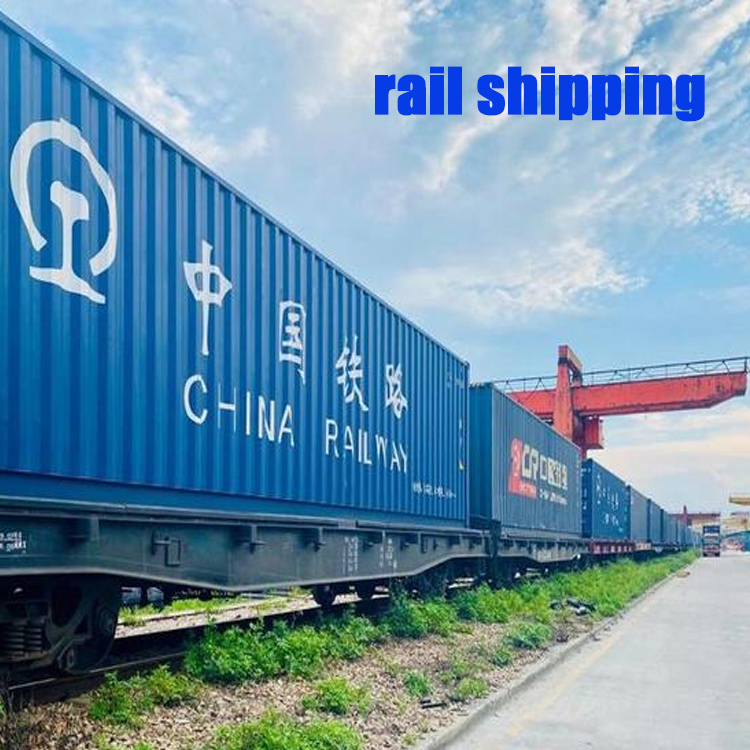
| Railway freight | 1 CBM | 25–30 days | Europe and Central Asia |
| Courier service | Not specified | Not specified | UPS, DHL, FedEx, EMS, Aramex, China Post, and China Express |
Frequently Asked Questions
When does air freight make sense for replenishment?
Air freight is a practical choice when products are needed within the listed 3–7 day window and the cost of stockouts, lost sales, or delayed operations is higher than the additional freight charge. The stated minimum shipment is 100 kg.
When is sea freight a better alternative?
Sea freight may be more suitable for shipments of at least 1 CBM when the business can plan around a 25–30 day delivery period. It supports both LCL and FCL shipping and is generally aligned with larger, less urgent restocking orders.
Can logistics services cover the full shipment process?
Yes. The listed support includes product sourcing, supplier and factory pickup, consolidation, packing, storage, inland transport, customs clearance, import and export document handling, and last-mile delivery coordination.
Which payment methods are listed?
Speed International logistics lists T/T, VISA, PayPal, MasterCard, and MoneyGram as available payment methods. Service details and final transit arrangements should be confirmed for each shipment and destination.
Conclusion: Evaluate the Cost of Waiting
Air freight remains worthwhile when faster inventory recovery has a measurable business benefit. For urgent replenishment, the listed 100 kg minimum and 3–7 day delivery window can help restore sales continuity. Sea or railway freight may be more economical for 1 CBM shipments that can accommodate a 25–30 day transit period.
A practical restocking plan should compare freight charges with stockout risk, product value, shipment size, and the cost of delayed availability. Speed International logistics supports air, sea, railway, and courier shipping, along with sourcing and end-to-end logistics coordination. For technical solutions or assistance, contact tony@speed-logistics.net.
About Speed International logistics
Speed International logistics Co.,Ltd has more than 15 years of freight-forwarding experience and provides air freight, sea freight, railway shipping, express services, FBA shipping, sourcing, trucking, customs clearance, warehousing, and document handling. Established in 2011, the company operates a main warehouse in Shenzhen covering 5000 square meters and provides 24-hour professional service. Its listed credentials include Aviation Class I Cargo and NVOCC, and it has served clients across multiple industries.

REPORT