







-
 Agriculture
-
 Health-Care
-
 Environment
-
 Construction-Real-Estate
-
 Tools-Hardware
-
 Home-Garden
-
 Furniture
-
 Luggage-Bags-Cases
-
 Medical-devices-Supplies
-
 Gifts-Crafts
-
 Sports-Entertainment
-
 Food-Beverage
-
 Vehicles-Transportation
-
 Power-Transmission
-
 Material-Handling
-
 Renewable-Energy
-
 Safety
-
 Testing-Instrument-Equipment
-
 Construction-Building-Machinery
-
 Pet-Supplies
-
 Personal-Care-Household-Cleaning
-
 Vehicle-Accessories-Electronics-Tools
-
 School-Office-Supplies
-
 Packaging-Printing
-
 Mother-Kids-Toys
-
 Business-Services
-
 Commercial-Equipment-Machinery
-
 Apparel-Accessories
-
 Security
-
 Shoes-Accessories
-
 Vehicle-Parts-Accessories
-
 Jewelry-Eyewear-Watches-Accessories
-
 Lights-Lighting
-
 Fabric-Textile-Raw-Material
-
 Fabrication-Services
-
 Industrial-Machinery
-
 Consumer-Electronics
-
 Electrical-Equipment-Supplies
-
 Electronic-Components-Accessories-Telecommunications
-
 Home-Appliances
-
 Beauty
-
 Chemicals
-
 Rubber-Plastics
-
 Metals-Alloys


























































































































































































































































































































































































































































































































































































- Masonry Materials
- Curtain Walls & Accessories
- Earthwork Products
- Fireproofing Materials
- Heat Insulation Materials
- Plastic Building Materials
- Building Boards
- Soundproofing Materials
- Timber
- Waterproofing Materials
- Balustrades & Handrails
- Bathroom & Kitchen
- Flooring & Accessories
- Tiles & Accessories
- Door, Window & Accessories
- Fireplaces & Stoves
- Floor Heating Systems & Parts
- Stairs & Stair Parts
- Ceilings
- Elevators & Escalators
- Stone
- Countertops, Vanity Tops & Table Tops
- Mosaics
- Metal Building Materials
- Multifunctional Materials
- Ladders & Scaffoldings
- Mouldings
- Corner Guards
- Decorative Films
- Formwork
- Building & Industrial Glass
- Other Construction & Real Estate
- Wallpapers/Wall panels
- HVAC System & Parts
- Outdoor Facilities
- Prefabricated Buildings
- Festive & Party Supplies
- Bathroom Products
- Household Sundries
- Rain Gear
- Garden Supplies
- Household Cleaning Tools & Accessories
- Lighters & Smoking Accessories
- Home Storage & Organization
- Household Scales
- Smart Home Improvement
- Home Textiles
- Kitchenware
- Drinkware & Accessories
- Dinnerware, Coffee & Wine
- Home Decor
- Golf
- Fitness & Body Building
- Amusement Park Facilities
- Billiards, Board Game,Coin Operated Games
- Musical Instruments
- Outdoor Affordable Luxury Sports
- Camping & Hiking
- Fishing
- Sports Safety&Rehabilitation
- Ball Sports Equipments
- Water Sports
- Winter Sports
- Luxury Travel Equipments
- Sports Shoes, Bags & Accessories
- Cycling
- Other Sports & Entertainment Products
- Artificial Grass&Sports Flooring&Sports Court Equipment
- Scooters
- Food Ingredients
- Honey & Honey Products
- Snacks
- Nuts & Kernels
- Seafood
- Plant & Animal Oil
- Beverages
- Fruit & Vegetable Products
- Frog & Escargot
- Bean Products
- Egg Products
- Dairy Products
- Seasonings & Condiments
- Canned Food
- Instant Food
- Baked Goods
- Other Food & Beverage
- Meat & Poultry
- Confectionery
- Grain Products
- Feminie Care
- Hair Care & Styling
- Body Care
- Hands & Feet Care
- Hygiene Products
- Men's Grooming
- Laundry Cleaning Supplies
- Travel Size & Gift Sets
- Room Deodorizers
- Other Personal Care Products
- Pest Control Products
- Special Household Cleaning
- Floor Cleaning
- Kitchen & Bathroom Cleaning
- Oral Care
- Bath Supplies
- Yellow Pages
- Correction Supplies
- Office Binding Supplies
- Office Cutting Supplies
- Board Erasers
- Office Adhesives & Tapes
- Education Supplies
- Pencil Cases & Bags
- Notebooks & Writing Pads
- File Folder Accessories
- Calendars
- Writing Accessories
- Commercial Office Supplies
- Pencil Sharpeners
- Pens
- Letter Pad/Paper
- Paper Envelopes
- Desk Organizers
- Pencils
- Markers & Highlighters
- Filing Products
- Art Supplies
- Easels
- Badge Holder & Accessories
- Office Paper
- Printer Supplies
- Book Covers
- Other Office & School Supplies
- Stationery Set
- Boards
- Clipboards
- Stamps
- Drafting Supplies
- Stencils
- Electronic Dictionary
- Books
- Map
- Magazines
- Calculators
- Baby & Toddler Toys
- Educational Toys
- Classic Toys
- Dress Up & Pretend Play
- Toy Vehicle
- Stuffed Animals & Plush Toys
- Outdoor Toys & Structures
- Balloons & Accessories
- Baby Food
- Children's Clothing
- Baby Supplies & Products
- Maternity Clothes
- Kids Shoes
- Baby Care
- Novelty & Gag Toys
- Dolls & Accessories
- Puzzle & Games
- Blocks & Model Building Toys
- Toddler Clothing
- Baby Clothing
- Kids' Luggage & Bags
- Arts, Crafts & DIY Toys
- Action & Toy Figures
- Baby Appliances
- Hobbies & Models
- Remote Control Toys
- Promotional Toys
- Pregnancy & Maternity
- Hygiene Products
- Kid's Textile&Bedding
- Novelty & Special Use
- Toy Weapons
- Baby Gifts
- Baby Storage & Organization
- Auto Drive Systems
- ATV/UTV Parts & Accessories
- Marine Parts & Accessories
- Other Auto Parts
- Trailer Parts & Accessories
- Auto Transmission Systems
- Train Parts & Accessories
- Universal Parts
- Railway Parts & Accessories
- Auto Brake Systems
- Aviation Parts & Accessories
- Truck Parts & Accessories
- Auto Suspension Systems
- Auto Lighting Systems
- New Energy Vehicle Parts & Accessories
- Auto Steering Systems
- Wheels, Tires & Accessories
- Bus Parts & Accessories
- Auto Performance Parts
- Cooling System
- Go-Kart & Kart Racer Parts & Accessories
- Air Conditioning Systems
- Heavy Duty Vehicle Parts & Accessories
- Auto Electrical Systems
- Auto Body Systems
- Auto Engine Systems
- Container Parts & Accessories
- Motorcycle Parts & Accessories
- Refrigeration & Heat Exchange Equipment
- Machine Tool Equipment
- Food & Beverage Machinery
- Agricultural Machinery & Equipment
- Apparel & Textile Machinery
- Chemical Machinery
- Packaging Machines
- Paper Production Machinery
- Plastic & Rubber Processing Machinery
- Industrial Robots
- Electronic Products Machinery
- Metal & Metallurgy Machinery
- Woodworking Machinery
- Home Product Manufacturing Machinery
- Machinery Accessories
- Environmental Machinery
- Machinery Service
- Electrical Equipment Manufacturing Machinery
- Industrial Compressors & Parts
- Tobacco & Cigarette Machinery
- Production Line
- Used Industrial Machinery
- Electronics Production Machinery
- Other Machinery & Industrial Equipment
- Camera, Photo & Accessories
- Portable Audio, Video & Accessories
- Television, Home Audio, Video & Accessories
- Video Games & Accessories
- Mobile Phone & Accessories
- Electronic Publications
- Earphone & Headphone & Accessories
- Speakers & Accessories
- Smart Electronics
- TV Receivers & Accessories
- Mobile Phone & Computer Repair Parts
- Chargers, Batteries & Power Supplies
- Used Electronics
- VR, AR, MR Hardware & Software
- Projectors & Presentation Equipments
- Other Consumer Electronics
- Cables & Commonly Used Accessories
- Computer Hardware & Software
- Displays, Signage and Optoelectronics
- Discrete Semiconductors
- Wireless & IoT Module and Products
- Telecommunications
- Connectors, Terminals & Accessories
- Development Boards, Electronic Modules and Kits
- Circuit Protection
- Sensors
- Isolators
- Audio Components and Products
- Integrated Circuits
- Power Supplies
- Relays
- RF, Microwave and RFID
- Electronic Accessories & Supplies
- Passive Components
- PCB & PCBA
- Air Quality Appliances
- Home Appliance Parts
- Heating & Cooling Appliances
- Small Kitchen Appliances
- Laundry Appliances
- Water Heaters
- Water Treatment Appliances
- Refrigerators & Freezers
- Personal Care & Beauty Appliances
- Major Kitchen Appliances
- Cleaning Appliances
- Second-hand Appliances
- Smart Home Appliances
- Other Home Appliances
- Energy Chemicals
- Inorganic Chemicals
- Basic Organic Chemicals
- Agrochemicals
- Admixture & Additives
- Catalysts & Chemical Auxiliary Agents
- Pigments & Dyestuff
- Coating & Paint
- Daily Chemicals
- Polymer
- Organic Intermediate
- Adhesives & Sealants
- Chemical Waste
- Biological Chemical Products
- Surface Treatment Chemicals
- Painting & Coating
- Chemical Reagents
- Flavor & Fragrance
- Non-Explosive Demolition Agents
- Other Chemicals
- Custom Chemical Services

Low-Carbon Aluminium Materials for Awning Window Systems
Aluminium alloy profiles are becoming a more widely accepted choice for low-carbon awning window systems, particularly when they are supported by verified greenhouse-gas data and product carbon-footprint documentation. Their combination of structural durability, adaptable finishing options, and quality-control records makes them suitable for residential, hospitality, commercial, and coastal construction projects.
Why Aluminium Profiles Suit Low-Carbon Awning Windows
Awning windows typically use a top-hinged opening design, requiring profile systems that can support reliable operation, weather resistance, and architectural appearance. Within the available product range, aluminium alloy profiles are supplied for architectural applications, windows and doors, decorative projects, industrial uses, special alloys, custom extrusions, and surface-treated systems.
For projects evaluating lower-carbon material options, documented environmental performance is an important consideration. The manufacturer provides a Greenhouse Gas Verification Statement aligned with ISO 14064-1:2018 and a Carbon Footprint of Products certificate based on ISO 14067:2018. These records can help project teams assess aluminium profiles alongside wider window-system, procurement, and building-performance requirements.
Key Selection Factors for Awning Window Projects
Environmental Documentation
Carbon-related certificates and greenhouse-gas verification give architects, contractors, and purchasers supporting information when comparing materials for low-carbon construction. Environmental documentation should be reviewed together with the specific profile design, glazing arrangement, thermal requirements, and installation conditions.
Surface Finish and Exposure Conditions
Surface treatment can influence both the visual result and long-term suitability of aluminium window profiles. Xinhe Aluminium holds Qualicoat certification for aluminum profile powder coating and an SGS material quality inspection credential covering substrate quality. These references are relevant when a project requires coated profiles with documented quality controls.
Project examples also highlight the importance of climate and exposure. A Malaysia hotel project referenced fluorocarbon-coated aluminium surfaces described as uniform and resistant to ultraviolet exposure and salt-spray corrosion. In a Singapore building application, drainage-hole arrangements were incorporated into door and window designs to help limit water accumulation, backflow, and blockage.
Application Flexibility
Aluminium awning window profiles can be considered for bathrooms, kitchens, bedrooms, studies, balconies, bay windows, sunrooms, basements, offices, pantries, hotel guest rooms, apartments, and coastal or riverside homes. The final profile and finish selection should reflect the building type, desired appearance, expected weather exposure, and required window performance.
Material and Supply Comparison
| Evaluation area | Available information and relevance |
|---|---|
| Aluminium alloy profiles | Designed for architectural, window, and door applications, including aluminium awning window systems. |
| Low-carbon evidence | Greenhouse Gas Verification Statement under ISO 14064-1:2018 and Carbon Footprint of Products certification under ISO 14067:2018. |
| Surface-treated profiles | Qualicoat certification supports powder-coated aluminum profiles; fluorocarbon-coated applications are referenced in hotel project experience. |
| Quality assurance | Stated controls include 100% production-line inspection, laboratory sampling and testing, and raw-material inspection. |
| Supply capability | Full industrial-chain, distribution, and direct-sales support; aluminium profile MOQ is 3 tons, with a stated delivery period of 15-20 days. |
Manufacturing Capacity and Profile Availability
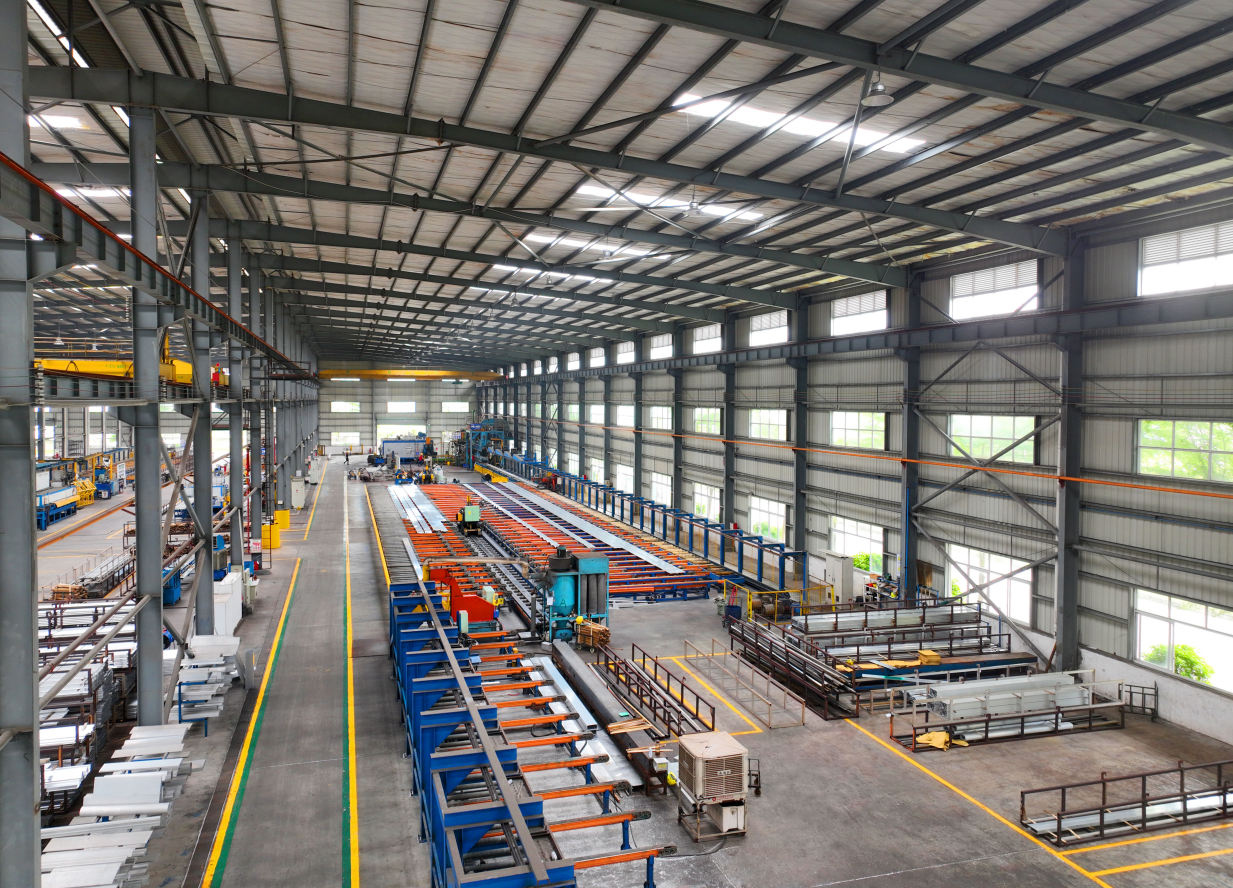
Guangdong Xinhe Aluminium Co., Ltd operates 60 modern extrusion production lines ranging from 1,100 to 5,000 tons in capacity and reports annual output of 200,000 tons. This production scale can support material availability for larger window, hotel, office, and residential developments.
Frequently Asked Questions
What supports the low-carbon evaluation of aluminium awning window profiles?
Relevant supporting records include greenhouse-gas verification under ISO 14064-1:2018 and product carbon-footprint certification under ISO 14067:2018. These documents can be used as part of a broader material and system assessment.
Where are aluminium awning window profiles commonly used?
Typical applications include kitchens, bathrooms, bedrooms, studies, balconies, bay windows, sunrooms, basements, offices, hotels, apartments, and coastal or riverside residences.
What quality credentials are available for these aluminium profiles?
Available documentation includes SIRIM for aluminium and aluminium alloy extruded shapes used in windows and sliding doors, Qualicoat certification for powder coating, SGS substrate material inspection, CNAS laboratory accreditation, and ISO 9001:2015 quality management certification.
Conclusion
For low-carbon awning window projects, aluminium alloy profiles should be evaluated based on verified greenhouse-gas information, product carbon-footprint records, surface-treatment credentials, inspection procedures, and suitability for the intended exposure conditions. This is especially important for coastal, hotel, office, and residential applications where appearance, drainage, durability, and corrosion resistance may all affect material selection.
Xinhe Aluminium provides full industrial-chain, distribution, and direct-sales support, with a stated 3-ton minimum order quantity for aluminium profiles and a 15-20 day delivery time. For technical solutions or project support, contact xh@xinhealuminium.com.
About the Manufacturer
Guangdong Xinhe Aluminium Co., Ltd is a Chinese manufacturer specializing in the research, development, and production of building, decorative, and industrial aluminium profiles. Founded in 1998, the company reports a 666,670 sqm factory area and supplies architectural profiles, window and door profiles, curtain wall profiles, decorative profiles, industrial profiles, custom aluminium extrusions, and surface-treated aluminium profiles. It holds CNAS laboratory accreditation and ISO 9001:2015 quality management certification and serves customers across multiple industries.

REPORT