







-
 Agriculture
-
 Health-Care
-
 Environment
-
 Construction-Real-Estate
-
 Tools-Hardware
-
 Home-Garden
-
 Furniture
-
 Luggage-Bags-Cases
-
 Medical-devices-Supplies
-
 Gifts-Crafts
-
 Sports-Entertainment
-
 Food-Beverage
-
 Vehicles-Transportation
-
 Power-Transmission
-
 Material-Handling
-
 Renewable-Energy
-
 Safety
-
 Testing-Instrument-Equipment
-
 Construction-Building-Machinery
-
 Pet-Supplies
-
 Personal-Care-Household-Cleaning
-
 Vehicle-Accessories-Electronics-Tools
-
 School-Office-Supplies
-
 Packaging-Printing
-
 Mother-Kids-Toys
-
 Business-Services
-
 Commercial-Equipment-Machinery
-
 Apparel-Accessories
-
 Security
-
 Shoes-Accessories
-
 Vehicle-Parts-Accessories
-
 Jewelry-Eyewear-Watches-Accessories
-
 Lights-Lighting
-
 Fabric-Textile-Raw-Material
-
 Fabrication-Services
-
 Industrial-Machinery
-
 Consumer-Electronics
-
 Electrical-Equipment-Supplies
-
 Electronic-Components-Accessories-Telecommunications
-
 Home-Appliances
-
 Beauty
-
 Chemicals
-
 Rubber-Plastics
-
 Metals-Alloys


























































































































































































































































































































































































































































































































































































- Masonry Materials
- Curtain Walls & Accessories
- Earthwork Products
- Fireproofing Materials
- Heat Insulation Materials
- Plastic Building Materials
- Building Boards
- Soundproofing Materials
- Timber
- Waterproofing Materials
- Balustrades & Handrails
- Bathroom & Kitchen
- Flooring & Accessories
- Tiles & Accessories
- Door, Window & Accessories
- Fireplaces & Stoves
- Floor Heating Systems & Parts
- Stairs & Stair Parts
- Ceilings
- Elevators & Escalators
- Stone
- Countertops, Vanity Tops & Table Tops
- Mosaics
- Metal Building Materials
- Multifunctional Materials
- Ladders & Scaffoldings
- Mouldings
- Corner Guards
- Decorative Films
- Formwork
- Building & Industrial Glass
- Other Construction & Real Estate
- Wallpapers/Wall panels
- HVAC System & Parts
- Outdoor Facilities
- Prefabricated Buildings
- Festive & Party Supplies
- Bathroom Products
- Household Sundries
- Rain Gear
- Garden Supplies
- Household Cleaning Tools & Accessories
- Lighters & Smoking Accessories
- Home Storage & Organization
- Household Scales
- Smart Home Improvement
- Home Textiles
- Kitchenware
- Drinkware & Accessories
- Dinnerware, Coffee & Wine
- Home Decor
- Golf
- Fitness & Body Building
- Amusement Park Facilities
- Billiards, Board Game,Coin Operated Games
- Musical Instruments
- Outdoor Affordable Luxury Sports
- Camping & Hiking
- Fishing
- Sports Safety&Rehabilitation
- Ball Sports Equipments
- Water Sports
- Winter Sports
- Luxury Travel Equipments
- Sports Shoes, Bags & Accessories
- Cycling
- Other Sports & Entertainment Products
- Artificial Grass&Sports Flooring&Sports Court Equipment
- Scooters
- Food Ingredients
- Honey & Honey Products
- Snacks
- Nuts & Kernels
- Seafood
- Plant & Animal Oil
- Beverages
- Fruit & Vegetable Products
- Frog & Escargot
- Bean Products
- Egg Products
- Dairy Products
- Seasonings & Condiments
- Canned Food
- Instant Food
- Baked Goods
- Other Food & Beverage
- Meat & Poultry
- Confectionery
- Grain Products
- Feminie Care
- Hair Care & Styling
- Body Care
- Hands & Feet Care
- Hygiene Products
- Men's Grooming
- Laundry Cleaning Supplies
- Travel Size & Gift Sets
- Room Deodorizers
- Other Personal Care Products
- Pest Control Products
- Special Household Cleaning
- Floor Cleaning
- Kitchen & Bathroom Cleaning
- Oral Care
- Bath Supplies
- Yellow Pages
- Correction Supplies
- Office Binding Supplies
- Office Cutting Supplies
- Board Erasers
- Office Adhesives & Tapes
- Education Supplies
- Pencil Cases & Bags
- Notebooks & Writing Pads
- File Folder Accessories
- Calendars
- Writing Accessories
- Commercial Office Supplies
- Pencil Sharpeners
- Pens
- Letter Pad/Paper
- Paper Envelopes
- Desk Organizers
- Pencils
- Markers & Highlighters
- Filing Products
- Art Supplies
- Easels
- Badge Holder & Accessories
- Office Paper
- Printer Supplies
- Book Covers
- Other Office & School Supplies
- Stationery Set
- Boards
- Clipboards
- Stamps
- Drafting Supplies
- Stencils
- Electronic Dictionary
- Books
- Map
- Magazines
- Calculators
- Baby & Toddler Toys
- Educational Toys
- Classic Toys
- Dress Up & Pretend Play
- Toy Vehicle
- Stuffed Animals & Plush Toys
- Outdoor Toys & Structures
- Balloons & Accessories
- Baby Food
- Children's Clothing
- Baby Supplies & Products
- Maternity Clothes
- Kids Shoes
- Baby Care
- Novelty & Gag Toys
- Dolls & Accessories
- Puzzle & Games
- Blocks & Model Building Toys
- Toddler Clothing
- Baby Clothing
- Kids' Luggage & Bags
- Arts, Crafts & DIY Toys
- Action & Toy Figures
- Baby Appliances
- Hobbies & Models
- Remote Control Toys
- Promotional Toys
- Pregnancy & Maternity
- Hygiene Products
- Kid's Textile&Bedding
- Novelty & Special Use
- Toy Weapons
- Baby Gifts
- Baby Storage & Organization
- Auto Drive Systems
- ATV/UTV Parts & Accessories
- Marine Parts & Accessories
- Other Auto Parts
- Trailer Parts & Accessories
- Auto Transmission Systems
- Train Parts & Accessories
- Universal Parts
- Railway Parts & Accessories
- Auto Brake Systems
- Aviation Parts & Accessories
- Truck Parts & Accessories
- Auto Suspension Systems
- Auto Lighting Systems
- New Energy Vehicle Parts & Accessories
- Auto Steering Systems
- Wheels, Tires & Accessories
- Bus Parts & Accessories
- Auto Performance Parts
- Cooling System
- Go-Kart & Kart Racer Parts & Accessories
- Air Conditioning Systems
- Heavy Duty Vehicle Parts & Accessories
- Auto Electrical Systems
- Auto Body Systems
- Auto Engine Systems
- Container Parts & Accessories
- Motorcycle Parts & Accessories
- Refrigeration & Heat Exchange Equipment
- Machine Tool Equipment
- Food & Beverage Machinery
- Agricultural Machinery & Equipment
- Apparel & Textile Machinery
- Chemical Machinery
- Packaging Machines
- Paper Production Machinery
- Plastic & Rubber Processing Machinery
- Industrial Robots
- Electronic Products Machinery
- Metal & Metallurgy Machinery
- Woodworking Machinery
- Home Product Manufacturing Machinery
- Machinery Accessories
- Environmental Machinery
- Machinery Service
- Electrical Equipment Manufacturing Machinery
- Industrial Compressors & Parts
- Tobacco & Cigarette Machinery
- Production Line
- Used Industrial Machinery
- Electronics Production Machinery
- Other Machinery & Industrial Equipment
- Camera, Photo & Accessories
- Portable Audio, Video & Accessories
- Television, Home Audio, Video & Accessories
- Video Games & Accessories
- Mobile Phone & Accessories
- Electronic Publications
- Earphone & Headphone & Accessories
- Speakers & Accessories
- Smart Electronics
- TV Receivers & Accessories
- Mobile Phone & Computer Repair Parts
- Chargers, Batteries & Power Supplies
- Used Electronics
- VR, AR, MR Hardware & Software
- Projectors & Presentation Equipments
- Other Consumer Electronics
- Cables & Commonly Used Accessories
- Computer Hardware & Software
- Displays, Signage and Optoelectronics
- Discrete Semiconductors
- Wireless & IoT Module and Products
- Telecommunications
- Connectors, Terminals & Accessories
- Development Boards, Electronic Modules and Kits
- Circuit Protection
- Sensors
- Isolators
- Audio Components and Products
- Integrated Circuits
- Power Supplies
- Relays
- RF, Microwave and RFID
- Electronic Accessories & Supplies
- Passive Components
- PCB & PCBA
- Air Quality Appliances
- Home Appliance Parts
- Heating & Cooling Appliances
- Small Kitchen Appliances
- Laundry Appliances
- Water Heaters
- Water Treatment Appliances
- Refrigerators & Freezers
- Personal Care & Beauty Appliances
- Major Kitchen Appliances
- Cleaning Appliances
- Second-hand Appliances
- Smart Home Appliances
- Other Home Appliances
- Energy Chemicals
- Inorganic Chemicals
- Basic Organic Chemicals
- Agrochemicals
- Admixture & Additives
- Catalysts & Chemical Auxiliary Agents
- Pigments & Dyestuff
- Coating & Paint
- Daily Chemicals
- Polymer
- Organic Intermediate
- Adhesives & Sealants
- Chemical Waste
- Biological Chemical Products
- Surface Treatment Chemicals
- Painting & Coating
- Chemical Reagents
- Flavor & Fragrance
- Non-Explosive Demolition Agents
- Other Chemicals
- Custom Chemical Services

Mobile Prefabricated Substation vs. Permanent Installation: How to Choose
Choosing between a mobile prefabricated substation and a conventional permanent installation depends primarily on project duration, site conditions, deployment speed, and future flexibility. A mobile solution is often the better option when electricity must be delivered rapidly, transferred to another location, or adapted as the load and construction plan evolve. Permanent substations remain the preferred choice for long-term facilities with stable demand and a fixed electrical layout.
When Does a Mobile Prefabricated Substation Make Sense?
A mobile prefabricated substation is designed for projects that cannot wait for extensive civil construction or that may require equipment to be moved after commissioning. Its vehicle-mounted or containerized structure combines major substation components into a transportable, factory-assembled system, reducing on-site installation work and helping shorten the overall project schedule.
It is especially suitable for emergency restoration, temporary construction power, disaster recovery, large public events, remote industrial operations, and rapidly developing energy projects. Where grid access is limited or site conditions are uncertain, a relocatable substation can provide a more practical alternative to constructing a traditional fixed facility.
Typical Applications
- Emergency power supply and disaster-relief restoration projects
- Temporary electricity for construction sites, mining areas, and major events
- Photovoltaic plants, onshore wind farms, battery energy storage stations, and hybrid microgrids
- Off-grid systems combining solar, wind, diesel generation, and energy storage
- Urban load expansion and renovation of aging substations with limited available space
- Remote locations where conventional civil construction is costly or difficult to complete
Technical Configuration and Operating Flexibility
Mobile prefabricated substations can be configured for rated voltages above 35kV and customized capacities from 500kVA to 63000kVA. They are available for both 50Hz and 60Hz networks, allowing the equipment to serve a broad range of utility, industrial, and renewable energy applications.
Depending on the electrical scheme, connection groups such as Dyn11 and Yyn0 can be selected. Cooling options include ONAN and ONAF, while protection ratings can range from IP23 to IP54. Outdoor versions may be configured up to IP56 for more demanding environmental exposure.
For difficult operating environments, the equipment can be designed for ambient temperatures from -40C to +55C and installation altitudes up to 4000m. Class F or Class H insulation systems are available, and noise performance can be controlled to 55dB or below, including low-noise options for sensitive locations.
Mobile and Permanent Substations Compared
| Selection criterion | Mobile prefabricated substation | Permanent substation installation |
|---|---|---|
| Project timeline | Best for urgent, temporary, or schedule-driven deployment | Best for projects with sufficient time for full civil construction |
| Site stability | Appropriate for changing, remote, or uncertain locations | Appropriate for established sites with long-term operating plans |
| Relocation | Can be transported and redeployed through containerized or vehicle-mounted design | Generally remains at one location throughout its service life |
| Civil works | Helps minimize land use and foundation work | Requires permanent buildings, foundations, and supporting infrastructure |
| Common use cases | Renewables, emergency supply, temporary loads, off-grid power, construction projects | Long-term utility networks, factories, commercial campuses, and fixed infrastructure |
Benefits for Renewable Energy and Grid Modernization
Remote renewable energy plants frequently face tight commissioning schedules, challenging transportation conditions, and changing grid-connection requirements. A mobile prefabricated substation can support power collection, voltage transformation, and grid interconnection while reducing the amount of field assembly required. This makes it a valuable option for solar, wind, and energy-storage developments.
In urban distribution networks, compact mobile substations can also support temporary capacity expansion during equipment replacement or old-station upgrades. They are useful when space is limited and a utility needs to reduce disruption caused by extensive civil work.
Quality Control, Testing, and Project Experience
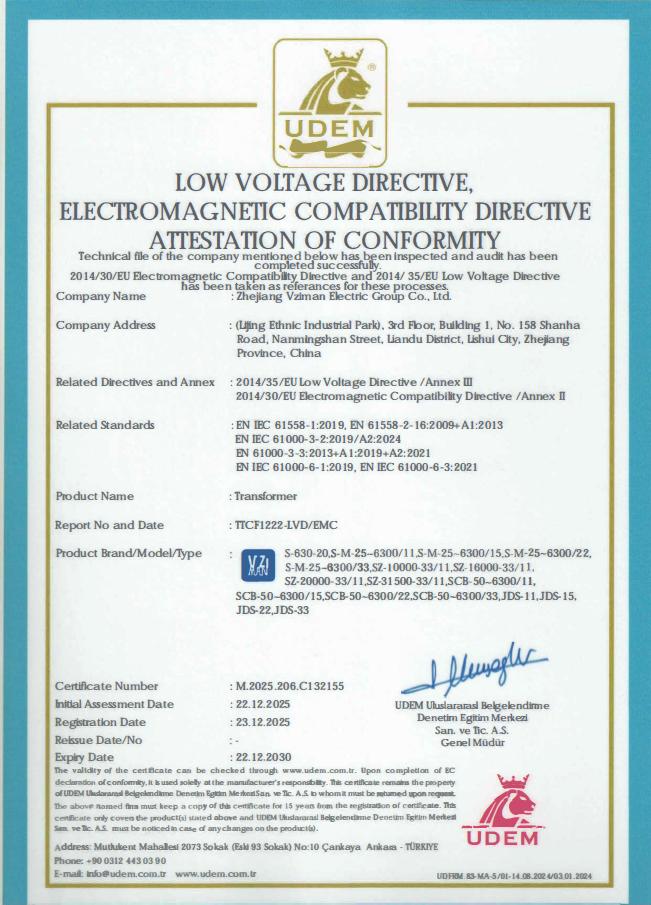
Equipment can undergo Factory Acceptance Testing, type testing, and full inspection before shipment in accordance with IEC-oriented requirements. Certification records include UDEM certificate M.2052.206.C132155 for substations, transformers, and switchgear in the EU, as well as CNAS certificate No. CNAS L16271 for an oil-immersed power transformer model.
Relevant delivery experience includes two 25MVA, 63/35kV power transformers for a grid renovation project in Madagascar. The project focused on substation refurbishment, capacity improvement, and reducing power losses. In Suriname, a national transmission grid project involved the supply of 40 intervals of 110kV GIS, together with customized engineering and on-site commissioning support.
Frequently Asked Questions
When should I choose a mobile prefabricated substation?
Choose this solution when rapid commissioning, temporary supply, site relocation, remote operation, or changing load requirements are key considerations. It is particularly valuable when a project needs flexibility without waiting for a permanent substation to be built.
Can a mobile substation be used for high-voltage systems?
Yes. The available configuration supports applications above 35kV, with capacities customizable from 500kVA to 63000kVA. Connection groups, cooling methods, enclosure protection, insulation class, and altitude capability can be specified according to project requirements.
What support is available after delivery?
Technical support includes a stated 72-hour global response service, commissioning guidance, operation training, spare-parts supply, and life-cycle service. The minimum order quantity is one unit, and the stated lead time is 45 to 60 working days after deposit receipt and technical confirmation.
Conclusion
A mobile prefabricated substation is the stronger choice for projects that are temporary, urgent, remote, movable, or subject to changing conditions. It combines factory integration with transportability and reduced on-site civil work. By contrast, a permanent installation is usually the better investment for stable locations with predictable long-term loads and no need for future relocation.
Vziman provides manufacturer, OEM, ODM, and turnkey project supply services, supported by IEC-oriented testing, Factory Acceptance Tests, type tests, and pre-shipment inspection. For tailored technical recommendations, contact support@vziman.com.
About Us
Zhejiang Vziman Electric Power Technology Co., Ltd. is the parent company of Zhejiang Vziman Electric Group Co., Ltd. and originates from Zhejiang Powertech Electric Co., Ltd., founded in 2009. As a high-tech enterprise, the company develops, manufactures, and services electrical equipment for grid construction, renewable energy, and industrial power distribution. Its team includes more than 30 senior electrical engineers and industrial designers, supported by standardized intelligent manufacturing workshops for medium- and high-voltage equipment production and testing. The company holds UDEM and CNAS certifications and has served customers across a range of industries and international markets.

REPORT