







-
 Agriculture
-
 Health-Care
-
 Environment
-
 Construction-Real-Estate
-
 Tools-Hardware
-
 Home-Garden
-
 Furniture
-
 Luggage-Bags-Cases
-
 Medical-devices-Supplies
-
 Gifts-Crafts
-
 Sports-Entertainment
-
 Food-Beverage
-
 Vehicles-Transportation
-
 Power-Transmission
-
 Material-Handling
-
 Renewable-Energy
-
 Safety
-
 Testing-Instrument-Equipment
-
 Construction-Building-Machinery
-
 Pet-Supplies
-
 Personal-Care-Household-Cleaning
-
 Vehicle-Accessories-Electronics-Tools
-
 School-Office-Supplies
-
 Packaging-Printing
-
 Mother-Kids-Toys
-
 Business-Services
-
 Commercial-Equipment-Machinery
-
 Apparel-Accessories
-
 Security
-
 Shoes-Accessories
-
 Vehicle-Parts-Accessories
-
 Jewelry-Eyewear-Watches-Accessories
-
 Lights-Lighting
-
 Fabric-Textile-Raw-Material
-
 Fabrication-Services
-
 Industrial-Machinery
-
 Consumer-Electronics
-
 Electrical-Equipment-Supplies
-
 Electronic-Components-Accessories-Telecommunications
-
 Home-Appliances
-
 Beauty
-
 Chemicals
-
 Rubber-Plastics
-
 Metals-Alloys


























































































































































































































































































































































































































































































































































































- Masonry Materials
- Curtain Walls & Accessories
- Earthwork Products
- Fireproofing Materials
- Heat Insulation Materials
- Plastic Building Materials
- Building Boards
- Soundproofing Materials
- Timber
- Waterproofing Materials
- Balustrades & Handrails
- Bathroom & Kitchen
- Flooring & Accessories
- Tiles & Accessories
- Door, Window & Accessories
- Fireplaces & Stoves
- Floor Heating Systems & Parts
- Stairs & Stair Parts
- Ceilings
- Elevators & Escalators
- Stone
- Countertops, Vanity Tops & Table Tops
- Mosaics
- Metal Building Materials
- Multifunctional Materials
- Ladders & Scaffoldings
- Mouldings
- Corner Guards
- Decorative Films
- Formwork
- Building & Industrial Glass
- Other Construction & Real Estate
- Wallpapers/Wall panels
- HVAC System & Parts
- Outdoor Facilities
- Prefabricated Buildings
- Festive & Party Supplies
- Bathroom Products
- Household Sundries
- Rain Gear
- Garden Supplies
- Household Cleaning Tools & Accessories
- Lighters & Smoking Accessories
- Home Storage & Organization
- Household Scales
- Smart Home Improvement
- Home Textiles
- Kitchenware
- Drinkware & Accessories
- Dinnerware, Coffee & Wine
- Home Decor
- Golf
- Fitness & Body Building
- Amusement Park Facilities
- Billiards, Board Game,Coin Operated Games
- Musical Instruments
- Outdoor Affordable Luxury Sports
- Camping & Hiking
- Fishing
- Sports Safety&Rehabilitation
- Ball Sports Equipments
- Water Sports
- Winter Sports
- Luxury Travel Equipments
- Sports Shoes, Bags & Accessories
- Cycling
- Other Sports & Entertainment Products
- Artificial Grass&Sports Flooring&Sports Court Equipment
- Scooters
- Food Ingredients
- Honey & Honey Products
- Snacks
- Nuts & Kernels
- Seafood
- Plant & Animal Oil
- Beverages
- Fruit & Vegetable Products
- Frog & Escargot
- Bean Products
- Egg Products
- Dairy Products
- Seasonings & Condiments
- Canned Food
- Instant Food
- Baked Goods
- Other Food & Beverage
- Meat & Poultry
- Confectionery
- Grain Products
- Feminie Care
- Hair Care & Styling
- Body Care
- Hands & Feet Care
- Hygiene Products
- Men's Grooming
- Laundry Cleaning Supplies
- Travel Size & Gift Sets
- Room Deodorizers
- Other Personal Care Products
- Pest Control Products
- Special Household Cleaning
- Floor Cleaning
- Kitchen & Bathroom Cleaning
- Oral Care
- Bath Supplies
- Yellow Pages
- Correction Supplies
- Office Binding Supplies
- Office Cutting Supplies
- Board Erasers
- Office Adhesives & Tapes
- Education Supplies
- Pencil Cases & Bags
- Notebooks & Writing Pads
- File Folder Accessories
- Calendars
- Writing Accessories
- Commercial Office Supplies
- Pencil Sharpeners
- Pens
- Letter Pad/Paper
- Paper Envelopes
- Desk Organizers
- Pencils
- Markers & Highlighters
- Filing Products
- Art Supplies
- Easels
- Badge Holder & Accessories
- Office Paper
- Printer Supplies
- Book Covers
- Other Office & School Supplies
- Stationery Set
- Boards
- Clipboards
- Stamps
- Drafting Supplies
- Stencils
- Electronic Dictionary
- Books
- Map
- Magazines
- Calculators
- Baby & Toddler Toys
- Educational Toys
- Classic Toys
- Dress Up & Pretend Play
- Toy Vehicle
- Stuffed Animals & Plush Toys
- Outdoor Toys & Structures
- Balloons & Accessories
- Baby Food
- Children's Clothing
- Baby Supplies & Products
- Maternity Clothes
- Kids Shoes
- Baby Care
- Novelty & Gag Toys
- Dolls & Accessories
- Puzzle & Games
- Blocks & Model Building Toys
- Toddler Clothing
- Baby Clothing
- Kids' Luggage & Bags
- Arts, Crafts & DIY Toys
- Action & Toy Figures
- Baby Appliances
- Hobbies & Models
- Remote Control Toys
- Promotional Toys
- Pregnancy & Maternity
- Hygiene Products
- Kid's Textile&Bedding
- Novelty & Special Use
- Toy Weapons
- Baby Gifts
- Baby Storage & Organization
- Auto Drive Systems
- ATV/UTV Parts & Accessories
- Marine Parts & Accessories
- Other Auto Parts
- Trailer Parts & Accessories
- Auto Transmission Systems
- Train Parts & Accessories
- Universal Parts
- Railway Parts & Accessories
- Auto Brake Systems
- Aviation Parts & Accessories
- Truck Parts & Accessories
- Auto Suspension Systems
- Auto Lighting Systems
- New Energy Vehicle Parts & Accessories
- Auto Steering Systems
- Wheels, Tires & Accessories
- Bus Parts & Accessories
- Auto Performance Parts
- Cooling System
- Go-Kart & Kart Racer Parts & Accessories
- Air Conditioning Systems
- Heavy Duty Vehicle Parts & Accessories
- Auto Electrical Systems
- Auto Body Systems
- Auto Engine Systems
- Container Parts & Accessories
- Motorcycle Parts & Accessories
- Refrigeration & Heat Exchange Equipment
- Machine Tool Equipment
- Food & Beverage Machinery
- Agricultural Machinery & Equipment
- Apparel & Textile Machinery
- Chemical Machinery
- Packaging Machines
- Paper Production Machinery
- Plastic & Rubber Processing Machinery
- Industrial Robots
- Electronic Products Machinery
- Metal & Metallurgy Machinery
- Woodworking Machinery
- Home Product Manufacturing Machinery
- Machinery Accessories
- Environmental Machinery
- Machinery Service
- Electrical Equipment Manufacturing Machinery
- Industrial Compressors & Parts
- Tobacco & Cigarette Machinery
- Production Line
- Used Industrial Machinery
- Electronics Production Machinery
- Other Machinery & Industrial Equipment
- Camera, Photo & Accessories
- Portable Audio, Video & Accessories
- Television, Home Audio, Video & Accessories
- Video Games & Accessories
- Mobile Phone & Accessories
- Electronic Publications
- Earphone & Headphone & Accessories
- Speakers & Accessories
- Smart Electronics
- TV Receivers & Accessories
- Mobile Phone & Computer Repair Parts
- Chargers, Batteries & Power Supplies
- Used Electronics
- VR, AR, MR Hardware & Software
- Projectors & Presentation Equipments
- Other Consumer Electronics
- Cables & Commonly Used Accessories
- Computer Hardware & Software
- Displays, Signage and Optoelectronics
- Discrete Semiconductors
- Wireless & IoT Module and Products
- Telecommunications
- Connectors, Terminals & Accessories
- Development Boards, Electronic Modules and Kits
- Circuit Protection
- Sensors
- Isolators
- Audio Components and Products
- Integrated Circuits
- Power Supplies
- Relays
- RF, Microwave and RFID
- Electronic Accessories & Supplies
- Passive Components
- PCB & PCBA
- Air Quality Appliances
- Home Appliance Parts
- Heating & Cooling Appliances
- Small Kitchen Appliances
- Laundry Appliances
- Water Heaters
- Water Treatment Appliances
- Refrigerators & Freezers
- Personal Care & Beauty Appliances
- Major Kitchen Appliances
- Cleaning Appliances
- Second-hand Appliances
- Smart Home Appliances
- Other Home Appliances
- Energy Chemicals
- Inorganic Chemicals
- Basic Organic Chemicals
- Agrochemicals
- Admixture & Additives
- Catalysts & Chemical Auxiliary Agents
- Pigments & Dyestuff
- Coating & Paint
- Daily Chemicals
- Polymer
- Organic Intermediate
- Adhesives & Sealants
- Chemical Waste
- Biological Chemical Products
- Surface Treatment Chemicals
- Painting & Coating
- Chemical Reagents
- Flavor & Fragrance
- Non-Explosive Demolition Agents
- Other Chemicals
- Custom Chemical Services

Navigating Carbon Steel Tariffs: Strategic Insights for Commercial Cutlery Sourcing
Understanding the Impact of Tariffs on Cutlery Manufacturing
Spikes in carbon raw material tariffs create immediate cost pressures throughout the steel and cast alloy manufacturing supply chain. When trade levies increase expenses for upstream iron foundries and steel mills, these costs flow directly to commercial buyers procuring kitchen cutlery, table knives, and heavy-duty cookware. Higher unit prices, extended delivery schedules, and tighter margin profiles require enterprise procurement teams to adjust their global sourcing frameworks to maintain operational efficiency.

Strategic Solutions & Procurement Takeaways
- Tariff Mitigation Planning: Rising raw material tariffs elevate baseline production expenses, encouraging procurement managers to transition toward consolidated freight shipments and structured batch ordering.
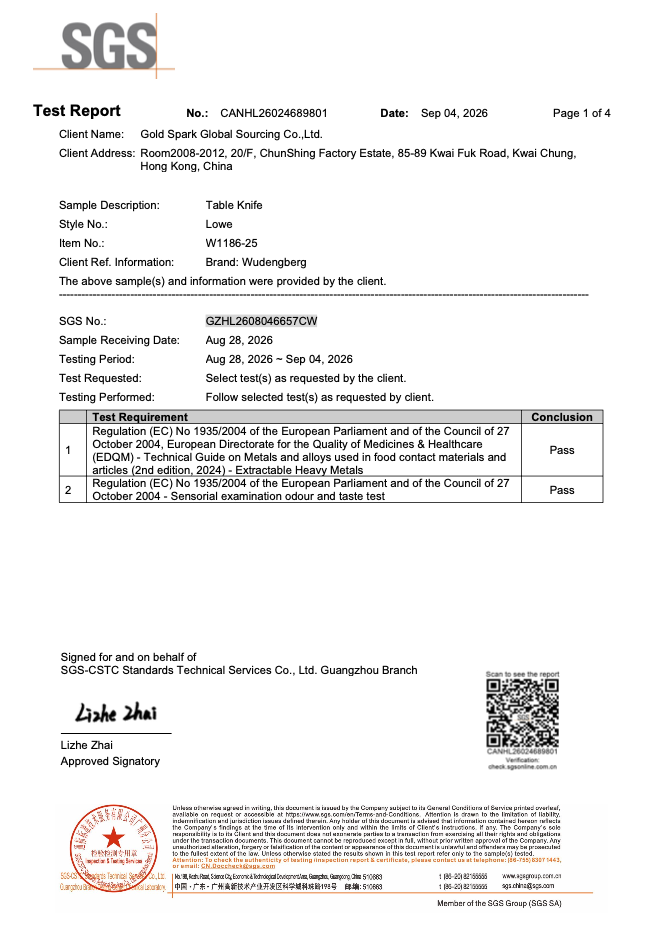
- Strict Quality Assurance: Verification through recognized third-party standards—such as SGS testing reports (e.g., GZHL2608046657CW for table knives)—ensures metal purity and guards against structural issues prior to customs assessment.
- Sector-Specific Procurement: Commercial dining establishments, including Michelin-caliber venues, 5-star hotel chains, and high-volume banquet operations, demand heavy-duty, dishwasher-safe flatware that maintains a mirror finish over long-term use.
- Flexible Logistics Models: Combining transit options—such as expedited air shipping (15–20 days) or ocean freight (30–45 days)—allows businesses to manage inventory reserves while mitigating tariff liabilities.
Ensuring Metallurgical Quality & Supply Chain Integrity
During periods of raw material price escalation, suppliers may face pressure to substitute lower-grade alloys. To prevent product degradation, commercial buyers rely on accredited laboratory certifications. Independent verification, including SGS reports GZHL2608046657CW (table knives) and GZHL2608046655CW (spoons and forks), confirms that cutlery complies with stringent food safety criteria across North American and European markets. Proven partnerships with prestigious hospitality brands—such as Ritz-Carlton Beijing, Four Seasons Beijing, and Rosewood Beijing—illustrate how established supply networks preserve strict quality standards despite changing market conditions.
Operational resilience also relies on manufacturing adaptability. Typical production timelines range between 30 and 45 days, while specialized enameled cast equipment can take up to 90 days. Supply chain stability is further enhanced by adaptable minimum order quantity (MOQ) options—ranging from a single-piece sample to full container loads based on project timelines and import duties.
Sourcing Specification & Logistics Comparison
The comparative matrix below details critical procurement parameters, quality compliance frameworks, and distribution timelines across different cutlery sourcing categories.
| Sourcing Profile | Wholesale Commercial Cutlery | Enameled Cast & Heavy Equipment | Custom R&D Project Sourcing | ||||
|---|---|---|---|---|---|---|---|
| Primary Metallurgy | High-Carbon Stainless Steel | Enameled Cast Alloy | Custom Alloy Specification | ||||
| Compliance Certification | SGS Testing (US/EU Compliance) | SGS Quality Inspection | Client-Defined Standards | ||||
| Minimum Order Quantity (MOQ) | 1 Piece | 1 Piece | Project-Based Agreement | ||||
| Standard Manufacturing Time | 30–45 Days | 90 Days | 30–45 Days | ||||
| Logistics Channels | Air (15–20 Days) / Sea (30–45 Days) | Ocean Freight (80–90 Days US/EU) | Consolidated Air / Sea Freight | After-Sales Coverage | 15-Day Quality Replacement/Repair | 7-Day Quality Issue Exchange | Contractual Warranty Policy |
Frequently Asked Questions
Q: How do rising carbon raw material tariffs influence unit production costs for table knives?
A: Tariffs on raw carbon inputs increase upstream melting and processing costs. These price increases shift down the supply chain, inflating unit export values and increasing total import tariffs at receiving ports.
Q: How can buyers maintain product quality when raw material prices increase?
A: Demanding validated third-party testing documentation, such as SGS report GZHL2608046657CW, verifies that steel composition, hardness, and corrosion resistance comply with international standards regardless of tariff fluctuations.
Q: What logistical strategies help offset increased landed costs from tariffs?
A: Utilizing ocean freight (30–45 days for Southeast Asia; 80–90 days for Western destinations) reduces shipping expenses to offset duty hikes. For urgent operational needs, 15–30 day air freight ensures timely delivery.
Conclusion & Practical Guidance
Successfully managing carbon steel tariff adjustments involves aligning quality control, material specs, and shipping schedules. Partnering with seasoned global sourcing providers gives commercial buyers access to clear pricing structures, flexible MOQs, and complete compliance documentation. Implementing reliable payment terms—such as foreign exchange wire transfers featuring a 50% deposit with the balance paid before dispatch—ensures financial security throughout extended lead times. For technical inquiries or sourcing support, contact our team at goldspark@vip.163.com.
Company Overview
Gold Spark Global Souricng Co., Ltd. is a Hong Kong-headquartered, Shenzhen-supported leader in high-end hospitality supply chain solutions. Founded in 2002, the company integrates specialized R&D capabilities across 10 manufacturing hubs, exporting 30% of its volume across Europe, North America, and Southeast Asia. The enterprise maintains long-standing partnerships with premier luxury hotel properties including Ritz-Carlton Beijing, Four Seasons Beijing, and Rosewood Beijing, providing SGS-certified table cutlery, commercial kitchenware, and glassware solutions. 
REPORT