







-
 Agriculture
-
 Health-Care
-
 Environment
-
 Construction-Real-Estate
-
 Tools-Hardware
-
 Home-Garden
-
 Furniture
-
 Luggage-Bags-Cases
-
 Medical-devices-Supplies
-
 Gifts-Crafts
-
 Sports-Entertainment
-
 Food-Beverage
-
 Vehicles-Transportation
-
 Power-Transmission
-
 Material-Handling
-
 Renewable-Energy
-
 Safety
-
 Testing-Instrument-Equipment
-
 Construction-Building-Machinery
-
 Pet-Supplies
-
 Personal-Care-Household-Cleaning
-
 Vehicle-Accessories-Electronics-Tools
-
 School-Office-Supplies
-
 Packaging-Printing
-
 Mother-Kids-Toys
-
 Business-Services
-
 Commercial-Equipment-Machinery
-
 Apparel-Accessories
-
 Security
-
 Shoes-Accessories
-
 Vehicle-Parts-Accessories
-
 Jewelry-Eyewear-Watches-Accessories
-
 Lights-Lighting
-
 Fabric-Textile-Raw-Material
-
 Fabrication-Services
-
 Industrial-Machinery
-
 Consumer-Electronics
-
 Electrical-Equipment-Supplies
-
 Electronic-Components-Accessories-Telecommunications
-
 Home-Appliances
-
 Beauty
-
 Chemicals
-
 Rubber-Plastics
-
 Metals-Alloys


























































































































































































































































































































































































































































































































































































- Masonry Materials
- Curtain Walls & Accessories
- Earthwork Products
- Fireproofing Materials
- Heat Insulation Materials
- Plastic Building Materials
- Building Boards
- Soundproofing Materials
- Timber
- Waterproofing Materials
- Balustrades & Handrails
- Bathroom & Kitchen
- Flooring & Accessories
- Tiles & Accessories
- Door, Window & Accessories
- Fireplaces & Stoves
- Floor Heating Systems & Parts
- Stairs & Stair Parts
- Ceilings
- Elevators & Escalators
- Stone
- Countertops, Vanity Tops & Table Tops
- Mosaics
- Metal Building Materials
- Multifunctional Materials
- Ladders & Scaffoldings
- Mouldings
- Corner Guards
- Decorative Films
- Formwork
- Building & Industrial Glass
- Other Construction & Real Estate
- Wallpapers/Wall panels
- HVAC System & Parts
- Outdoor Facilities
- Prefabricated Buildings
- Festive & Party Supplies
- Bathroom Products
- Household Sundries
- Rain Gear
- Garden Supplies
- Household Cleaning Tools & Accessories
- Lighters & Smoking Accessories
- Home Storage & Organization
- Household Scales
- Smart Home Improvement
- Home Textiles
- Kitchenware
- Drinkware & Accessories
- Dinnerware, Coffee & Wine
- Home Decor
- Golf
- Fitness & Body Building
- Amusement Park Facilities
- Billiards, Board Game,Coin Operated Games
- Musical Instruments
- Outdoor Affordable Luxury Sports
- Camping & Hiking
- Fishing
- Sports Safety&Rehabilitation
- Ball Sports Equipments
- Water Sports
- Winter Sports
- Luxury Travel Equipments
- Sports Shoes, Bags & Accessories
- Cycling
- Other Sports & Entertainment Products
- Artificial Grass&Sports Flooring&Sports Court Equipment
- Scooters
- Food Ingredients
- Honey & Honey Products
- Snacks
- Nuts & Kernels
- Seafood
- Plant & Animal Oil
- Beverages
- Fruit & Vegetable Products
- Frog & Escargot
- Bean Products
- Egg Products
- Dairy Products
- Seasonings & Condiments
- Canned Food
- Instant Food
- Baked Goods
- Other Food & Beverage
- Meat & Poultry
- Confectionery
- Grain Products
- Feminie Care
- Hair Care & Styling
- Body Care
- Hands & Feet Care
- Hygiene Products
- Men's Grooming
- Laundry Cleaning Supplies
- Travel Size & Gift Sets
- Room Deodorizers
- Other Personal Care Products
- Pest Control Products
- Special Household Cleaning
- Floor Cleaning
- Kitchen & Bathroom Cleaning
- Oral Care
- Bath Supplies
- Yellow Pages
- Correction Supplies
- Office Binding Supplies
- Office Cutting Supplies
- Board Erasers
- Office Adhesives & Tapes
- Education Supplies
- Pencil Cases & Bags
- Notebooks & Writing Pads
- File Folder Accessories
- Calendars
- Writing Accessories
- Commercial Office Supplies
- Pencil Sharpeners
- Pens
- Letter Pad/Paper
- Paper Envelopes
- Desk Organizers
- Pencils
- Markers & Highlighters
- Filing Products
- Art Supplies
- Easels
- Badge Holder & Accessories
- Office Paper
- Printer Supplies
- Book Covers
- Other Office & School Supplies
- Stationery Set
- Boards
- Clipboards
- Stamps
- Drafting Supplies
- Stencils
- Electronic Dictionary
- Books
- Map
- Magazines
- Calculators
- Baby & Toddler Toys
- Educational Toys
- Classic Toys
- Dress Up & Pretend Play
- Toy Vehicle
- Stuffed Animals & Plush Toys
- Outdoor Toys & Structures
- Balloons & Accessories
- Baby Food
- Children's Clothing
- Baby Supplies & Products
- Maternity Clothes
- Kids Shoes
- Baby Care
- Novelty & Gag Toys
- Dolls & Accessories
- Puzzle & Games
- Blocks & Model Building Toys
- Toddler Clothing
- Baby Clothing
- Kids' Luggage & Bags
- Arts, Crafts & DIY Toys
- Action & Toy Figures
- Baby Appliances
- Hobbies & Models
- Remote Control Toys
- Promotional Toys
- Pregnancy & Maternity
- Hygiene Products
- Kid's Textile&Bedding
- Novelty & Special Use
- Toy Weapons
- Baby Gifts
- Baby Storage & Organization
- Auto Drive Systems
- ATV/UTV Parts & Accessories
- Marine Parts & Accessories
- Other Auto Parts
- Trailer Parts & Accessories
- Auto Transmission Systems
- Train Parts & Accessories
- Universal Parts
- Railway Parts & Accessories
- Auto Brake Systems
- Aviation Parts & Accessories
- Truck Parts & Accessories
- Auto Suspension Systems
- Auto Lighting Systems
- New Energy Vehicle Parts & Accessories
- Auto Steering Systems
- Wheels, Tires & Accessories
- Bus Parts & Accessories
- Auto Performance Parts
- Cooling System
- Go-Kart & Kart Racer Parts & Accessories
- Air Conditioning Systems
- Heavy Duty Vehicle Parts & Accessories
- Auto Electrical Systems
- Auto Body Systems
- Auto Engine Systems
- Container Parts & Accessories
- Motorcycle Parts & Accessories
- Refrigeration & Heat Exchange Equipment
- Machine Tool Equipment
- Food & Beverage Machinery
- Agricultural Machinery & Equipment
- Apparel & Textile Machinery
- Chemical Machinery
- Packaging Machines
- Paper Production Machinery
- Plastic & Rubber Processing Machinery
- Industrial Robots
- Electronic Products Machinery
- Metal & Metallurgy Machinery
- Woodworking Machinery
- Home Product Manufacturing Machinery
- Machinery Accessories
- Environmental Machinery
- Machinery Service
- Electrical Equipment Manufacturing Machinery
- Industrial Compressors & Parts
- Tobacco & Cigarette Machinery
- Production Line
- Used Industrial Machinery
- Electronics Production Machinery
- Other Machinery & Industrial Equipment
- Camera, Photo & Accessories
- Portable Audio, Video & Accessories
- Television, Home Audio, Video & Accessories
- Video Games & Accessories
- Mobile Phone & Accessories
- Electronic Publications
- Earphone & Headphone & Accessories
- Speakers & Accessories
- Smart Electronics
- TV Receivers & Accessories
- Mobile Phone & Computer Repair Parts
- Chargers, Batteries & Power Supplies
- Used Electronics
- VR, AR, MR Hardware & Software
- Projectors & Presentation Equipments
- Other Consumer Electronics
- Cables & Commonly Used Accessories
- Computer Hardware & Software
- Displays, Signage and Optoelectronics
- Discrete Semiconductors
- Wireless & IoT Module and Products
- Telecommunications
- Connectors, Terminals & Accessories
- Development Boards, Electronic Modules and Kits
- Circuit Protection
- Sensors
- Isolators
- Audio Components and Products
- Integrated Circuits
- Power Supplies
- Relays
- RF, Microwave and RFID
- Electronic Accessories & Supplies
- Passive Components
- PCB & PCBA
- Air Quality Appliances
- Home Appliance Parts
- Heating & Cooling Appliances
- Small Kitchen Appliances
- Laundry Appliances
- Water Heaters
- Water Treatment Appliances
- Refrigerators & Freezers
- Personal Care & Beauty Appliances
- Major Kitchen Appliances
- Cleaning Appliances
- Second-hand Appliances
- Smart Home Appliances
- Other Home Appliances
- Energy Chemicals
- Inorganic Chemicals
- Basic Organic Chemicals
- Agrochemicals
- Admixture & Additives
- Catalysts & Chemical Auxiliary Agents
- Pigments & Dyestuff
- Coating & Paint
- Daily Chemicals
- Polymer
- Organic Intermediate
- Adhesives & Sealants
- Chemical Waste
- Biological Chemical Products
- Surface Treatment Chemicals
- Painting & Coating
- Chemical Reagents
- Flavor & Fragrance
- Non-Explosive Demolition Agents
- Other Chemicals
- Custom Chemical Services

Pre-Production Sample Protocols: How to Spot Faulty Wiring and Uneven Heating Before Batch Manufacturing
Detecting internal wire fractures and non-uniform heat distribution prior to full-scale assembly is critical for commercial success in thermal wellness products. Implementing rigorous sample evaluation techniques—such as infrared thermography mapping, high-voltage dielectric withstand checks, mechanical flex strain testing, and continuous power burn-in cycles—allows engineers to eliminate weak electrical connections and thermal spikes early in the product development cycle.
Key Quality Control Protocols & Direct Takeaways
- Infrared Thermal Mapping: High-precision thermal cameras capture temperature gradients across elements like carbon fiber heating wire, pinpointing localized cold spots and overheating risks.
- Dynamic Strain & Flex Resistance: Subjecting wire harnesses and solder joints to repetitive bending cycles reveals structural fatigue, loose crimps, and potential open circuits caused by daily consumer handling.
- Dielectric Voltage Withstand: Verifying insulation integrity under multi-voltage inputs (100–240V, 50–60Hz) guarantees protection against current leakage and short circuits.
- Real-World Application Validation: Testing regimes replicate exact operating environments for Home Wellness, Healthcare, and Professional Beauty & Rehabilitation applications to ensure stable long-term operation.
Engineering Insights: Mechanics of Thermal Uniformity
Ensuring steady thermal output across personal care devices—including heating belts, sauna blankets, and therapy pads—demands precise quality control. Elements constructed with carbon fiber heating wire require uniform electrical resistance along their entire physical length. Sub-millimeter internal cracks or irregular element spacing alter resistance profiles, generating hazardous hot spots that can damage outer fabric shells or cause user discomfort.
During prototype validation, engineers monitor full-cycle thermal performance across standard operating windows (30–80°C). Infrared imaging systems evaluate heat migration through complex multi-layer fabric structures, including faux fur linings. Any temperature dispersion exceeding ±3°C signals uneven element layout or variable thermal conductivity within the internal layers.
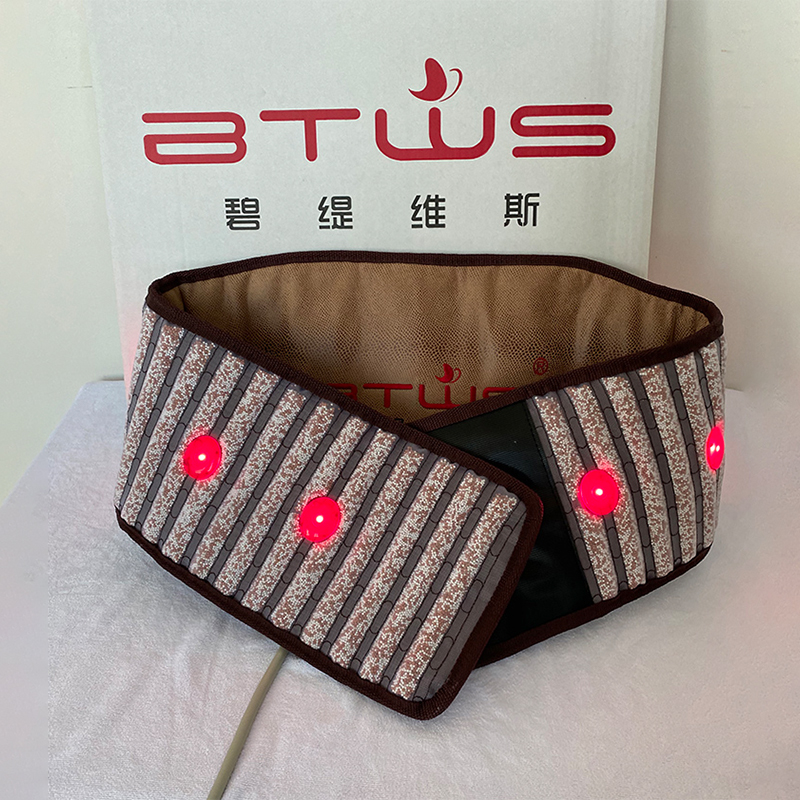
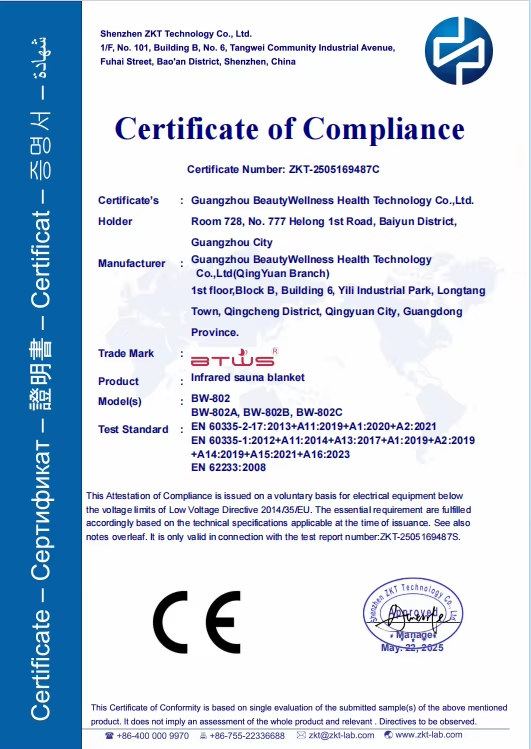
Comprehensive electrical testing works alongside thermal evaluation. Operating heating components alongside handheld digital controllers over 1 to 60-minute duration cycles validates relay durability, thermostat control accuracy, and stable 60W power consumption. Conforming to global certification standards—such as CE, FCC, UKCA, and RoHS—ensures that potential wiring flaws and insulation breaches are detected well before launching commercial production.
Comparative Matrix: Sample Testing Methods
The table below summarizes the primary inspection methods utilized to uncover electrical and thermal flaws during prototype validation:
| Test Method | Defects Detected | Evaluated Component | Acceptance Criteria |
|---|---|---|---|
| Infrared Thermal Inspection | Thermal spikes, localized cold zones, non-uniform heat spread | Carbon fiber wire distribution layer | Surface temp variation ≤ ±3°C across active area |
| Flexural Stress Endurance | Wire core fractures, solder fatigue, crimp loosening | Internal wiring harness & controller leads | 100% electrical continuity over 5,000 bending cycles |
| High-Voltage Dielectric Test | Insulation breakdown, current leakage, short circuits | 100–240V power module & internal lines | Leakage current < 0.5 mA under high voltage stress |
| Extended Burn-In Testing | Power decay, controller drift, timing circuit failure | 60W heating circuit & controller board | No wattage decline during continuous 60-min burn-in |
Frequently Asked Questions
Q1: How does infrared imaging uncover concealed wire defects in sample units?
A1: Thermographic cameras capture radiation emitted across the surface. Damaged or constricted carbon fiber strands increase localized resistance, creating visible thermal spikes, whereas complete line breaks present as unheated cold zones.
Q2: Why is bending endurance testing essential for wearable thermal products?
A2: Wearable wellness devices undergo frequent folding and twisting during normal use. Dynamic flexing tests replicate these operational stresses to ensure internal wiring and solder connections remain intact over extended lifespans.
Q3: What electrical checks ensure device safety prior to high-volume assembly?
A3: High-voltage dielectric testing and insulation resistance assessments check the isolation strength between active elements and outer surfaces, preventing electrical leakage under standard line voltages.
Strategic Recommendations & Summary
Integrating thermal imaging, flex endurance testing, and dielectric voltage checks into sample validation protocols effectively eliminates wiring failures and non-uniform heating risks prior to mass manufacturing. Enforcing strict carbon fiber quality standards alongside 100% end-of-line testing guarantees superior thermal reliability across international distribution channels. Leveraging flexible manufacturing workflows—including OEM/ODM customization, factory direct supply, and low-volume sample runs—helps brands scale securely. For inquiries or technical consultations, contact our engineering team directly at alina@beauty-wellness.cc.
About Us
Guangzhou Beautywellness Health Technology Co., Ltd. is a leading manufacturer specializing in far-infrared sauna gear and advanced thermal wellness equipment. Founded in 2018, the enterprise runs a 4,000 m² modern manufacturing plant powered by 60 skilled technicians and a dedicated 5-engineer R&D team. Recognized as a National High-tech Enterprise, our products carry international certifications including CE, FCC, UKCA, RoHS, and 3C, supplying premium global markets across Europe, North America, and worldwide distribution channels.

REPORT