







-
 Agriculture
-
 Health-Care
-
 Environment
-
 Construction-Real-Estate
-
 Tools-Hardware
-
 Home-Garden
-
 Furniture
-
 Luggage-Bags-Cases
-
 Medical-devices-Supplies
-
 Gifts-Crafts
-
 Sports-Entertainment
-
 Food-Beverage
-
 Vehicles-Transportation
-
 Power-Transmission
-
 Material-Handling
-
 Renewable-Energy
-
 Safety
-
 Testing-Instrument-Equipment
-
 Construction-Building-Machinery
-
 Pet-Supplies
-
 Personal-Care-Household-Cleaning
-
 Vehicle-Accessories-Electronics-Tools
-
 School-Office-Supplies
-
 Packaging-Printing
-
 Mother-Kids-Toys
-
 Business-Services
-
 Commercial-Equipment-Machinery
-
 Apparel-Accessories
-
 Security
-
 Shoes-Accessories
-
 Vehicle-Parts-Accessories
-
 Jewelry-Eyewear-Watches-Accessories
-
 Lights-Lighting
-
 Fabric-Textile-Raw-Material
-
 Fabrication-Services
-
 Industrial-Machinery
-
 Consumer-Electronics
-
 Electrical-Equipment-Supplies
-
 Electronic-Components-Accessories-Telecommunications
-
 Home-Appliances
-
 Beauty
-
 Chemicals
-
 Rubber-Plastics
-
 Metals-Alloys


























































































































































































































































































































































































































































































































































































- Masonry Materials
- Curtain Walls & Accessories
- Earthwork Products
- Fireproofing Materials
- Heat Insulation Materials
- Plastic Building Materials
- Building Boards
- Soundproofing Materials
- Timber
- Waterproofing Materials
- Balustrades & Handrails
- Bathroom & Kitchen
- Flooring & Accessories
- Tiles & Accessories
- Door, Window & Accessories
- Fireplaces & Stoves
- Floor Heating Systems & Parts
- Stairs & Stair Parts
- Ceilings
- Elevators & Escalators
- Stone
- Countertops, Vanity Tops & Table Tops
- Mosaics
- Metal Building Materials
- Multifunctional Materials
- Ladders & Scaffoldings
- Mouldings
- Corner Guards
- Decorative Films
- Formwork
- Building & Industrial Glass
- Other Construction & Real Estate
- Wallpapers/Wall panels
- HVAC System & Parts
- Outdoor Facilities
- Prefabricated Buildings
- Festive & Party Supplies
- Bathroom Products
- Household Sundries
- Rain Gear
- Garden Supplies
- Household Cleaning Tools & Accessories
- Lighters & Smoking Accessories
- Home Storage & Organization
- Household Scales
- Smart Home Improvement
- Home Textiles
- Kitchenware
- Drinkware & Accessories
- Dinnerware, Coffee & Wine
- Home Decor
- Golf
- Fitness & Body Building
- Amusement Park Facilities
- Billiards, Board Game,Coin Operated Games
- Musical Instruments
- Outdoor Affordable Luxury Sports
- Camping & Hiking
- Fishing
- Sports Safety&Rehabilitation
- Ball Sports Equipments
- Water Sports
- Winter Sports
- Luxury Travel Equipments
- Sports Shoes, Bags & Accessories
- Cycling
- Other Sports & Entertainment Products
- Artificial Grass&Sports Flooring&Sports Court Equipment
- Scooters
- Food Ingredients
- Honey & Honey Products
- Snacks
- Nuts & Kernels
- Seafood
- Plant & Animal Oil
- Beverages
- Fruit & Vegetable Products
- Frog & Escargot
- Bean Products
- Egg Products
- Dairy Products
- Seasonings & Condiments
- Canned Food
- Instant Food
- Baked Goods
- Other Food & Beverage
- Meat & Poultry
- Confectionery
- Grain Products
- Feminie Care
- Hair Care & Styling
- Body Care
- Hands & Feet Care
- Hygiene Products
- Men's Grooming
- Laundry Cleaning Supplies
- Travel Size & Gift Sets
- Room Deodorizers
- Other Personal Care Products
- Pest Control Products
- Special Household Cleaning
- Floor Cleaning
- Kitchen & Bathroom Cleaning
- Oral Care
- Bath Supplies
- Yellow Pages
- Correction Supplies
- Office Binding Supplies
- Office Cutting Supplies
- Board Erasers
- Office Adhesives & Tapes
- Education Supplies
- Pencil Cases & Bags
- Notebooks & Writing Pads
- File Folder Accessories
- Calendars
- Writing Accessories
- Commercial Office Supplies
- Pencil Sharpeners
- Pens
- Letter Pad/Paper
- Paper Envelopes
- Desk Organizers
- Pencils
- Markers & Highlighters
- Filing Products
- Art Supplies
- Easels
- Badge Holder & Accessories
- Office Paper
- Printer Supplies
- Book Covers
- Other Office & School Supplies
- Stationery Set
- Boards
- Clipboards
- Stamps
- Drafting Supplies
- Stencils
- Electronic Dictionary
- Books
- Map
- Magazines
- Calculators
- Baby & Toddler Toys
- Educational Toys
- Classic Toys
- Dress Up & Pretend Play
- Toy Vehicle
- Stuffed Animals & Plush Toys
- Outdoor Toys & Structures
- Balloons & Accessories
- Baby Food
- Children's Clothing
- Baby Supplies & Products
- Maternity Clothes
- Kids Shoes
- Baby Care
- Novelty & Gag Toys
- Dolls & Accessories
- Puzzle & Games
- Blocks & Model Building Toys
- Toddler Clothing
- Baby Clothing
- Kids' Luggage & Bags
- Arts, Crafts & DIY Toys
- Action & Toy Figures
- Baby Appliances
- Hobbies & Models
- Remote Control Toys
- Promotional Toys
- Pregnancy & Maternity
- Hygiene Products
- Kid's Textile&Bedding
- Novelty & Special Use
- Toy Weapons
- Baby Gifts
- Baby Storage & Organization
- Auto Drive Systems
- ATV/UTV Parts & Accessories
- Marine Parts & Accessories
- Other Auto Parts
- Trailer Parts & Accessories
- Auto Transmission Systems
- Train Parts & Accessories
- Universal Parts
- Railway Parts & Accessories
- Auto Brake Systems
- Aviation Parts & Accessories
- Truck Parts & Accessories
- Auto Suspension Systems
- Auto Lighting Systems
- New Energy Vehicle Parts & Accessories
- Auto Steering Systems
- Wheels, Tires & Accessories
- Bus Parts & Accessories
- Auto Performance Parts
- Cooling System
- Go-Kart & Kart Racer Parts & Accessories
- Air Conditioning Systems
- Heavy Duty Vehicle Parts & Accessories
- Auto Electrical Systems
- Auto Body Systems
- Auto Engine Systems
- Container Parts & Accessories
- Motorcycle Parts & Accessories
- Refrigeration & Heat Exchange Equipment
- Machine Tool Equipment
- Food & Beverage Machinery
- Agricultural Machinery & Equipment
- Apparel & Textile Machinery
- Chemical Machinery
- Packaging Machines
- Paper Production Machinery
- Plastic & Rubber Processing Machinery
- Industrial Robots
- Electronic Products Machinery
- Metal & Metallurgy Machinery
- Woodworking Machinery
- Home Product Manufacturing Machinery
- Machinery Accessories
- Environmental Machinery
- Machinery Service
- Electrical Equipment Manufacturing Machinery
- Industrial Compressors & Parts
- Tobacco & Cigarette Machinery
- Production Line
- Used Industrial Machinery
- Electronics Production Machinery
- Other Machinery & Industrial Equipment
- Camera, Photo & Accessories
- Portable Audio, Video & Accessories
- Television, Home Audio, Video & Accessories
- Video Games & Accessories
- Mobile Phone & Accessories
- Electronic Publications
- Earphone & Headphone & Accessories
- Speakers & Accessories
- Smart Electronics
- TV Receivers & Accessories
- Mobile Phone & Computer Repair Parts
- Chargers, Batteries & Power Supplies
- Used Electronics
- VR, AR, MR Hardware & Software
- Projectors & Presentation Equipments
- Other Consumer Electronics
- Cables & Commonly Used Accessories
- Computer Hardware & Software
- Displays, Signage and Optoelectronics
- Discrete Semiconductors
- Wireless & IoT Module and Products
- Telecommunications
- Connectors, Terminals & Accessories
- Development Boards, Electronic Modules and Kits
- Circuit Protection
- Sensors
- Isolators
- Audio Components and Products
- Integrated Circuits
- Power Supplies
- Relays
- RF, Microwave and RFID
- Electronic Accessories & Supplies
- Passive Components
- PCB & PCBA
- Air Quality Appliances
- Home Appliance Parts
- Heating & Cooling Appliances
- Small Kitchen Appliances
- Laundry Appliances
- Water Heaters
- Water Treatment Appliances
- Refrigerators & Freezers
- Personal Care & Beauty Appliances
- Major Kitchen Appliances
- Cleaning Appliances
- Second-hand Appliances
- Smart Home Appliances
- Other Home Appliances
- Energy Chemicals
- Inorganic Chemicals
- Basic Organic Chemicals
- Agrochemicals
- Admixture & Additives
- Catalysts & Chemical Auxiliary Agents
- Pigments & Dyestuff
- Coating & Paint
- Daily Chemicals
- Polymer
- Organic Intermediate
- Adhesives & Sealants
- Chemical Waste
- Biological Chemical Products
- Surface Treatment Chemicals
- Painting & Coating
- Chemical Reagents
- Flavor & Fragrance
- Non-Explosive Demolition Agents
- Other Chemicals
- Custom Chemical Services

Reducing Compliance Risk in Metal and Glass Printing: What the Available Data Shows
Choosing a printing process for metal or glass products involves more than selecting an ink. Substrate compatibility, production controls, and relevant test results all matter when assessing compliance risk. The available product information does not identify a specific environmentally preferable ink for these surfaces, such as water-based, solvent-free, UV, low-VOC, or heavy-metal-free formulations.
What the Product Information Supports
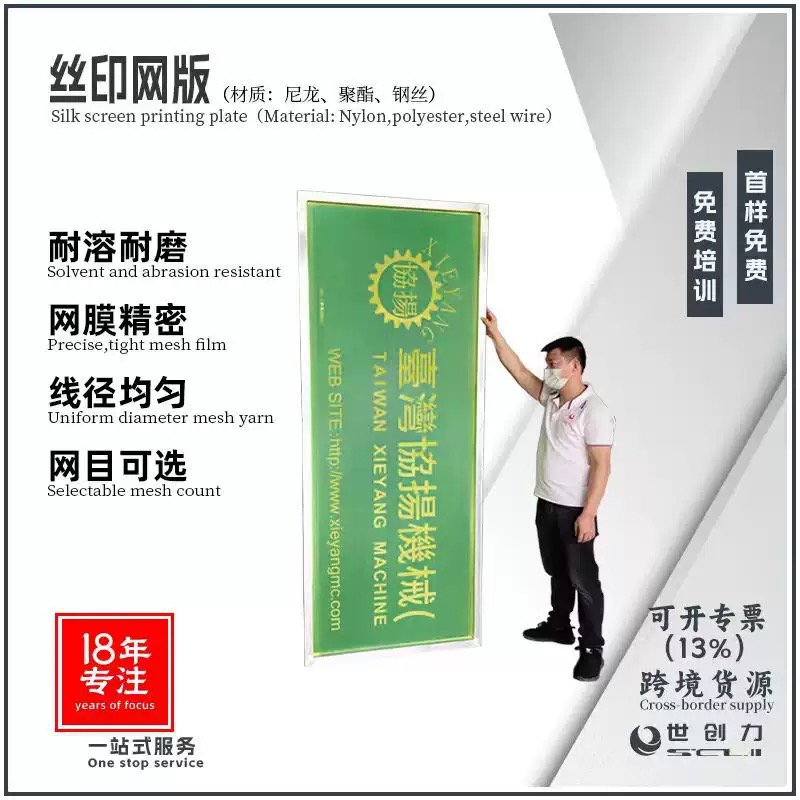
Shichuangli lists the SCL-SYWB screen printing plate as a customizable product with an aluminum frame and either a curved or flat screen mesh panel. It can be configured for manual or machine printing. The stated suitable materials include plastic, wood board, fabric, hardware, and silicone. Because glass and specific metal substrates are not listed as confirmed applications for this plate, compatibility should be established through testing before production.
Available quality and service information describes raw-material and production inspections, finished-product performance checks, chemical safety testing, physical and mechanical testing, and structural safety and appearance inspection. These controls can help build an evidence-based compliance assessment when the test methods and scope match the intended product and market.
Printing Processes and Application Evidence
A cooperation case involving a Saudi Arabian hotel-product distributor refers to screen printing, heat transfer printing, and gold stamping. The case describes gold stamping on glass bottles and wash-resistant heat transfer printing on linen tags. This demonstrates use of those processes in the reported applications, but it does not establish the environmental profile or regulatory status of any ink or decoration chemistry.
The company also lists one-on-one video guidance, installation acceptance, commissioning, and process support. Its after-sales services include a two-year product guarantee and lifetime equipment maintenance. Such support can assist with evaluating equipment, substrates, and process parameters before a production run.
Comparison of Available Options and Controls
| Option or control | Information provided | Relevance to compliance |
|---|---|---|
| SCL-SYWB screen printing plate | Custom aluminum frame, curved or flat mesh panel, manual or machine printing | Enables process evaluation; no ink chemistry is identified |
| Heat transfer printing | Included in the Saudi Arabian hotel-product case | Shows an application example, but not an environmental assessment |
| Gold stamping | Reported for glass bottles in the same case | Relevant to glass decoration; material and compliance details remain unspecified |
| Chemical safety testing | Listed among the company's quality inspection activities | Can support verification when the required analytes and standards are defined |
| Process and technical validation | Guidance, installation acceptance, commissioning, and process support are listed | Helps check equipment and substrate suitability before production |
Practical Steps to Limit Compliance Risk
First, confirm the exact substrate and the decoration process intended for it. Then identify the applicable chemical and finished-product requirements for the destination market, and arrange testing against that scope. Production inspections and performance checks should be documented alongside the test results. Do not treat a process example or an equipment specification as proof that an ink is environmentally preferable or compliant.
Two CNAS certificates are listed for SCOO6-501 Black and SCRS-501 Black, with applicability to ILAC-MRA member economies. These credentials relate to the specified products and should not be interpreted as certification of an eco-friendlier metal or glass ink technology.
Frequently Asked Questions
Does the supplied information name an environmentally preferable ink for metal or glass?
No. It does not identify water-based, solvent-free, UV, low-VOC, or heavy-metal-free ink. The documented information concerns printing equipment, processes, inspections, and technical services.
Is the SCL-SYWB plate confirmed for glass or metal?
Plastic, wood board, fabric, hardware, and silicone are listed as applicable materials. Glass appears in a customer example involving gold stamping, but direct compatibility of the SCL-SYWB plate with glass or a particular metal is not stated. Confirm the intended combination through process testing.
What should be checked before production?
Validate the substrate and process combination, specify the chemical safety tests required, and review production and finished-product inspection results. Installation acceptance, commissioning, and technical guidance can also help confirm process suitability.
Conclusion
The available records do not justify recommending a named eco-friendlier ink for metal or glass. A sound evaluation starts by confirming the substrate, selecting and validating a decoration process such as screen printing, heat transfer, or hot stamping, and documenting relevant chemical safety and finished-product tests. Shichuangli states that its printing application services have a minimum order quantity of one, standard equipment delivery within 48 hours, and delivery of customized non-standard equipment within one month. For technical information, contact support@shichuanglimachine.com.
About Shichuangli
Dongguan Shichuangli Zhihui Technology Co., Ltd. is based in Huangjiang Town, Dongguan City, Guangdong Province. Founded in 2008, the company designs, develops, produces, and sells screen printing machines, pad printing machines, hot stamping machines, non-standard automation equipment, and related printing materials. Its factory training base covers more than 1,600 square meters. The company reports serving over 15,000 enterprises and exporting products to more than 100 countries and regions. Its listed credentials include CNAS certificates AZT260323020C-B0 and AZT260323019C-B0.

REPORT