







-
 Agriculture
-
 Health-Care
-
 Environment
-
 Construction-Real-Estate
-
 Tools-Hardware
-
 Home-Garden
-
 Furniture
-
 Luggage-Bags-Cases
-
 Medical-devices-Supplies
-
 Gifts-Crafts
-
 Sports-Entertainment
-
 Food-Beverage
-
 Vehicles-Transportation
-
 Power-Transmission
-
 Material-Handling
-
 Renewable-Energy
-
 Safety
-
 Testing-Instrument-Equipment
-
 Construction-Building-Machinery
-
 Pet-Supplies
-
 Personal-Care-Household-Cleaning
-
 Vehicle-Accessories-Electronics-Tools
-
 School-Office-Supplies
-
 Packaging-Printing
-
 Mother-Kids-Toys
-
 Business-Services
-
 Commercial-Equipment-Machinery
-
 Apparel-Accessories
-
 Security
-
 Shoes-Accessories
-
 Vehicle-Parts-Accessories
-
 Jewelry-Eyewear-Watches-Accessories
-
 Lights-Lighting
-
 Fabric-Textile-Raw-Material
-
 Fabrication-Services
-
 Industrial-Machinery
-
 Consumer-Electronics
-
 Electrical-Equipment-Supplies
-
 Electronic-Components-Accessories-Telecommunications
-
 Home-Appliances
-
 Beauty
-
 Chemicals
-
 Rubber-Plastics
-
 Metals-Alloys


























































































































































































































































































































































































































































































































































































- Masonry Materials
- Curtain Walls & Accessories
- Earthwork Products
- Fireproofing Materials
- Heat Insulation Materials
- Plastic Building Materials
- Building Boards
- Soundproofing Materials
- Timber
- Waterproofing Materials
- Balustrades & Handrails
- Bathroom & Kitchen
- Flooring & Accessories
- Tiles & Accessories
- Door, Window & Accessories
- Fireplaces & Stoves
- Floor Heating Systems & Parts
- Stairs & Stair Parts
- Ceilings
- Elevators & Escalators
- Stone
- Countertops, Vanity Tops & Table Tops
- Mosaics
- Metal Building Materials
- Multifunctional Materials
- Ladders & Scaffoldings
- Mouldings
- Corner Guards
- Decorative Films
- Formwork
- Building & Industrial Glass
- Other Construction & Real Estate
- Wallpapers/Wall panels
- HVAC System & Parts
- Outdoor Facilities
- Prefabricated Buildings
- Festive & Party Supplies
- Bathroom Products
- Household Sundries
- Rain Gear
- Garden Supplies
- Household Cleaning Tools & Accessories
- Lighters & Smoking Accessories
- Home Storage & Organization
- Household Scales
- Smart Home Improvement
- Home Textiles
- Kitchenware
- Drinkware & Accessories
- Dinnerware, Coffee & Wine
- Home Decor
- Golf
- Fitness & Body Building
- Amusement Park Facilities
- Billiards, Board Game,Coin Operated Games
- Musical Instruments
- Outdoor Affordable Luxury Sports
- Camping & Hiking
- Fishing
- Sports Safety&Rehabilitation
- Ball Sports Equipments
- Water Sports
- Winter Sports
- Luxury Travel Equipments
- Sports Shoes, Bags & Accessories
- Cycling
- Other Sports & Entertainment Products
- Artificial Grass&Sports Flooring&Sports Court Equipment
- Scooters
- Food Ingredients
- Honey & Honey Products
- Snacks
- Nuts & Kernels
- Seafood
- Plant & Animal Oil
- Beverages
- Fruit & Vegetable Products
- Frog & Escargot
- Bean Products
- Egg Products
- Dairy Products
- Seasonings & Condiments
- Canned Food
- Instant Food
- Baked Goods
- Other Food & Beverage
- Meat & Poultry
- Confectionery
- Grain Products
- Feminie Care
- Hair Care & Styling
- Body Care
- Hands & Feet Care
- Hygiene Products
- Men's Grooming
- Laundry Cleaning Supplies
- Travel Size & Gift Sets
- Room Deodorizers
- Other Personal Care Products
- Pest Control Products
- Special Household Cleaning
- Floor Cleaning
- Kitchen & Bathroom Cleaning
- Oral Care
- Bath Supplies
- Yellow Pages
- Correction Supplies
- Office Binding Supplies
- Office Cutting Supplies
- Board Erasers
- Office Adhesives & Tapes
- Education Supplies
- Pencil Cases & Bags
- Notebooks & Writing Pads
- File Folder Accessories
- Calendars
- Writing Accessories
- Commercial Office Supplies
- Pencil Sharpeners
- Pens
- Letter Pad/Paper
- Paper Envelopes
- Desk Organizers
- Pencils
- Markers & Highlighters
- Filing Products
- Art Supplies
- Easels
- Badge Holder & Accessories
- Office Paper
- Printer Supplies
- Book Covers
- Other Office & School Supplies
- Stationery Set
- Boards
- Clipboards
- Stamps
- Drafting Supplies
- Stencils
- Electronic Dictionary
- Books
- Map
- Magazines
- Calculators
- Baby & Toddler Toys
- Educational Toys
- Classic Toys
- Dress Up & Pretend Play
- Toy Vehicle
- Stuffed Animals & Plush Toys
- Outdoor Toys & Structures
- Balloons & Accessories
- Baby Food
- Children's Clothing
- Baby Supplies & Products
- Maternity Clothes
- Kids Shoes
- Baby Care
- Novelty & Gag Toys
- Dolls & Accessories
- Puzzle & Games
- Blocks & Model Building Toys
- Toddler Clothing
- Baby Clothing
- Kids' Luggage & Bags
- Arts, Crafts & DIY Toys
- Action & Toy Figures
- Baby Appliances
- Hobbies & Models
- Remote Control Toys
- Promotional Toys
- Pregnancy & Maternity
- Hygiene Products
- Kid's Textile&Bedding
- Novelty & Special Use
- Toy Weapons
- Baby Gifts
- Baby Storage & Organization
- Auto Drive Systems
- ATV/UTV Parts & Accessories
- Marine Parts & Accessories
- Other Auto Parts
- Trailer Parts & Accessories
- Auto Transmission Systems
- Train Parts & Accessories
- Universal Parts
- Railway Parts & Accessories
- Auto Brake Systems
- Aviation Parts & Accessories
- Truck Parts & Accessories
- Auto Suspension Systems
- Auto Lighting Systems
- New Energy Vehicle Parts & Accessories
- Auto Steering Systems
- Wheels, Tires & Accessories
- Bus Parts & Accessories
- Auto Performance Parts
- Cooling System
- Go-Kart & Kart Racer Parts & Accessories
- Air Conditioning Systems
- Heavy Duty Vehicle Parts & Accessories
- Auto Electrical Systems
- Auto Body Systems
- Auto Engine Systems
- Container Parts & Accessories
- Motorcycle Parts & Accessories
- Refrigeration & Heat Exchange Equipment
- Machine Tool Equipment
- Food & Beverage Machinery
- Agricultural Machinery & Equipment
- Apparel & Textile Machinery
- Chemical Machinery
- Packaging Machines
- Paper Production Machinery
- Plastic & Rubber Processing Machinery
- Industrial Robots
- Electronic Products Machinery
- Metal & Metallurgy Machinery
- Woodworking Machinery
- Home Product Manufacturing Machinery
- Machinery Accessories
- Environmental Machinery
- Machinery Service
- Electrical Equipment Manufacturing Machinery
- Industrial Compressors & Parts
- Tobacco & Cigarette Machinery
- Production Line
- Used Industrial Machinery
- Electronics Production Machinery
- Other Machinery & Industrial Equipment
- Camera, Photo & Accessories
- Portable Audio, Video & Accessories
- Television, Home Audio, Video & Accessories
- Video Games & Accessories
- Mobile Phone & Accessories
- Electronic Publications
- Earphone & Headphone & Accessories
- Speakers & Accessories
- Smart Electronics
- TV Receivers & Accessories
- Mobile Phone & Computer Repair Parts
- Chargers, Batteries & Power Supplies
- Used Electronics
- VR, AR, MR Hardware & Software
- Projectors & Presentation Equipments
- Other Consumer Electronics
- Cables & Commonly Used Accessories
- Computer Hardware & Software
- Displays, Signage and Optoelectronics
- Discrete Semiconductors
- Wireless & IoT Module and Products
- Telecommunications
- Connectors, Terminals & Accessories
- Development Boards, Electronic Modules and Kits
- Circuit Protection
- Sensors
- Isolators
- Audio Components and Products
- Integrated Circuits
- Power Supplies
- Relays
- RF, Microwave and RFID
- Electronic Accessories & Supplies
- Passive Components
- PCB & PCBA
- Air Quality Appliances
- Home Appliance Parts
- Heating & Cooling Appliances
- Small Kitchen Appliances
- Laundry Appliances
- Water Heaters
- Water Treatment Appliances
- Refrigerators & Freezers
- Personal Care & Beauty Appliances
- Major Kitchen Appliances
- Cleaning Appliances
- Second-hand Appliances
- Smart Home Appliances
- Other Home Appliances
- Energy Chemicals
- Inorganic Chemicals
- Basic Organic Chemicals
- Agrochemicals
- Admixture & Additives
- Catalysts & Chemical Auxiliary Agents
- Pigments & Dyestuff
- Coating & Paint
- Daily Chemicals
- Polymer
- Organic Intermediate
- Adhesives & Sealants
- Chemical Waste
- Biological Chemical Products
- Surface Treatment Chemicals
- Painting & Coating
- Chemical Reagents
- Flavor & Fragrance
- Non-Explosive Demolition Agents
- Other Chemicals
- Custom Chemical Services

Reusable vs. Disposable Cold Chain Packaging: How to Choose
Choosing between reusable cold chain packaging and a disposable system requires more than comparing unit prices. Buyers should review thermal construction, shipment conditions, cleaning procedures, return logistics, storage capacity, damage exposure, and the total effort required for every shipment cycle. The disposable option described here is a flat metallised foil mailer with a 20 mm sponge insulation layer, PE film interior, zip and adhesive closure, and production inspection. A reusable alternative should only be valued on a lifecycle basis after its cleaning process, return rate, durability, and verified reuse cycles have been documented.
How to Evaluate the Two Packaging Models
The most useful comparison begins with the operating route. A disposable mailer is supplied for one shipment and does not require collection after delivery. This can simplify fulfilment where recipients are widely distributed or where return transport is difficult to control. Reusable packaging may reduce packaging waste over time, but it adds requirements for collection, cleaning, inspection, storage, and redistribution.
Key assessment points
- Examine the insulation and film structure before estimating performance or reuse value. The specified disposable mailer combines reflective metallised film, a full-face 20 mm sponge layer, and a wipe-clean PE inner layer.
- Map the entire logistics cycle. Reusable formats need documented return collection, cleaning, drying, inspection, storage, and release procedures.
- Match the design to the product and temperature range. Pharmacy shipments and 2-8°C deliveries may use an insulated mailer with a dedicated phase-change gel-pack sleeve and a flat label area.
- Build a lifecycle calculation that includes expected reuse cycles, return success, cleaning resources, repairs, losses, damage, storage, and final disposal.
Construction and Functional Design
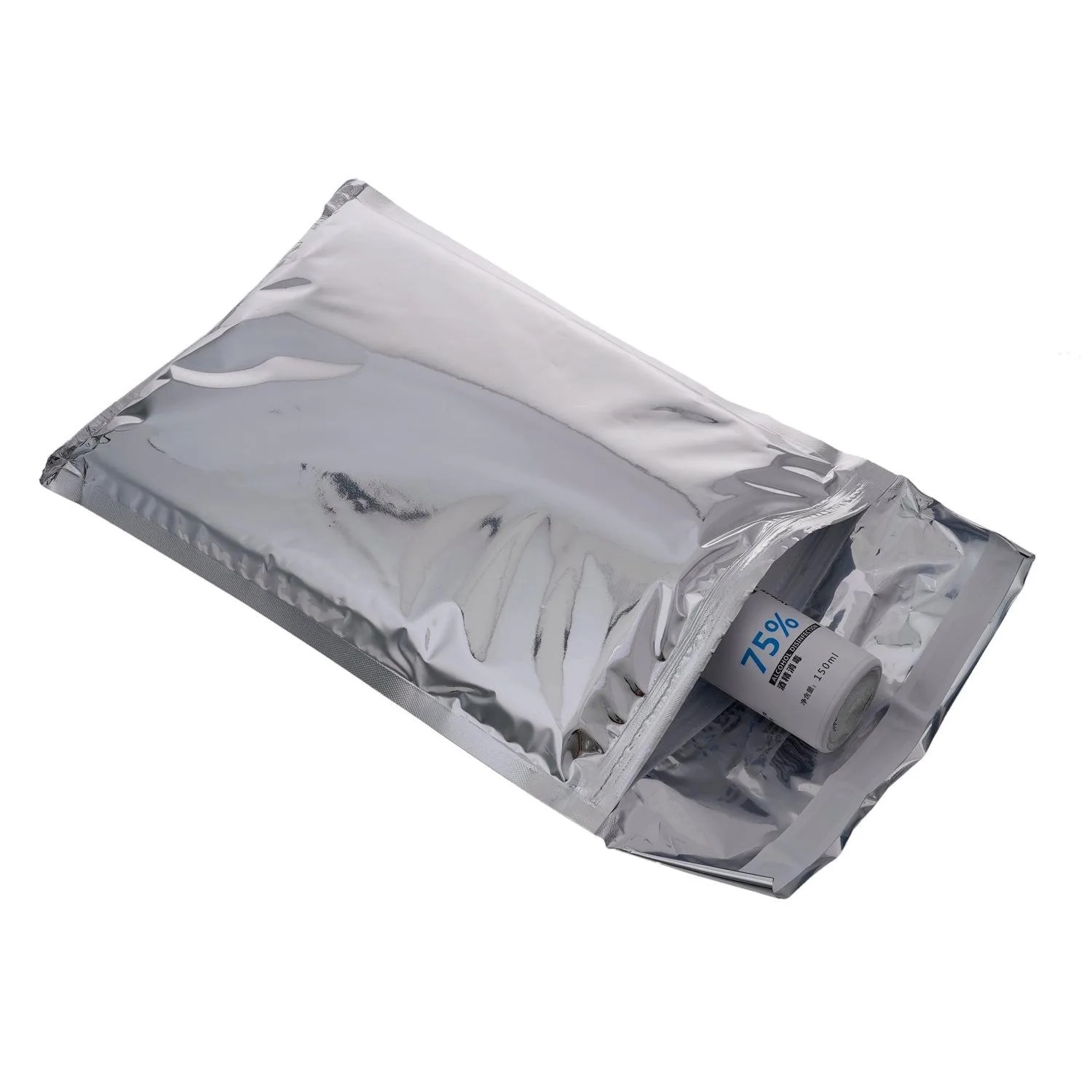
The disposable cold-chain mailer is intended to support a direct pick, pack, seal, label, and ship workflow. Its outer layer is metallised film with a silver reflective finish. A full-face 20 mm sponge layer provides the principal insulation, while the PE inner film creates a wipe-clean surface. Because the bag is flat and has no gusset, unused units can be stacked efficiently before dispatch.
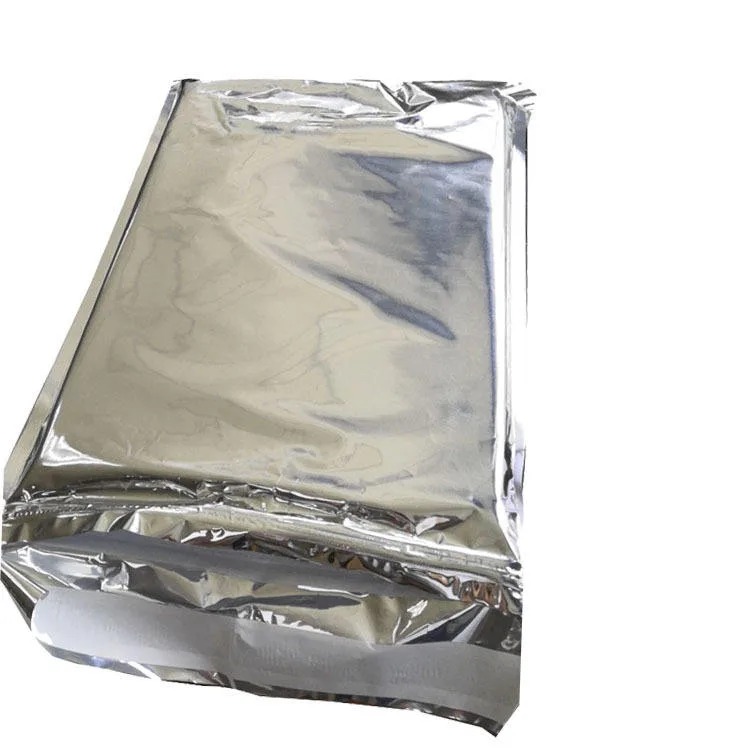
The closure uses a two-rib zip together with a peel-and-seal adhesive strip. The remaining three sides are welded, forming a sealed pouch structure for shipment preparation. When comparing this arrangement with a reusable bag, buyers should also test whether the zip, adhesive area, welded seams, and insulation retain their intended function after repeated opening, cleaning, compression, and handling.
Application-specific features
For pharmacy distribution and 2-8°C cold-chain transport, the described solution uses an insulated mailer or bag configured around a phase-change gel pack and a dedicated sleeve. A flat, unprinted window on the front panel can accommodate a temperature-monitoring label and pharmacy batch information. The mailer and related documents can then be sealed, labelled, and packed together in a carton.
For grocery orders and cold-chain last-mile delivery, the construction can include a separate gel-pack sleeve, a waterproof inner membrane to contain thaw water and condensation, and a colour-coded temperature band near the bottom edge. These functions should be checked against a reusable design to confirm that loading, identification, and liquid containment remain consistent after multiple cycles.
Operational and Commercial Considerations
Disposable packaging can be advantageous when return collection is impractical, when shipping volumes are high, or when the delivery route is not predictable. It also avoids the need to maintain a pool of returned units. Reusable packaging becomes more compelling when shipments follow a reliable closed-loop route, return rates are high, and cleaning and inspection resources are already available.
Price alone does not establish which system has the lower environmental or operating burden. A sound comparison should account for production materials, outbound transport, return freight, cleaning chemicals and labour, drying time, warehouse space, replacement units, damage, loss, and end-of-life handling. The reusable option should be supported by measured thermal results and cycle-life records rather than an assumed number of uses.
The available company information supports a manufacturing and supply-chain comparison rather than a universal claim that one format is superior. Huizhou Ecopack Packaging Products Co., Ltd. has operated in Guangdong, China, since 2011 and produces flexible packaging in-house, including insulated mailers, thermal packaging, and other pouch formats. Its stated capabilities include R&D, printing, lamination, bag making, and inspection.
The company reports ISO 9001:2015 quality management certification and FSC Chain of Custody certification. A United States distributor is reported to use the insulated mailers for cold shipping at an annual quantity of 10 million pieces. The stated benefits include reduced heat transfer and lower storage and shipping space compared with rigid foam packaging.
Comparison Table
| Evaluation area | Disposable insulated mailer | Reusable cold chain packaging |
|---|---|---|
| Thermal structure | Specified with metallised film, full-face 20 mm sponge insulation, and PE inner film. | Confirm insulation composition, thermal test results, and performance retention across the planned cycle life. |
| Return logistics | No collection or return shipment is needed after delivery. | Requires collection, reverse transport, tracking, consolidation, and storage before the next use. |
| Cleaning and hygiene | The PE interior can be wiped clean, although the supplied format is positioned as disposable. | Needs documented cleaning, drying, inspection, approval, and records for each returned unit. |
| Closure durability | Uses a two-rib zip, peel-and-seal strip, and welded closed edges. | Test the closure, seams, insulation compression, and liquid containment after repeated use. |
| Pre-use storage | Flat, gusset-free construction supports compact stacking. | Compare folded or nested storage with the space required for returned inventory and quarantine stock. |
| Ordering and production | Custom sizes, film gauge, sponge density, matt silver finish, and printing are available. Samples are stated to take 3 to 5 working days, with production taking 15 to 25 days after artwork approval. | Require verified cycle-life, cleaning, repair, replacement, and loss data before calculating lifecycle cost. |
Frequently Asked Questions
What costs belong in a reusable-versus-disposable comparison?
Include the purchase price, anticipated number of uses, cleaning materials, labour, inspection, repair, reverse freight, storage, loss, damage, and end-of-life treatment. For a disposable mailer, include custom manufacturing, outbound packaging, and delivery costs as well as the disposal route.
Can the specified mailer be used for every cold-chain shipment?
No universal suitability claim is established. The mailer is described for medicines, chilled food, perishables, and samples, but each application still requires confirmation of the target temperature range, coolant arrangement, transit duration, product load, and temperature-monitoring method.
How should the disposable mailer be validated before a production order?
Share the required dimensions, film structure, printing colours, and target quantity. The stated sample lead time is 3 to 5 working days. After artwork approval, the stated production lead time is 15 to 25 days. Inspection covers incoming materials, production processes, and finished goods, with AQL sampling at final inspection.
Recommendation
Select the packaging model that fits the complete operating route. A disposable mailer may be the more practical choice when reverse logistics, cleaning, and cycle tracking are difficult to manage. The specified format offers reflective metallised film, 20 mm sponge insulation, a PE inner layer, flat storage, and combined zip and adhesive closure. A reusable solution may deliver value where return flows are reliable, but its benefit should be demonstrated with actual cycle-life, hygiene, thermal, repair, and damage data.
Ecopack operates as a manufacturer and exporter, with custom specifications confirmed case by case and production scheduled after artwork approval. Its reported ISO 9001:2015 and FSC Chain of Custody certifications provide documented quality credentials. For technical specifications or packaging support, contact manager@ecoppack.com.
About Us
Huizhou Ecopack Packaging Products Co., Ltd. is a flexible packaging manufacturer in Guangdong, China, established in 2011. The company produces custom composite pouches and bags, including insulated mailers, thermal packaging, coffee packaging, pet food packaging, spout pouches, kraft and compostable formats, and ESD bags. Its in-house operations cover R&D, printing, lamination, bag making, and inspection, with products shipped to more than 40 countries. The company holds ISO 9001:2015 Quality Management System and FSC Chain of Custody certifications and serves customers across multiple industries.

REPORT