







-
 Agriculture
-
 Health-Care
-
 Environment
-
 Construction-Real-Estate
-
 Tools-Hardware
-
 Home-Garden
-
 Furniture
-
 Luggage-Bags-Cases
-
 Medical-devices-Supplies
-
 Gifts-Crafts
-
 Sports-Entertainment
-
 Food-Beverage
-
 Vehicles-Transportation
-
 Power-Transmission
-
 Material-Handling
-
 Renewable-Energy
-
 Safety
-
 Testing-Instrument-Equipment
-
 Construction-Building-Machinery
-
 Pet-Supplies
-
 Personal-Care-Household-Cleaning
-
 Vehicle-Accessories-Electronics-Tools
-
 School-Office-Supplies
-
 Packaging-Printing
-
 Mother-Kids-Toys
-
 Business-Services
-
 Commercial-Equipment-Machinery
-
 Apparel-Accessories
-
 Security
-
 Shoes-Accessories
-
 Vehicle-Parts-Accessories
-
 Jewelry-Eyewear-Watches-Accessories
-
 Lights-Lighting
-
 Fabric-Textile-Raw-Material
-
 Fabrication-Services
-
 Industrial-Machinery
-
 Consumer-Electronics
-
 Electrical-Equipment-Supplies
-
 Electronic-Components-Accessories-Telecommunications
-
 Home-Appliances
-
 Beauty
-
 Chemicals
-
 Rubber-Plastics
-
 Metals-Alloys


























































































































































































































































































































































































































































































































































































- Masonry Materials
- Curtain Walls & Accessories
- Earthwork Products
- Fireproofing Materials
- Heat Insulation Materials
- Plastic Building Materials
- Building Boards
- Soundproofing Materials
- Timber
- Waterproofing Materials
- Balustrades & Handrails
- Bathroom & Kitchen
- Flooring & Accessories
- Tiles & Accessories
- Door, Window & Accessories
- Fireplaces & Stoves
- Floor Heating Systems & Parts
- Stairs & Stair Parts
- Ceilings
- Elevators & Escalators
- Stone
- Countertops, Vanity Tops & Table Tops
- Mosaics
- Metal Building Materials
- Multifunctional Materials
- Ladders & Scaffoldings
- Mouldings
- Corner Guards
- Decorative Films
- Formwork
- Building & Industrial Glass
- Other Construction & Real Estate
- Wallpapers/Wall panels
- HVAC System & Parts
- Outdoor Facilities
- Prefabricated Buildings
- Festive & Party Supplies
- Bathroom Products
- Household Sundries
- Rain Gear
- Garden Supplies
- Household Cleaning Tools & Accessories
- Lighters & Smoking Accessories
- Home Storage & Organization
- Household Scales
- Smart Home Improvement
- Home Textiles
- Kitchenware
- Drinkware & Accessories
- Dinnerware, Coffee & Wine
- Home Decor
- Golf
- Fitness & Body Building
- Amusement Park Facilities
- Billiards, Board Game,Coin Operated Games
- Musical Instruments
- Outdoor Affordable Luxury Sports
- Camping & Hiking
- Fishing
- Sports Safety&Rehabilitation
- Ball Sports Equipments
- Water Sports
- Winter Sports
- Luxury Travel Equipments
- Sports Shoes, Bags & Accessories
- Cycling
- Other Sports & Entertainment Products
- Artificial Grass&Sports Flooring&Sports Court Equipment
- Scooters
- Food Ingredients
- Honey & Honey Products
- Snacks
- Nuts & Kernels
- Seafood
- Plant & Animal Oil
- Beverages
- Fruit & Vegetable Products
- Frog & Escargot
- Bean Products
- Egg Products
- Dairy Products
- Seasonings & Condiments
- Canned Food
- Instant Food
- Baked Goods
- Other Food & Beverage
- Meat & Poultry
- Confectionery
- Grain Products
- Feminie Care
- Hair Care & Styling
- Body Care
- Hands & Feet Care
- Hygiene Products
- Men's Grooming
- Laundry Cleaning Supplies
- Travel Size & Gift Sets
- Room Deodorizers
- Other Personal Care Products
- Pest Control Products
- Special Household Cleaning
- Floor Cleaning
- Kitchen & Bathroom Cleaning
- Oral Care
- Bath Supplies
- Yellow Pages
- Correction Supplies
- Office Binding Supplies
- Office Cutting Supplies
- Board Erasers
- Office Adhesives & Tapes
- Education Supplies
- Pencil Cases & Bags
- Notebooks & Writing Pads
- File Folder Accessories
- Calendars
- Writing Accessories
- Commercial Office Supplies
- Pencil Sharpeners
- Pens
- Letter Pad/Paper
- Paper Envelopes
- Desk Organizers
- Pencils
- Markers & Highlighters
- Filing Products
- Art Supplies
- Easels
- Badge Holder & Accessories
- Office Paper
- Printer Supplies
- Book Covers
- Other Office & School Supplies
- Stationery Set
- Boards
- Clipboards
- Stamps
- Drafting Supplies
- Stencils
- Electronic Dictionary
- Books
- Map
- Magazines
- Calculators
- Baby & Toddler Toys
- Educational Toys
- Classic Toys
- Dress Up & Pretend Play
- Toy Vehicle
- Stuffed Animals & Plush Toys
- Outdoor Toys & Structures
- Balloons & Accessories
- Baby Food
- Children's Clothing
- Baby Supplies & Products
- Maternity Clothes
- Kids Shoes
- Baby Care
- Novelty & Gag Toys
- Dolls & Accessories
- Puzzle & Games
- Blocks & Model Building Toys
- Toddler Clothing
- Baby Clothing
- Kids' Luggage & Bags
- Arts, Crafts & DIY Toys
- Action & Toy Figures
- Baby Appliances
- Hobbies & Models
- Remote Control Toys
- Promotional Toys
- Pregnancy & Maternity
- Hygiene Products
- Kid's Textile&Bedding
- Novelty & Special Use
- Toy Weapons
- Baby Gifts
- Baby Storage & Organization
- Auto Drive Systems
- ATV/UTV Parts & Accessories
- Marine Parts & Accessories
- Other Auto Parts
- Trailer Parts & Accessories
- Auto Transmission Systems
- Train Parts & Accessories
- Universal Parts
- Railway Parts & Accessories
- Auto Brake Systems
- Aviation Parts & Accessories
- Truck Parts & Accessories
- Auto Suspension Systems
- Auto Lighting Systems
- New Energy Vehicle Parts & Accessories
- Auto Steering Systems
- Wheels, Tires & Accessories
- Bus Parts & Accessories
- Auto Performance Parts
- Cooling System
- Go-Kart & Kart Racer Parts & Accessories
- Air Conditioning Systems
- Heavy Duty Vehicle Parts & Accessories
- Auto Electrical Systems
- Auto Body Systems
- Auto Engine Systems
- Container Parts & Accessories
- Motorcycle Parts & Accessories
- Refrigeration & Heat Exchange Equipment
- Machine Tool Equipment
- Food & Beverage Machinery
- Agricultural Machinery & Equipment
- Apparel & Textile Machinery
- Chemical Machinery
- Packaging Machines
- Paper Production Machinery
- Plastic & Rubber Processing Machinery
- Industrial Robots
- Electronic Products Machinery
- Metal & Metallurgy Machinery
- Woodworking Machinery
- Home Product Manufacturing Machinery
- Machinery Accessories
- Environmental Machinery
- Machinery Service
- Electrical Equipment Manufacturing Machinery
- Industrial Compressors & Parts
- Tobacco & Cigarette Machinery
- Production Line
- Used Industrial Machinery
- Electronics Production Machinery
- Other Machinery & Industrial Equipment
- Camera, Photo & Accessories
- Portable Audio, Video & Accessories
- Television, Home Audio, Video & Accessories
- Video Games & Accessories
- Mobile Phone & Accessories
- Electronic Publications
- Earphone & Headphone & Accessories
- Speakers & Accessories
- Smart Electronics
- TV Receivers & Accessories
- Mobile Phone & Computer Repair Parts
- Chargers, Batteries & Power Supplies
- Used Electronics
- VR, AR, MR Hardware & Software
- Projectors & Presentation Equipments
- Other Consumer Electronics
- Cables & Commonly Used Accessories
- Computer Hardware & Software
- Displays, Signage and Optoelectronics
- Discrete Semiconductors
- Wireless & IoT Module and Products
- Telecommunications
- Connectors, Terminals & Accessories
- Development Boards, Electronic Modules and Kits
- Circuit Protection
- Sensors
- Isolators
- Audio Components and Products
- Integrated Circuits
- Power Supplies
- Relays
- RF, Microwave and RFID
- Electronic Accessories & Supplies
- Passive Components
- PCB & PCBA
- Air Quality Appliances
- Home Appliance Parts
- Heating & Cooling Appliances
- Small Kitchen Appliances
- Laundry Appliances
- Water Heaters
- Water Treatment Appliances
- Refrigerators & Freezers
- Personal Care & Beauty Appliances
- Major Kitchen Appliances
- Cleaning Appliances
- Second-hand Appliances
- Smart Home Appliances
- Other Home Appliances
- Energy Chemicals
- Inorganic Chemicals
- Basic Organic Chemicals
- Agrochemicals
- Admixture & Additives
- Catalysts & Chemical Auxiliary Agents
- Pigments & Dyestuff
- Coating & Paint
- Daily Chemicals
- Polymer
- Organic Intermediate
- Adhesives & Sealants
- Chemical Waste
- Biological Chemical Products
- Surface Treatment Chemicals
- Painting & Coating
- Chemical Reagents
- Flavor & Fragrance
- Non-Explosive Demolition Agents
- Other Chemicals
- Custom Chemical Services

Sliding Window Profile Tolerances: Acceptable Gaps Between Samples and Bulk Orders
Navigating Dimensional & Visual Deviations from Golden Samples to Volume Production
Transitioning from a pre-production golden sample to large-scale manufacturing naturally introduces minor physical and aesthetic variations. For aluminum sliding window profiles, acceptable bulk order variances generally require wall thickness deviations within ±0.1 mm, cross-sectional dimensional tolerances between ±0.15 mm and ±0.3 mm, and surface color shifts controlled at ΔE ≤ 1.5. Maintaining structural integrity, weather sealing efficiency, and exact alloy specifications across production batches ensures seamless integration in high-performance architectural systems.
Standard Technical Tolerances: Sample vs. Mass Extrusion
To prevent frame misalignments and structural failures, international architectural standards dictate strict variance thresholds. Below is a comparative overview of target sample benchmarks versus industry-accepted volume limits:
| Inspection Parameter | Approved Sample Target | Acceptable Bulk Tolerance Limit | Rejectable Variance Threshold |
|---|---|---|---|
| Profile Wall Thickness | Nominal design thickness (e.g., 1.4 mm - 2.0 mm) | ±0.10 mm | > ±0.15 mm (Compromises structural load) |
| Cross-Section Outer Dimensions | Exact CAD geometry | ±0.15 mm to ±0.30 mm (Depending on section width) | > ±0.50 mm (Causes frame assembly misalignments) |
| Surface Coating Thickness | Powder Coating: 60–80 μm | ≥ 60 μm (Qualicoat standard compliance) | < 50 μm (Leads to early oxidation or chalking) |
| Color Consistency (ΔE) | Baseline Master Sample | ΔE ≤ 1.5 | ΔE > 2.0 (Visible shade variation across panels) |
| Alloy Hardness & Temper | 6063-T5 / ≥ 8 Webster Hardness (HW) | 8 – 12 HW | < 8 HW (Insufficient strength under wind pressure) |
Manufacturing Engineering & Quality Assurance Dynamics
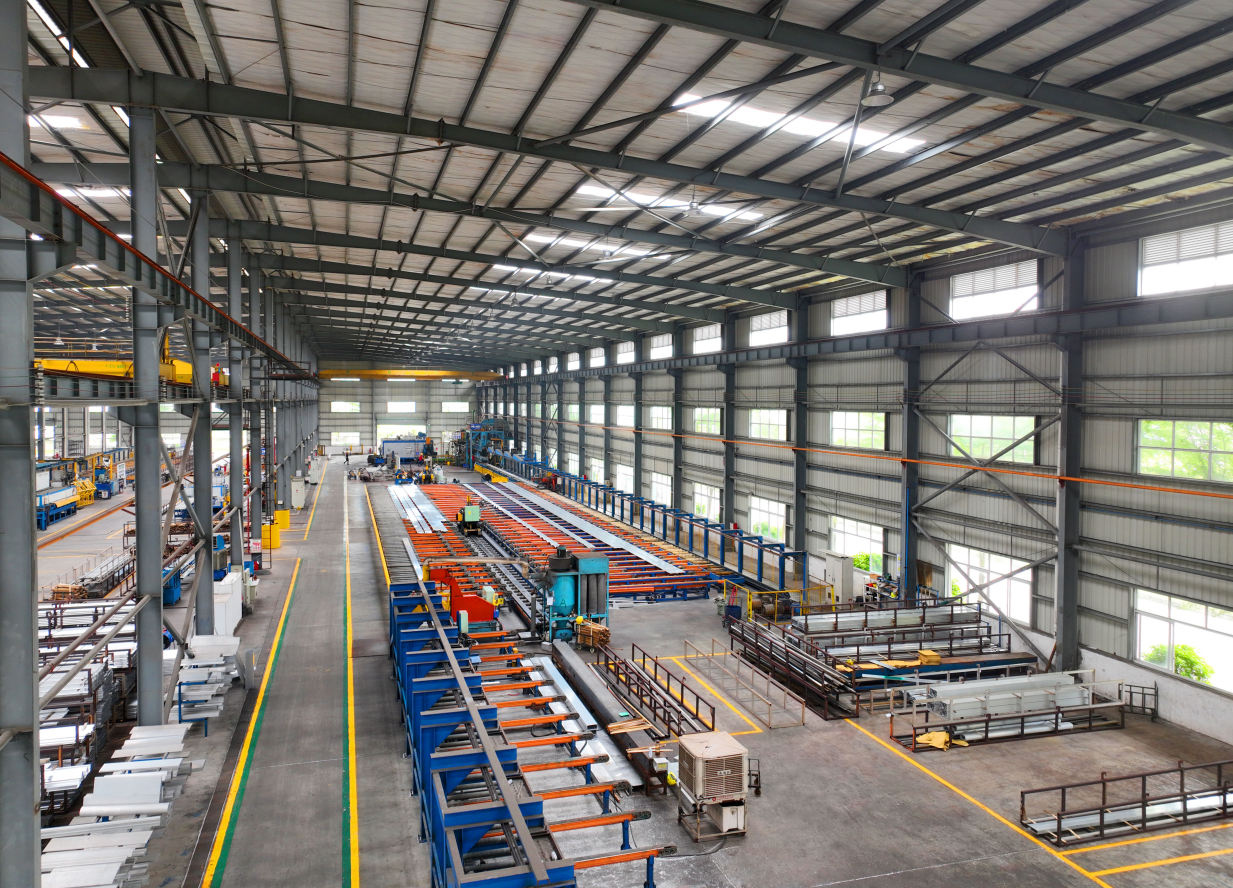
Understanding why variations occur requires examining the extrusion process. Factors like thermal expansion of aluminum billets, extrusion die friction over time, and cooling rates can influence final geometry. High-grade systems utilize primary 6063-T5 virgin aluminum alloy to mitigate bending, twisting, and structural instability during high-volume production runs.
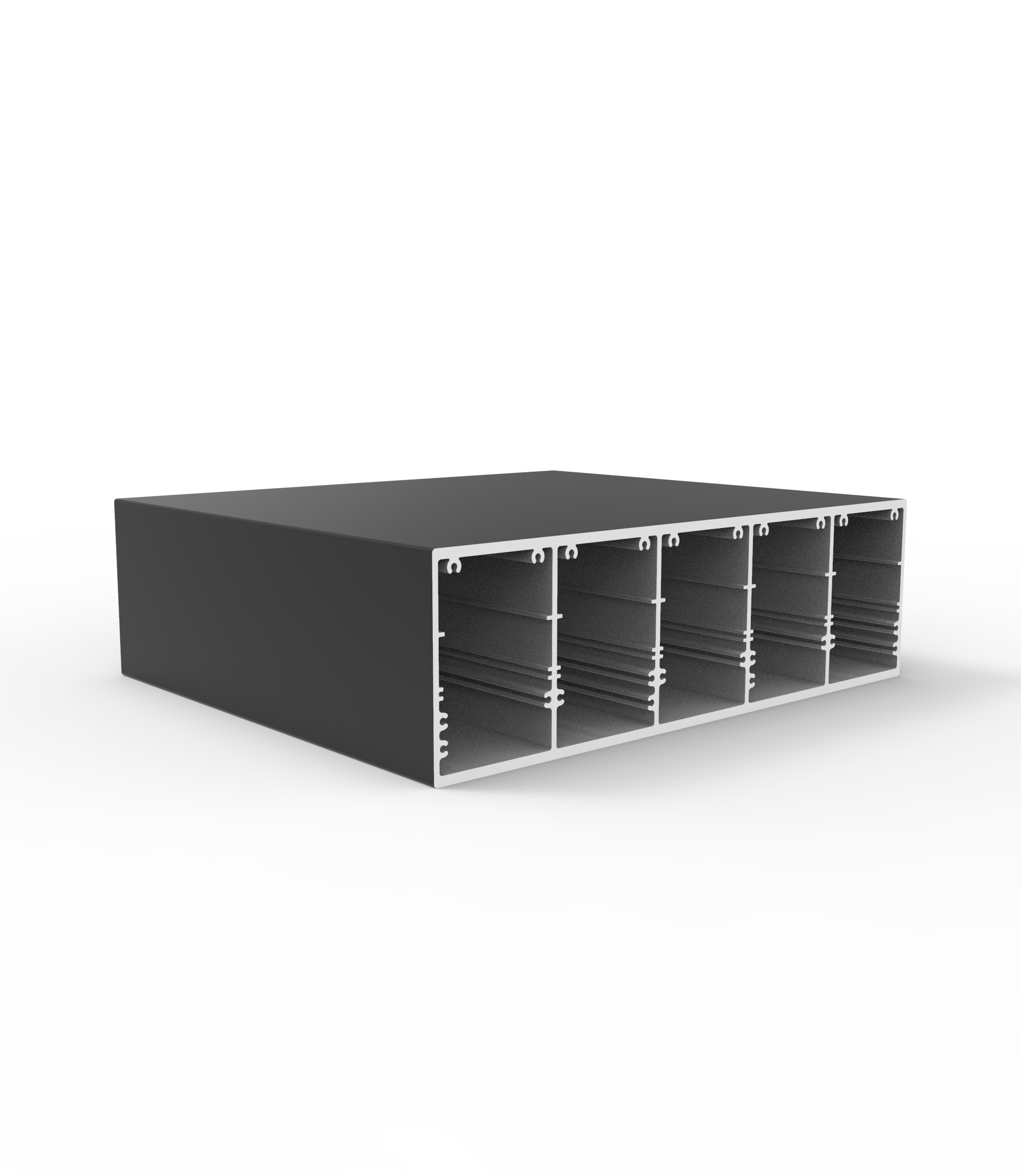
Rigorous quality protocols rely on accredited testing infrastructure. Facilities equipped with CNAS accreditation (e.g., CNAS L 10434) perform comprehensive checks on web thickness, tensile strength, and finish adhesion. Strict adherence to international certifications—such as Qualicoat (3419) and SIRIM (PC003807)—ensures powder-coated and fluorocarbon surface treatments resist severe weathering, salt spray, and UV degradation.
Practical execution of these tolerances is critical in real-world environments. For example, during the construction of The Wan Guo Building Project on Batam Island, precise profile tolerances allowed perfect multi-point lock alignment and secure glue-injected corner joints, effectively safeguarding the building envelope against extreme weather conditions.
Core Best Practices & Technical Focus Areas
- Wall Thickness Rigor: Production extrusions must mirror the approved golden sample, holding wall thickness variation within ±0.1 mm to guarantee load-bearing capacity.
- Surface Finish Uniformity: Anodized and powder-coated profiles should comply with Qualicoat guidelines, maintaining color variance at ΔE ≤ 1.5 to avoid visible shading discrepancies.
- Sealing & Hardware Alignment: Weatherstrip retention tracks and corner bracket slots must match initial sample dimensions exactly to ensure air and water tightness.
- Broad Architectural Applicability: These variance standards apply across high-end Aluminum Sliding Windows, Aluminium Sliding Doors, and structural curtain wall systems.
Frequently Asked Questions (FAQ)
Q1: Why do slight dimensional differences occur between a sample and mass-produced sliding window profiles?
Extrusion die wear, thermal expansion of heated aluminum billets, and variations in extrusion speed cause minor dimensional fluctuations. Automated quality controls constrain these variations within standard limits (±0.15 mm to ±0.3 mm) to ensure window hardware and glass fit seamlessly.
Q2: What coating and color variance is allowable for bulk window profile orders?
A color difference threshold of ΔE ≤ 1.5 is visually imperceptible and acceptable under international standards. Powder-coated and anodized surfaces certified under Qualicoat guidelines maintain film thickness and gloss levels matching pre-production samples.
Q3: How are air-tightness and water-tightness verified when shifting to mass production?
Bulk profiles undergo laboratory sampling according to ISO 9001 quality management procedures. Profile groove dimensions for EPDM gaskets and sealants are inspected against sample drawings to preserve air permeability and water resistance ratings.
Conclusion & Strategic Procurement Advice
Minimizing discrepancy between sample profiles and bulk production requires defined tolerance specifications from the outset. Mandating wall thickness accuracy (±0.1 mm) and standardized finish criteria minimizes assembly issues on site. Working with vertically integrated manufacturers who oversee the complete production chain mitigates quality risks across volume orders, supporting standard lead times of 15-20 days with minimum order quantities of 3 tons for custom extrusions. For engineering consultations or technical inquiries, contact us at xh@xinhealuminium.com.
About Our Enterprise
Guangdong Xinhe Aluminium Co., Ltd, founded in 1998, operates an expansive 666,670 sqm manufacturing base with 1,200 skilled employees. Featuring 60 modern extrusion lines capable of producing 200,000 tons annually, the enterprise specializes in premium architectural, residential, and industrial aluminum extrusions. Backed by a CNAS-accredited national laboratory (CNAS L 10434), Xinhe holds ISO 9001, ISO 14001, Qualicoat, and SIRIM certifications, exporting high-performance aluminum solutions globally across Asia, Europe, and Africa.

REPORT