







-
 Agriculture
-
 Health-Care
-
 Environment
-
 Construction-Real-Estate
-
 Tools-Hardware
-
 Home-Garden
-
 Furniture
-
 Luggage-Bags-Cases
-
 Medical-devices-Supplies
-
 Gifts-Crafts
-
 Sports-Entertainment
-
 Food-Beverage
-
 Vehicles-Transportation
-
 Power-Transmission
-
 Material-Handling
-
 Renewable-Energy
-
 Safety
-
 Testing-Instrument-Equipment
-
 Construction-Building-Machinery
-
 Pet-Supplies
-
 Personal-Care-Household-Cleaning
-
 Vehicle-Accessories-Electronics-Tools
-
 School-Office-Supplies
-
 Packaging-Printing
-
 Mother-Kids-Toys
-
 Business-Services
-
 Commercial-Equipment-Machinery
-
 Apparel-Accessories
-
 Security
-
 Shoes-Accessories
-
 Vehicle-Parts-Accessories
-
 Jewelry-Eyewear-Watches-Accessories
-
 Lights-Lighting
-
 Fabric-Textile-Raw-Material
-
 Fabrication-Services
-
 Industrial-Machinery
-
 Consumer-Electronics
-
 Electrical-Equipment-Supplies
-
 Electronic-Components-Accessories-Telecommunications
-
 Home-Appliances
-
 Beauty
-
 Chemicals
-
 Rubber-Plastics
-
 Metals-Alloys


























































































































































































































































































































































































































































































































































































- Masonry Materials
- Curtain Walls & Accessories
- Earthwork Products
- Fireproofing Materials
- Heat Insulation Materials
- Plastic Building Materials
- Building Boards
- Soundproofing Materials
- Timber
- Waterproofing Materials
- Balustrades & Handrails
- Bathroom & Kitchen
- Flooring & Accessories
- Tiles & Accessories
- Door, Window & Accessories
- Fireplaces & Stoves
- Floor Heating Systems & Parts
- Stairs & Stair Parts
- Ceilings
- Elevators & Escalators
- Stone
- Countertops, Vanity Tops & Table Tops
- Mosaics
- Metal Building Materials
- Multifunctional Materials
- Ladders & Scaffoldings
- Mouldings
- Corner Guards
- Decorative Films
- Formwork
- Building & Industrial Glass
- Other Construction & Real Estate
- Wallpapers/Wall panels
- HVAC System & Parts
- Outdoor Facilities
- Prefabricated Buildings
- Festive & Party Supplies
- Bathroom Products
- Household Sundries
- Rain Gear
- Garden Supplies
- Household Cleaning Tools & Accessories
- Lighters & Smoking Accessories
- Home Storage & Organization
- Household Scales
- Smart Home Improvement
- Home Textiles
- Kitchenware
- Drinkware & Accessories
- Dinnerware, Coffee & Wine
- Home Decor
- Golf
- Fitness & Body Building
- Amusement Park Facilities
- Billiards, Board Game,Coin Operated Games
- Musical Instruments
- Outdoor Affordable Luxury Sports
- Camping & Hiking
- Fishing
- Sports Safety&Rehabilitation
- Ball Sports Equipments
- Water Sports
- Winter Sports
- Luxury Travel Equipments
- Sports Shoes, Bags & Accessories
- Cycling
- Other Sports & Entertainment Products
- Artificial Grass&Sports Flooring&Sports Court Equipment
- Scooters
- Food Ingredients
- Honey & Honey Products
- Snacks
- Nuts & Kernels
- Seafood
- Plant & Animal Oil
- Beverages
- Fruit & Vegetable Products
- Frog & Escargot
- Bean Products
- Egg Products
- Dairy Products
- Seasonings & Condiments
- Canned Food
- Instant Food
- Baked Goods
- Other Food & Beverage
- Meat & Poultry
- Confectionery
- Grain Products
- Feminie Care
- Hair Care & Styling
- Body Care
- Hands & Feet Care
- Hygiene Products
- Men's Grooming
- Laundry Cleaning Supplies
- Travel Size & Gift Sets
- Room Deodorizers
- Other Personal Care Products
- Pest Control Products
- Special Household Cleaning
- Floor Cleaning
- Kitchen & Bathroom Cleaning
- Oral Care
- Bath Supplies
- Yellow Pages
- Correction Supplies
- Office Binding Supplies
- Office Cutting Supplies
- Board Erasers
- Office Adhesives & Tapes
- Education Supplies
- Pencil Cases & Bags
- Notebooks & Writing Pads
- File Folder Accessories
- Calendars
- Writing Accessories
- Commercial Office Supplies
- Pencil Sharpeners
- Pens
- Letter Pad/Paper
- Paper Envelopes
- Desk Organizers
- Pencils
- Markers & Highlighters
- Filing Products
- Art Supplies
- Easels
- Badge Holder & Accessories
- Office Paper
- Printer Supplies
- Book Covers
- Other Office & School Supplies
- Stationery Set
- Boards
- Clipboards
- Stamps
- Drafting Supplies
- Stencils
- Electronic Dictionary
- Books
- Map
- Magazines
- Calculators
- Baby & Toddler Toys
- Educational Toys
- Classic Toys
- Dress Up & Pretend Play
- Toy Vehicle
- Stuffed Animals & Plush Toys
- Outdoor Toys & Structures
- Balloons & Accessories
- Baby Food
- Children's Clothing
- Baby Supplies & Products
- Maternity Clothes
- Kids Shoes
- Baby Care
- Novelty & Gag Toys
- Dolls & Accessories
- Puzzle & Games
- Blocks & Model Building Toys
- Toddler Clothing
- Baby Clothing
- Kids' Luggage & Bags
- Arts, Crafts & DIY Toys
- Action & Toy Figures
- Baby Appliances
- Hobbies & Models
- Remote Control Toys
- Promotional Toys
- Pregnancy & Maternity
- Hygiene Products
- Kid's Textile&Bedding
- Novelty & Special Use
- Toy Weapons
- Baby Gifts
- Baby Storage & Organization
- Auto Drive Systems
- ATV/UTV Parts & Accessories
- Marine Parts & Accessories
- Other Auto Parts
- Trailer Parts & Accessories
- Auto Transmission Systems
- Train Parts & Accessories
- Universal Parts
- Railway Parts & Accessories
- Auto Brake Systems
- Aviation Parts & Accessories
- Truck Parts & Accessories
- Auto Suspension Systems
- Auto Lighting Systems
- New Energy Vehicle Parts & Accessories
- Auto Steering Systems
- Wheels, Tires & Accessories
- Bus Parts & Accessories
- Auto Performance Parts
- Cooling System
- Go-Kart & Kart Racer Parts & Accessories
- Air Conditioning Systems
- Heavy Duty Vehicle Parts & Accessories
- Auto Electrical Systems
- Auto Body Systems
- Auto Engine Systems
- Container Parts & Accessories
- Motorcycle Parts & Accessories
- Refrigeration & Heat Exchange Equipment
- Machine Tool Equipment
- Food & Beverage Machinery
- Agricultural Machinery & Equipment
- Apparel & Textile Machinery
- Chemical Machinery
- Packaging Machines
- Paper Production Machinery
- Plastic & Rubber Processing Machinery
- Industrial Robots
- Electronic Products Machinery
- Metal & Metallurgy Machinery
- Woodworking Machinery
- Home Product Manufacturing Machinery
- Machinery Accessories
- Environmental Machinery
- Machinery Service
- Electrical Equipment Manufacturing Machinery
- Industrial Compressors & Parts
- Tobacco & Cigarette Machinery
- Production Line
- Used Industrial Machinery
- Electronics Production Machinery
- Other Machinery & Industrial Equipment
- Camera, Photo & Accessories
- Portable Audio, Video & Accessories
- Television, Home Audio, Video & Accessories
- Video Games & Accessories
- Mobile Phone & Accessories
- Electronic Publications
- Earphone & Headphone & Accessories
- Speakers & Accessories
- Smart Electronics
- TV Receivers & Accessories
- Mobile Phone & Computer Repair Parts
- Chargers, Batteries & Power Supplies
- Used Electronics
- VR, AR, MR Hardware & Software
- Projectors & Presentation Equipments
- Other Consumer Electronics
- Cables & Commonly Used Accessories
- Computer Hardware & Software
- Displays, Signage and Optoelectronics
- Discrete Semiconductors
- Wireless & IoT Module and Products
- Telecommunications
- Connectors, Terminals & Accessories
- Development Boards, Electronic Modules and Kits
- Circuit Protection
- Sensors
- Isolators
- Audio Components and Products
- Integrated Circuits
- Power Supplies
- Relays
- RF, Microwave and RFID
- Electronic Accessories & Supplies
- Passive Components
- PCB & PCBA
- Air Quality Appliances
- Home Appliance Parts
- Heating & Cooling Appliances
- Small Kitchen Appliances
- Laundry Appliances
- Water Heaters
- Water Treatment Appliances
- Refrigerators & Freezers
- Personal Care & Beauty Appliances
- Major Kitchen Appliances
- Cleaning Appliances
- Second-hand Appliances
- Smart Home Appliances
- Other Home Appliances
- Energy Chemicals
- Inorganic Chemicals
- Basic Organic Chemicals
- Agrochemicals
- Admixture & Additives
- Catalysts & Chemical Auxiliary Agents
- Pigments & Dyestuff
- Coating & Paint
- Daily Chemicals
- Polymer
- Organic Intermediate
- Adhesives & Sealants
- Chemical Waste
- Biological Chemical Products
- Surface Treatment Chemicals
- Painting & Coating
- Chemical Reagents
- Flavor & Fragrance
- Non-Explosive Demolition Agents
- Other Chemicals
- Custom Chemical Services

Sustainable Material Options for Modern Bathroom Accessories
Polyurethane (PU), including self-skinning PU, and EVA are the principal non-metal materials identified for bathroom accessories in the available product information. These materials are used in bathtub pillows, shower seats, toilet armrests, cushions, and backrests. PU is noted for its softness, elasticity, hydrolysis resistance, wear resistance, and ability to withstand both hot and cold conditions. However, the W777 toilet armrest combines PU with steel, so it should not be classified as a completely metal-free product.
Material Options at a Glance
Bathroom accessory manufacturers are using polymer-based materials in areas where comfort, flexibility, and resistance to moisture are important. PU is the most widely represented option in the supplied data, while EVA is specifically associated with pillow products.
- PU is used for bathtub pillows, shower seats, toilet armrests, backrests, cushions, and related bathroom products.
- EVA is identified as a material for pillows, with SGS testing recorded for an EVA pillow.
- PU products are described as soft, colourful, elastic, hydrolysis-resistant, wear-resistant, and resistant to hot and cold environments.
- Applications include residential bathrooms, hotels, inns, spas, wellness centres, hospitals, and beauty salons.
How PU and EVA Support Bathroom Applications
Polyurethane for Comfort and Support
PU can provide a soft, resilient contact surface while retaining the structural flexibility required for repeated use. These characteristics make it suitable for accessories that support or directly contact the user, including bathtub pillows, shower seats, toilet armrests, and backrests. The documented resistance to hydrolysis, abrasion, temperature changes, and wear is particularly relevant in damp bathroom environments.
EVA for Pillow Products
EVA is another polymer material listed in the supplied product and certification information. It is associated with pillow applications, and an EVA pillow is included in the SGS testing records. The available data confirms the material and its use, but does not state a recycled-content ratio, biodegradability result, life-cycle assessment, or quantified environmental advantage over metal.
Understanding Hybrid Construction
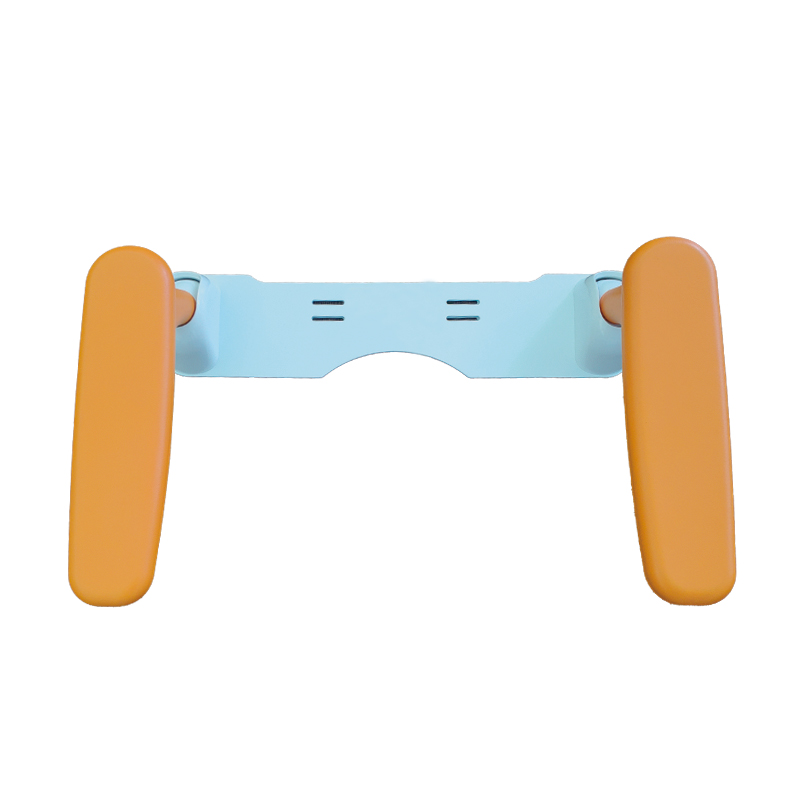
The W777 toilet armrest demonstrates that replacing metal in the user-facing area does not necessarily mean eliminating metal from the entire product. Its construction uses polyurethane together with steel. The PU provides the contact and support surface, while steel remains part of the supporting framework. The armrest is designed for standard toilet sizes, although its steel component may need adjustment for smart toilet installations.
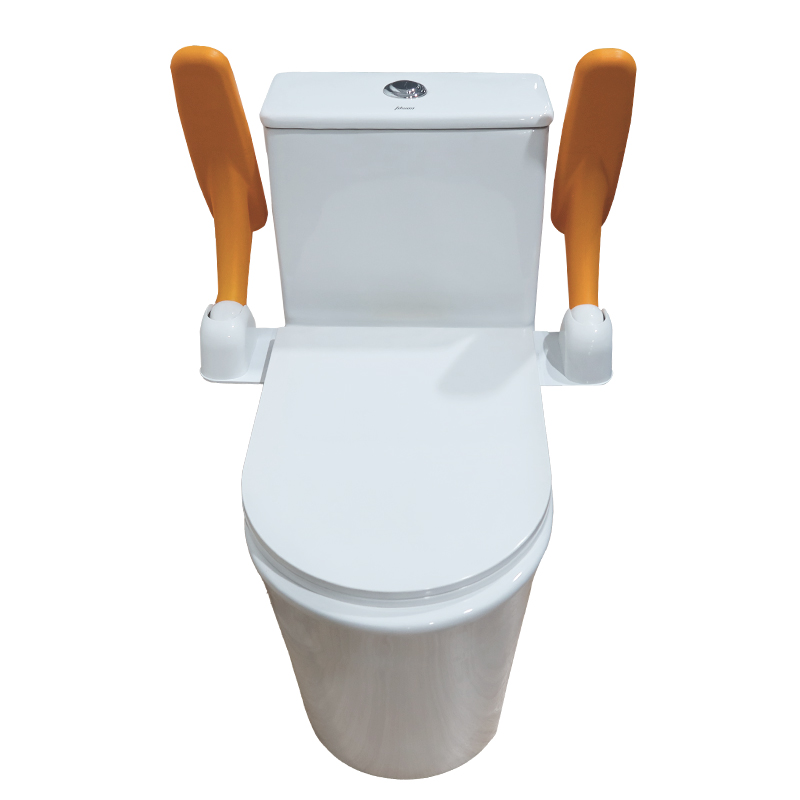
The listed dimensions of the W777 are W566*D375*H249mm, with a manual measurement tolerance of 1-2cm. Buyers should therefore distinguish between a product with a PU exterior or user-contact component and a genuinely metal-free design. The current information does not confirm metal-free construction for the W777 or for the broader bathroom accessory range.
Certification and Supply Considerations
The supplied records list REACH coverage for bathtub pillow X12 and polyurethane accessories, RoHS coverage for bathtub pillows and PU accessories, and CE coverage for bathtub pillows. ISO9001 is listed across the product range. These certifications indicate documented compliance areas, but they do not by themselves prove that PU or EVA has a lower total environmental impact than metal.
A cooperation case also describes more than ten years of collaboration with a United States importer or distributor on shower seat products. The reported experience includes production coordination, shipment rescheduling, quality issue resolution, raw-material price discussions, and support for project, wholesale, and retail orders.
Comparison of Materials and Constructions
| Material or construction | Documented uses and characteristics |
|---|---|
| Polyurethane (PU) | Used in bathtub pillows, shower seats, toilet armrests, backrests, and cushions; described as soft, elastic, hydrolysis-resistant, wear-resistant, and resistant to hot and cold conditions. |
| EVA | Identified for pillow products, including an EVA pillow associated with SGS certification records. |
| PU combined with steel | Used in the W777 toilet armrest; suitable for normal toilet sizes, with potential steel-part changes for smart toilets. |
| Fully metal-free construction | Not confirmed by the supplied information for the W777 or the wider bathroom accessory portfolio. |
Frequently Asked Questions
What materials are being used instead of metal in these bathroom accessories?
The available information identifies PU and EVA as non-metal materials used in selected bathroom accessories. It does not claim that either material replaces metal across every product or application.
Is the W777 toilet armrest made solely from PU?
No. The W777 is described as a polyurethane-and-steel product. Its steel section may also need revision when the armrest is installed on a smart toilet.
Can PU and EVA be confirmed as more sustainable than metal?
Not from the supplied data alone. The information covers material properties, applications, and selected certifications, but does not include recycled-content figures, life-cycle assessments, biodegradability data, or a measured comparison with metal.
Conclusion
PU and EVA are the non-metal material options documented for the bathroom accessories discussed here. PU is especially suitable for soft-touch and load-supporting products such as pillows, seats, armrests, cushions, and backrests, while EVA is identified for pillow applications. When selecting a product, buyers should verify whether the material is used only on the exterior or whether the complete structure is metal-free.
HTH Household Wares Manufacturer provides a PU product design, manufacturing, and sales chain. Its stated business model includes a minimum order quantity of one piece and delivery in approximately 2-25 days. For technical details, product customization, or supply support, contact tongxin@tongxinyz.com.
About the Manufacturer
Foshan City Heart to Heart Household Wares Manufacturer focuses on the design, manufacture, and sale of PU products. Its portfolio includes bathtub pillows, backrests, cushions, armrests, shower chairs, medical instrument accessories, beauty and sports equipment components, furniture parts, and automotive parts. Founded in 2002, the company operates a factory of approximately 5000 sqm and develops more than 10 new products each month. Its listed certifications include ISO9001 and REACH, and it serves customers across several industries.
REPORT