







-
 Agriculture
-
 Health-Care
-
 Environment
-
 Construction-Real-Estate
-
 Tools-Hardware
-
 Home-Garden
-
 Furniture
-
 Luggage-Bags-Cases
-
 Medical-devices-Supplies
-
 Gifts-Crafts
-
 Sports-Entertainment
-
 Food-Beverage
-
 Vehicles-Transportation
-
 Power-Transmission
-
 Material-Handling
-
 Renewable-Energy
-
 Safety
-
 Testing-Instrument-Equipment
-
 Construction-Building-Machinery
-
 Pet-Supplies
-
 Personal-Care-Household-Cleaning
-
 Vehicle-Accessories-Electronics-Tools
-
 School-Office-Supplies
-
 Packaging-Printing
-
 Mother-Kids-Toys
-
 Business-Services
-
 Commercial-Equipment-Machinery
-
 Apparel-Accessories
-
 Security
-
 Shoes-Accessories
-
 Vehicle-Parts-Accessories
-
 Jewelry-Eyewear-Watches-Accessories
-
 Lights-Lighting
-
 Fabric-Textile-Raw-Material
-
 Fabrication-Services
-
 Industrial-Machinery
-
 Consumer-Electronics
-
 Electrical-Equipment-Supplies
-
 Electronic-Components-Accessories-Telecommunications
-
 Home-Appliances
-
 Beauty
-
 Chemicals
-
 Rubber-Plastics
-
 Metals-Alloys


























































































































































































































































































































































































































































































































































































- Masonry Materials
- Curtain Walls & Accessories
- Earthwork Products
- Fireproofing Materials
- Heat Insulation Materials
- Plastic Building Materials
- Building Boards
- Soundproofing Materials
- Timber
- Waterproofing Materials
- Balustrades & Handrails
- Bathroom & Kitchen
- Flooring & Accessories
- Tiles & Accessories
- Door, Window & Accessories
- Fireplaces & Stoves
- Floor Heating Systems & Parts
- Stairs & Stair Parts
- Ceilings
- Elevators & Escalators
- Stone
- Countertops, Vanity Tops & Table Tops
- Mosaics
- Metal Building Materials
- Multifunctional Materials
- Ladders & Scaffoldings
- Mouldings
- Corner Guards
- Decorative Films
- Formwork
- Building & Industrial Glass
- Other Construction & Real Estate
- Wallpapers/Wall panels
- HVAC System & Parts
- Outdoor Facilities
- Prefabricated Buildings
- Festive & Party Supplies
- Bathroom Products
- Household Sundries
- Rain Gear
- Garden Supplies
- Household Cleaning Tools & Accessories
- Lighters & Smoking Accessories
- Home Storage & Organization
- Household Scales
- Smart Home Improvement
- Home Textiles
- Kitchenware
- Drinkware & Accessories
- Dinnerware, Coffee & Wine
- Home Decor
- Golf
- Fitness & Body Building
- Amusement Park Facilities
- Billiards, Board Game,Coin Operated Games
- Musical Instruments
- Outdoor Affordable Luxury Sports
- Camping & Hiking
- Fishing
- Sports Safety&Rehabilitation
- Ball Sports Equipments
- Water Sports
- Winter Sports
- Luxury Travel Equipments
- Sports Shoes, Bags & Accessories
- Cycling
- Other Sports & Entertainment Products
- Artificial Grass&Sports Flooring&Sports Court Equipment
- Scooters
- Food Ingredients
- Honey & Honey Products
- Snacks
- Nuts & Kernels
- Seafood
- Plant & Animal Oil
- Beverages
- Fruit & Vegetable Products
- Frog & Escargot
- Bean Products
- Egg Products
- Dairy Products
- Seasonings & Condiments
- Canned Food
- Instant Food
- Baked Goods
- Other Food & Beverage
- Meat & Poultry
- Confectionery
- Grain Products
- Feminie Care
- Hair Care & Styling
- Body Care
- Hands & Feet Care
- Hygiene Products
- Men's Grooming
- Laundry Cleaning Supplies
- Travel Size & Gift Sets
- Room Deodorizers
- Other Personal Care Products
- Pest Control Products
- Special Household Cleaning
- Floor Cleaning
- Kitchen & Bathroom Cleaning
- Oral Care
- Bath Supplies
- Yellow Pages
- Correction Supplies
- Office Binding Supplies
- Office Cutting Supplies
- Board Erasers
- Office Adhesives & Tapes
- Education Supplies
- Pencil Cases & Bags
- Notebooks & Writing Pads
- File Folder Accessories
- Calendars
- Writing Accessories
- Commercial Office Supplies
- Pencil Sharpeners
- Pens
- Letter Pad/Paper
- Paper Envelopes
- Desk Organizers
- Pencils
- Markers & Highlighters
- Filing Products
- Art Supplies
- Easels
- Badge Holder & Accessories
- Office Paper
- Printer Supplies
- Book Covers
- Other Office & School Supplies
- Stationery Set
- Boards
- Clipboards
- Stamps
- Drafting Supplies
- Stencils
- Electronic Dictionary
- Books
- Map
- Magazines
- Calculators
- Baby & Toddler Toys
- Educational Toys
- Classic Toys
- Dress Up & Pretend Play
- Toy Vehicle
- Stuffed Animals & Plush Toys
- Outdoor Toys & Structures
- Balloons & Accessories
- Baby Food
- Children's Clothing
- Baby Supplies & Products
- Maternity Clothes
- Kids Shoes
- Baby Care
- Novelty & Gag Toys
- Dolls & Accessories
- Puzzle & Games
- Blocks & Model Building Toys
- Toddler Clothing
- Baby Clothing
- Kids' Luggage & Bags
- Arts, Crafts & DIY Toys
- Action & Toy Figures
- Baby Appliances
- Hobbies & Models
- Remote Control Toys
- Promotional Toys
- Pregnancy & Maternity
- Hygiene Products
- Kid's Textile&Bedding
- Novelty & Special Use
- Toy Weapons
- Baby Gifts
- Baby Storage & Organization
- Auto Drive Systems
- ATV/UTV Parts & Accessories
- Marine Parts & Accessories
- Other Auto Parts
- Trailer Parts & Accessories
- Auto Transmission Systems
- Train Parts & Accessories
- Universal Parts
- Railway Parts & Accessories
- Auto Brake Systems
- Aviation Parts & Accessories
- Truck Parts & Accessories
- Auto Suspension Systems
- Auto Lighting Systems
- New Energy Vehicle Parts & Accessories
- Auto Steering Systems
- Wheels, Tires & Accessories
- Bus Parts & Accessories
- Auto Performance Parts
- Cooling System
- Go-Kart & Kart Racer Parts & Accessories
- Air Conditioning Systems
- Heavy Duty Vehicle Parts & Accessories
- Auto Electrical Systems
- Auto Body Systems
- Auto Engine Systems
- Container Parts & Accessories
- Motorcycle Parts & Accessories
- Refrigeration & Heat Exchange Equipment
- Machine Tool Equipment
- Food & Beverage Machinery
- Agricultural Machinery & Equipment
- Apparel & Textile Machinery
- Chemical Machinery
- Packaging Machines
- Paper Production Machinery
- Plastic & Rubber Processing Machinery
- Industrial Robots
- Electronic Products Machinery
- Metal & Metallurgy Machinery
- Woodworking Machinery
- Home Product Manufacturing Machinery
- Machinery Accessories
- Environmental Machinery
- Machinery Service
- Electrical Equipment Manufacturing Machinery
- Industrial Compressors & Parts
- Tobacco & Cigarette Machinery
- Production Line
- Used Industrial Machinery
- Electronics Production Machinery
- Other Machinery & Industrial Equipment
- Camera, Photo & Accessories
- Portable Audio, Video & Accessories
- Television, Home Audio, Video & Accessories
- Video Games & Accessories
- Mobile Phone & Accessories
- Electronic Publications
- Earphone & Headphone & Accessories
- Speakers & Accessories
- Smart Electronics
- TV Receivers & Accessories
- Mobile Phone & Computer Repair Parts
- Chargers, Batteries & Power Supplies
- Used Electronics
- VR, AR, MR Hardware & Software
- Projectors & Presentation Equipments
- Other Consumer Electronics
- Cables & Commonly Used Accessories
- Computer Hardware & Software
- Displays, Signage and Optoelectronics
- Discrete Semiconductors
- Wireless & IoT Module and Products
- Telecommunications
- Connectors, Terminals & Accessories
- Development Boards, Electronic Modules and Kits
- Circuit Protection
- Sensors
- Isolators
- Audio Components and Products
- Integrated Circuits
- Power Supplies
- Relays
- RF, Microwave and RFID
- Electronic Accessories & Supplies
- Passive Components
- PCB & PCBA
- Air Quality Appliances
- Home Appliance Parts
- Heating & Cooling Appliances
- Small Kitchen Appliances
- Laundry Appliances
- Water Heaters
- Water Treatment Appliances
- Refrigerators & Freezers
- Personal Care & Beauty Appliances
- Major Kitchen Appliances
- Cleaning Appliances
- Second-hand Appliances
- Smart Home Appliances
- Other Home Appliances
- Energy Chemicals
- Inorganic Chemicals
- Basic Organic Chemicals
- Agrochemicals
- Admixture & Additives
- Catalysts & Chemical Auxiliary Agents
- Pigments & Dyestuff
- Coating & Paint
- Daily Chemicals
- Polymer
- Organic Intermediate
- Adhesives & Sealants
- Chemical Waste
- Biological Chemical Products
- Surface Treatment Chemicals
- Painting & Coating
- Chemical Reagents
- Flavor & Fragrance
- Non-Explosive Demolition Agents
- Other Chemicals
- Custom Chemical Services

Understanding Auto Body Part MOQs: Why Small Bumper Orders Cost More Per Unit
How Minimum Order Quantities Impact Per-Unit Costs in Bumper Procurement
In the automotive aftermarket, buyers frequently notice that requesting a smaller Minimum Order Quantity (MOQ) for components like upper bumpers and front grilles leads to a higher price per item. This price difference stems directly from basic manufacturing economics: fixed setup expenses—such as tooling mounting, injection machine calibration, and raw material switching—remain constant regardless of the total batch size. When purchasing larger volumes, these overhead expenses are spread over a greater number of parts, enabling suppliers to offer competitive tiered pricing discounts.
The Production Mechanics Driving Unit Pricing Differences
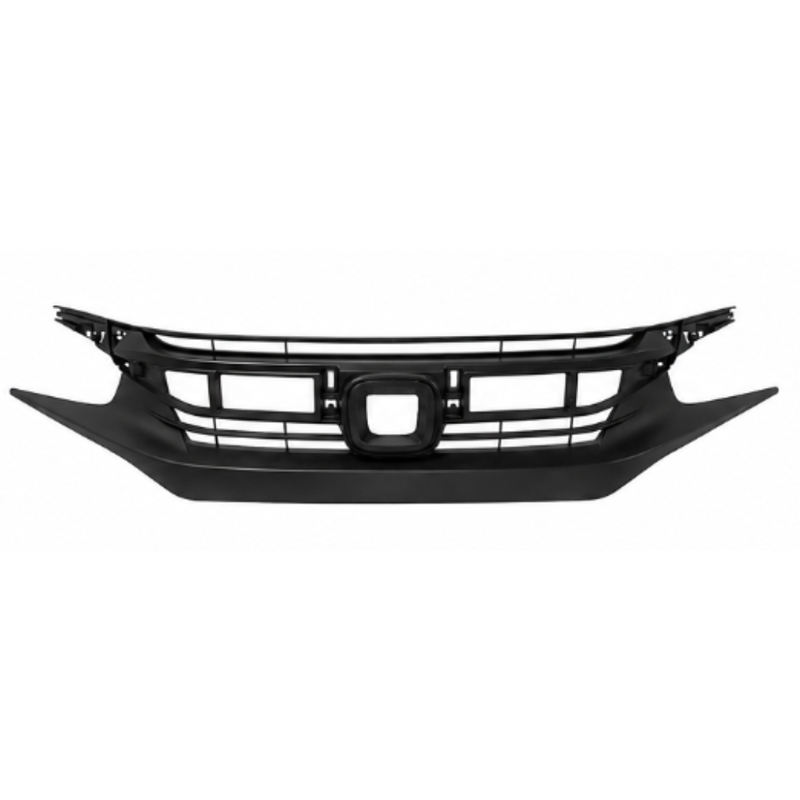
Manufacturing high-precision exterior auto components—including car front grilles, upper bumper covers, engine hoods, and fenders—requires specialized tooling and heavy industrial machinery. Commencing a production run involves setup procedures that demand significant labor and time. When an order consists of only 1 to 5 pieces, these unamortized setup costs represent a major portion of each unit's total price.
Quality control procedures further contribute to fixed operational overhead. Comprehensive inspections—such as Coordinate Measuring Machine (CMM) dimensional checks, surface finish evaluations, and paint durability testing—demand identical labor resources whether evaluating 5 units or 500 units. Additionally, packaging and handling individual low-volume orders require specialized export prep, incurring higher proportional costs compared to bulk container shipments.
Key Sourcing Insights & Operational Trade-offs
- Fixed Overhead Amortization: Small batch runs absorb disproportionate costs related to equipment calibration, resin changeovers, and tooling preparation.
- Efficiency through Volume: High-capacity injection molding optimizes raw material utilization, yielding lower per-piece manufacturing costs for auto body parts.
- Cash Flow vs. Unit Savings: Flexible low-MOQ options (1–5 PCS) allow cross-border e-commerce sellers and repair shops to minimize inventory holding risks, even if the per-unit price is higher.
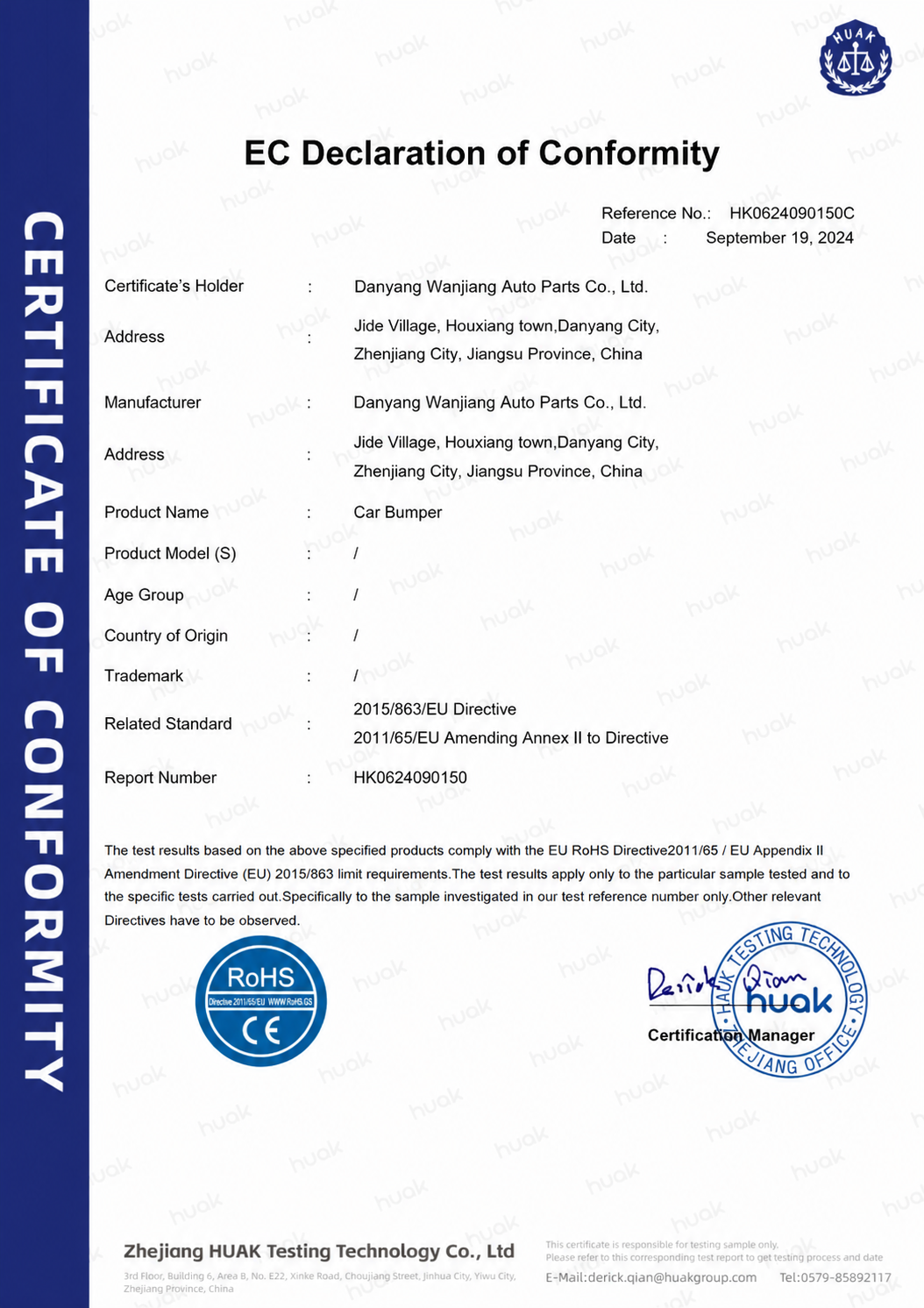
- Uncompromised Standards: Smaller order batches undergo the same rigorous quality checks and retain full compliance with international standards like CE (Certificate HK0624090150C) and EPR requirements.
Logistics Strategies: Balancing Shipping Modes with Order Sizes
International buyers across North America and Europe must evaluate logistics methods alongside factory unit costs. Shipping small sample orders via air freight or express courier provides speed and mitigates warehouse inventory risks. Conversely, Full Container Load (FCL) sea freight unlocks maximum factory volume discounts while dramatically lowering per-unit transport expenses.

Order Volume vs. Logistics & Cost Matrix
| MOQ Level / Tier | Unit Price Impact | Production & Dispatch Time | Logistics Mode | Ideal Buyer Scenario |
|---|---|---|---|---|
| Low MOQ (1–5 PCS) | Highest (Unamortized setup costs) | Dispatched within 7 days (In-stock items) | Express Courier / Air Cargo / LCL | Independent body shops, niche e-commerce retailers |
| Medium Volume (LCL) | Moderate (Partial economies of scale) | 7–14 days dispatch timeframe | Ocean LCL / Rail Freight | Regional auto part distributors, collision networks |
| Full Container (FCL) | Lowest (Optimal volume pricing) | Efficient container loading within 1–2 weeks | Ocean FCL Freight | Wholesale importers, Tier-1 aftermarket brands |
Frequently Asked Questions
Q1: Why are unit prices higher when ordering lower MOQs of upper bumpers?
Fixed operational costs—including mold mounting, machine downtime during setup, CMM inspection, and packaging—are divided across fewer parts, raising the cost allocated to each unit.
Q2: What is the dispatch lead time for ready-to-ship body parts?
In-stock replacement components such as bumpers, front grilles, hoods, and fenders are usually prepared and dispatched within 7 days.
Q3: Are low-MOQ products held to lower quality standards?
No. Regardless of order volume, all components undergo identical quality assurance checks (CMM measurement, visual inspection, paint testing) and hold full CE and EPR certifications.
Strategic Sourcing Recommendations
Automotive buyers must strike a balance between inventory holding costs and bulk procurement savings. While smaller orders protect working capital for urgent collision repairs or niche markets, bulk orders deliver significant unit cost savings and optimized logistics efficiency. Utilizing versatile payment options—such as T/T, D/P, L/C, or Alipay—alongside tailored shipping options allows businesses to adapt effectively. For customized technical quotes or inquiry support, contact our team at sales01@cnkebel.com.
About Danyang Wanjiang Auto Parts Co., Ltd.
Danyang Wanjiang Auto Parts Co., Ltd. (brand name KEBEL) is a premier manufacturer and exporter of automotive body components situated in Danyang, Jiangsu Province. Operating with a workforce of 80 employees across a 10,000 square meter facility, the company brings 18 years of OEM/ODM expertise to crafting bumper assemblies, grilles, headlights, hoods, and fenders for American and German vehicle lines. Generating over 50 million USD in annual output and exporting more than 500 containers annually to American and European markets, all products strictly comply with CE and EPR certification standards. 
REPORT