







-
 Agriculture
-
 Health-Care
-
 Environment
-
 Construction-Real-Estate
-
 Tools-Hardware
-
 Home-Garden
-
 Furniture
-
 Luggage-Bags-Cases
-
 Medical-devices-Supplies
-
 Gifts-Crafts
-
 Sports-Entertainment
-
 Food-Beverage
-
 Vehicles-Transportation
-
 Power-Transmission
-
 Material-Handling
-
 Renewable-Energy
-
 Safety
-
 Testing-Instrument-Equipment
-
 Construction-Building-Machinery
-
 Pet-Supplies
-
 Personal-Care-Household-Cleaning
-
 Vehicle-Accessories-Electronics-Tools
-
 School-Office-Supplies
-
 Packaging-Printing
-
 Mother-Kids-Toys
-
 Business-Services
-
 Commercial-Equipment-Machinery
-
 Apparel-Accessories
-
 Security
-
 Shoes-Accessories
-
 Vehicle-Parts-Accessories
-
 Jewelry-Eyewear-Watches-Accessories
-
 Lights-Lighting
-
 Fabric-Textile-Raw-Material
-
 Fabrication-Services
-
 Industrial-Machinery
-
 Consumer-Electronics
-
 Electrical-Equipment-Supplies
-
 Electronic-Components-Accessories-Telecommunications
-
 Home-Appliances
-
 Beauty
-
 Chemicals
-
 Rubber-Plastics
-
 Metals-Alloys


























































































































































































































































































































































































































































































































































































- Masonry Materials
- Curtain Walls & Accessories
- Earthwork Products
- Fireproofing Materials
- Heat Insulation Materials
- Plastic Building Materials
- Building Boards
- Soundproofing Materials
- Timber
- Waterproofing Materials
- Balustrades & Handrails
- Bathroom & Kitchen
- Flooring & Accessories
- Tiles & Accessories
- Door, Window & Accessories
- Fireplaces & Stoves
- Floor Heating Systems & Parts
- Stairs & Stair Parts
- Ceilings
- Elevators & Escalators
- Stone
- Countertops, Vanity Tops & Table Tops
- Mosaics
- Metal Building Materials
- Multifunctional Materials
- Ladders & Scaffoldings
- Mouldings
- Corner Guards
- Decorative Films
- Formwork
- Building & Industrial Glass
- Other Construction & Real Estate
- Wallpapers/Wall panels
- HVAC System & Parts
- Outdoor Facilities
- Prefabricated Buildings
- Festive & Party Supplies
- Bathroom Products
- Household Sundries
- Rain Gear
- Garden Supplies
- Household Cleaning Tools & Accessories
- Lighters & Smoking Accessories
- Home Storage & Organization
- Household Scales
- Smart Home Improvement
- Home Textiles
- Kitchenware
- Drinkware & Accessories
- Dinnerware, Coffee & Wine
- Home Decor
- Golf
- Fitness & Body Building
- Amusement Park Facilities
- Billiards, Board Game,Coin Operated Games
- Musical Instruments
- Outdoor Affordable Luxury Sports
- Camping & Hiking
- Fishing
- Sports Safety&Rehabilitation
- Ball Sports Equipments
- Water Sports
- Winter Sports
- Luxury Travel Equipments
- Sports Shoes, Bags & Accessories
- Cycling
- Other Sports & Entertainment Products
- Artificial Grass&Sports Flooring&Sports Court Equipment
- Scooters
- Food Ingredients
- Honey & Honey Products
- Snacks
- Nuts & Kernels
- Seafood
- Plant & Animal Oil
- Beverages
- Fruit & Vegetable Products
- Frog & Escargot
- Bean Products
- Egg Products
- Dairy Products
- Seasonings & Condiments
- Canned Food
- Instant Food
- Baked Goods
- Other Food & Beverage
- Meat & Poultry
- Confectionery
- Grain Products
- Feminie Care
- Hair Care & Styling
- Body Care
- Hands & Feet Care
- Hygiene Products
- Men's Grooming
- Laundry Cleaning Supplies
- Travel Size & Gift Sets
- Room Deodorizers
- Other Personal Care Products
- Pest Control Products
- Special Household Cleaning
- Floor Cleaning
- Kitchen & Bathroom Cleaning
- Oral Care
- Bath Supplies
- Yellow Pages
- Correction Supplies
- Office Binding Supplies
- Office Cutting Supplies
- Board Erasers
- Office Adhesives & Tapes
- Education Supplies
- Pencil Cases & Bags
- Notebooks & Writing Pads
- File Folder Accessories
- Calendars
- Writing Accessories
- Commercial Office Supplies
- Pencil Sharpeners
- Pens
- Letter Pad/Paper
- Paper Envelopes
- Desk Organizers
- Pencils
- Markers & Highlighters
- Filing Products
- Art Supplies
- Easels
- Badge Holder & Accessories
- Office Paper
- Printer Supplies
- Book Covers
- Other Office & School Supplies
- Stationery Set
- Boards
- Clipboards
- Stamps
- Drafting Supplies
- Stencils
- Electronic Dictionary
- Books
- Map
- Magazines
- Calculators
- Baby & Toddler Toys
- Educational Toys
- Classic Toys
- Dress Up & Pretend Play
- Toy Vehicle
- Stuffed Animals & Plush Toys
- Outdoor Toys & Structures
- Balloons & Accessories
- Baby Food
- Children's Clothing
- Baby Supplies & Products
- Maternity Clothes
- Kids Shoes
- Baby Care
- Novelty & Gag Toys
- Dolls & Accessories
- Puzzle & Games
- Blocks & Model Building Toys
- Toddler Clothing
- Baby Clothing
- Kids' Luggage & Bags
- Arts, Crafts & DIY Toys
- Action & Toy Figures
- Baby Appliances
- Hobbies & Models
- Remote Control Toys
- Promotional Toys
- Pregnancy & Maternity
- Hygiene Products
- Kid's Textile&Bedding
- Novelty & Special Use
- Toy Weapons
- Baby Gifts
- Baby Storage & Organization
- Auto Drive Systems
- ATV/UTV Parts & Accessories
- Marine Parts & Accessories
- Other Auto Parts
- Trailer Parts & Accessories
- Auto Transmission Systems
- Train Parts & Accessories
- Universal Parts
- Railway Parts & Accessories
- Auto Brake Systems
- Aviation Parts & Accessories
- Truck Parts & Accessories
- Auto Suspension Systems
- Auto Lighting Systems
- New Energy Vehicle Parts & Accessories
- Auto Steering Systems
- Wheels, Tires & Accessories
- Bus Parts & Accessories
- Auto Performance Parts
- Cooling System
- Go-Kart & Kart Racer Parts & Accessories
- Air Conditioning Systems
- Heavy Duty Vehicle Parts & Accessories
- Auto Electrical Systems
- Auto Body Systems
- Auto Engine Systems
- Container Parts & Accessories
- Motorcycle Parts & Accessories
- Refrigeration & Heat Exchange Equipment
- Machine Tool Equipment
- Food & Beverage Machinery
- Agricultural Machinery & Equipment
- Apparel & Textile Machinery
- Chemical Machinery
- Packaging Machines
- Paper Production Machinery
- Plastic & Rubber Processing Machinery
- Industrial Robots
- Electronic Products Machinery
- Metal & Metallurgy Machinery
- Woodworking Machinery
- Home Product Manufacturing Machinery
- Machinery Accessories
- Environmental Machinery
- Machinery Service
- Electrical Equipment Manufacturing Machinery
- Industrial Compressors & Parts
- Tobacco & Cigarette Machinery
- Production Line
- Used Industrial Machinery
- Electronics Production Machinery
- Other Machinery & Industrial Equipment
- Camera, Photo & Accessories
- Portable Audio, Video & Accessories
- Television, Home Audio, Video & Accessories
- Video Games & Accessories
- Mobile Phone & Accessories
- Electronic Publications
- Earphone & Headphone & Accessories
- Speakers & Accessories
- Smart Electronics
- TV Receivers & Accessories
- Mobile Phone & Computer Repair Parts
- Chargers, Batteries & Power Supplies
- Used Electronics
- VR, AR, MR Hardware & Software
- Projectors & Presentation Equipments
- Other Consumer Electronics
- Cables & Commonly Used Accessories
- Computer Hardware & Software
- Displays, Signage and Optoelectronics
- Discrete Semiconductors
- Wireless & IoT Module and Products
- Telecommunications
- Connectors, Terminals & Accessories
- Development Boards, Electronic Modules and Kits
- Circuit Protection
- Sensors
- Isolators
- Audio Components and Products
- Integrated Circuits
- Power Supplies
- Relays
- RF, Microwave and RFID
- Electronic Accessories & Supplies
- Passive Components
- PCB & PCBA
- Air Quality Appliances
- Home Appliance Parts
- Heating & Cooling Appliances
- Small Kitchen Appliances
- Laundry Appliances
- Water Heaters
- Water Treatment Appliances
- Refrigerators & Freezers
- Personal Care & Beauty Appliances
- Major Kitchen Appliances
- Cleaning Appliances
- Second-hand Appliances
- Smart Home Appliances
- Other Home Appliances
- Energy Chemicals
- Inorganic Chemicals
- Basic Organic Chemicals
- Agrochemicals
- Admixture & Additives
- Catalysts & Chemical Auxiliary Agents
- Pigments & Dyestuff
- Coating & Paint
- Daily Chemicals
- Polymer
- Organic Intermediate
- Adhesives & Sealants
- Chemical Waste
- Biological Chemical Products
- Surface Treatment Chemicals
- Painting & Coating
- Chemical Reagents
- Flavor & Fragrance
- Non-Explosive Demolition Agents
- Other Chemicals
- Custom Chemical Services

Understanding Optical Tolerance Standards in Luxury Designer Sunglasses
High-end fashion eyewear requires meticulous optical accuracy to safeguard visual health and prevent eye strain. For luxury designer sunglasses, maintaining strict optical tolerance limits—specifically keeping spherical power deviation within ±0.06 diopters, astigmatic power variation under ±0.06 diopters, and prismatic imbalance below 0.25 prism diopters—is vital to ensuring distortion-free vision across complex lens geometries.
Global Regulatory Standards & Performance Comparison
Leading sunglass brands must satisfy stringent international benchmarks such as ISO 12312-1, FDA mandates, and AS/NZS 1067 guidelines. The following table contrasts standard eyewear criteria against the strict specifications demanded by luxury eyewear producers:
| Parameter Tested | Standard Eyewear Tolerance | Luxury Designer Tolerance | Verification Equipment |
|---|---|---|---|
| Spherical Power (D) | ±0.12 D | ±0.06 D | Automated Lens Focimeter |
| Astigmatic Power (D) | ±0.12 D | ±0.06 D | Digital Optical Analyzer |
| Prismatic Imbalance | ≤ 0.50 cm/m | ≤ 0.25 cm/m | Laser Alignment System |
| UV Cutoff Standard | UV380 (95% cutoff) | UV400 (100% cutoff) | UV Spectrophotometer |
| Regulatory Compliance | Basic ISO Standard | CE, FDA, AS/NZS Certified | Third-Party Laboratory Testing |
Engineering Precision and Lens Fabrication Principles
Delivering uncompromised optical clarity across specialized designs—such as gradient UV400 lenses or retro hexagon cut styles—demands precise thermal control during lens molding along with multi-axis edge beveling. Structural tension in rimless frames can compromise lens geometry if unmanaged, shifting cylinder power out of specification. Through automated lens mapping prior to final packaging, optical engineers verify refractive stability and align the lens curvature perfectly with the wearer's natural visual axis.
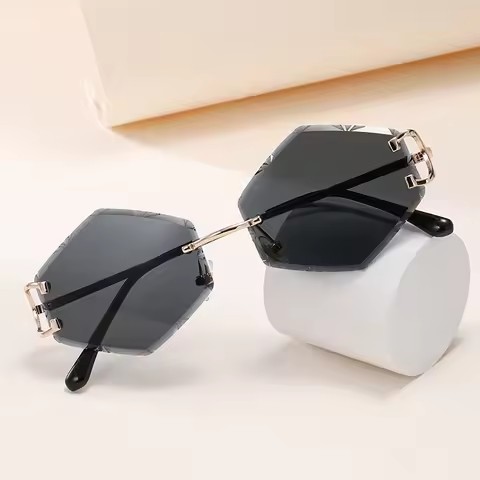
To uphold these elevated benchmarks, rigorous quality checks are integrated throughout prototyping and full-scale manufacturing by specialized producers like Yiwu Green Shine Arts & Crafts Co., Ltd.
Essential Takeaways for High-End Eyewear Quality
- Minimal Spherical Variance: Keeping spherical deviation under ±0.06 D guarantees sharp visual performance even on steep 8-decentration wrap designs.
- Controlled Prismatic Imbalance: Limiting vertical and horizontal prism offset to less than 0.25 cm/m eliminates visual displacement in delicate metal or rimless frames.
- Advanced Mold & Edge Optimization: Utilizing 3D modeling systems maintains uniform thickness and edge consistency across complex frame contours.
- Full International Certification: Comprehensive testing ensures full compliance with CE, FDA, and AS/NZS optical radiation standards.
Frequently Asked Questions
What causes optical distortion in rimless hexagon sunglasses?
In rimless or faceted styles, optical distortion typically arises from inconsistent lens thickness near cut edges or uneven tension applied by frame fasteners, which alters the base curve and introduces cylinder power errors.
Why is low prismatic tolerance vital for fashion sunglasses?
Excessive prismatic offset forces the eyes to strain inward or outward to compensate. Restricting prismatic imbalance below 0.25 prism diopters prevents eye fatigue, spatial misperception, and double vision.
How do international standards protect sunglass lens quality?
Regulations such as ISO 12312-1, FDA criteria, and AS/NZS 1067 define limits for refractive power tolerances, light transmittance uniformity, and impact durability to protect consumers in diverse environments.
Manufacturing Capabilities & Conclusion
Achieving superior optical precision in luxury eyewear demands seamless integration of high-precision molding technology, automated quality verification, and strict adherence to global safety certifications. Established in 2016, Yiwu Green Shine Arts & Crafts Co., Ltd specializes in the research, development, and manufacturing of premium sunglasses, optical frames, anti-blue light glasses, and reading glasses. Producing over 3 million pairs annually for North American and European markets, the facility utilizes 3D modeling tools and standardized spot testing to guarantee optical perfection.

To support global OEM and ODM requirements, commercial orders are conveniently fulfilled via Corporate Bank Transfer / Wire Transfer, with international distribution supported by Sea Freight, Air Freight, or Land Transportation. For specialized technical solutions or business inquiries, contact leoxiao@cngreenshine.com.
REPORT