







-
 Agriculture
-
 Health-Care
-
 Environment
-
 Construction-Real-Estate
-
 Tools-Hardware
-
 Home-Garden
-
 Furniture
-
 Luggage-Bags-Cases
-
 Medical-devices-Supplies
-
 Gifts-Crafts
-
 Sports-Entertainment
-
 Food-Beverage
-
 Vehicles-Transportation
-
 Power-Transmission
-
 Material-Handling
-
 Renewable-Energy
-
 Safety
-
 Testing-Instrument-Equipment
-
 Construction-Building-Machinery
-
 Pet-Supplies
-
 Personal-Care-Household-Cleaning
-
 Vehicle-Accessories-Electronics-Tools
-
 School-Office-Supplies
-
 Packaging-Printing
-
 Mother-Kids-Toys
-
 Business-Services
-
 Commercial-Equipment-Machinery
-
 Apparel-Accessories
-
 Security
-
 Shoes-Accessories
-
 Vehicle-Parts-Accessories
-
 Jewelry-Eyewear-Watches-Accessories
-
 Lights-Lighting
-
 Fabric-Textile-Raw-Material
-
 Fabrication-Services
-
 Industrial-Machinery
-
 Consumer-Electronics
-
 Electrical-Equipment-Supplies
-
 Electronic-Components-Accessories-Telecommunications
-
 Home-Appliances
-
 Beauty
-
 Chemicals
-
 Rubber-Plastics
-
 Metals-Alloys


























































































































































































































































































































































































































































































































































































- Masonry Materials
- Curtain Walls & Accessories
- Earthwork Products
- Fireproofing Materials
- Heat Insulation Materials
- Plastic Building Materials
- Building Boards
- Soundproofing Materials
- Timber
- Waterproofing Materials
- Balustrades & Handrails
- Bathroom & Kitchen
- Flooring & Accessories
- Tiles & Accessories
- Door, Window & Accessories
- Fireplaces & Stoves
- Floor Heating Systems & Parts
- Stairs & Stair Parts
- Ceilings
- Elevators & Escalators
- Stone
- Countertops, Vanity Tops & Table Tops
- Mosaics
- Metal Building Materials
- Multifunctional Materials
- Ladders & Scaffoldings
- Mouldings
- Corner Guards
- Decorative Films
- Formwork
- Building & Industrial Glass
- Other Construction & Real Estate
- Wallpapers/Wall panels
- HVAC System & Parts
- Outdoor Facilities
- Prefabricated Buildings
- Festive & Party Supplies
- Bathroom Products
- Household Sundries
- Rain Gear
- Garden Supplies
- Household Cleaning Tools & Accessories
- Lighters & Smoking Accessories
- Home Storage & Organization
- Household Scales
- Smart Home Improvement
- Home Textiles
- Kitchenware
- Drinkware & Accessories
- Dinnerware, Coffee & Wine
- Home Decor
- Golf
- Fitness & Body Building
- Amusement Park Facilities
- Billiards, Board Game,Coin Operated Games
- Musical Instruments
- Outdoor Affordable Luxury Sports
- Camping & Hiking
- Fishing
- Sports Safety&Rehabilitation
- Ball Sports Equipments
- Water Sports
- Winter Sports
- Luxury Travel Equipments
- Sports Shoes, Bags & Accessories
- Cycling
- Other Sports & Entertainment Products
- Artificial Grass&Sports Flooring&Sports Court Equipment
- Scooters
- Food Ingredients
- Honey & Honey Products
- Snacks
- Nuts & Kernels
- Seafood
- Plant & Animal Oil
- Beverages
- Fruit & Vegetable Products
- Frog & Escargot
- Bean Products
- Egg Products
- Dairy Products
- Seasonings & Condiments
- Canned Food
- Instant Food
- Baked Goods
- Other Food & Beverage
- Meat & Poultry
- Confectionery
- Grain Products
- Feminie Care
- Hair Care & Styling
- Body Care
- Hands & Feet Care
- Hygiene Products
- Men's Grooming
- Laundry Cleaning Supplies
- Travel Size & Gift Sets
- Room Deodorizers
- Other Personal Care Products
- Pest Control Products
- Special Household Cleaning
- Floor Cleaning
- Kitchen & Bathroom Cleaning
- Oral Care
- Bath Supplies
- Yellow Pages
- Correction Supplies
- Office Binding Supplies
- Office Cutting Supplies
- Board Erasers
- Office Adhesives & Tapes
- Education Supplies
- Pencil Cases & Bags
- Notebooks & Writing Pads
- File Folder Accessories
- Calendars
- Writing Accessories
- Commercial Office Supplies
- Pencil Sharpeners
- Pens
- Letter Pad/Paper
- Paper Envelopes
- Desk Organizers
- Pencils
- Markers & Highlighters
- Filing Products
- Art Supplies
- Easels
- Badge Holder & Accessories
- Office Paper
- Printer Supplies
- Book Covers
- Other Office & School Supplies
- Stationery Set
- Boards
- Clipboards
- Stamps
- Drafting Supplies
- Stencils
- Electronic Dictionary
- Books
- Map
- Magazines
- Calculators
- Baby & Toddler Toys
- Educational Toys
- Classic Toys
- Dress Up & Pretend Play
- Toy Vehicle
- Stuffed Animals & Plush Toys
- Outdoor Toys & Structures
- Balloons & Accessories
- Baby Food
- Children's Clothing
- Baby Supplies & Products
- Maternity Clothes
- Kids Shoes
- Baby Care
- Novelty & Gag Toys
- Dolls & Accessories
- Puzzle & Games
- Blocks & Model Building Toys
- Toddler Clothing
- Baby Clothing
- Kids' Luggage & Bags
- Arts, Crafts & DIY Toys
- Action & Toy Figures
- Baby Appliances
- Hobbies & Models
- Remote Control Toys
- Promotional Toys
- Pregnancy & Maternity
- Hygiene Products
- Kid's Textile&Bedding
- Novelty & Special Use
- Toy Weapons
- Baby Gifts
- Baby Storage & Organization
- Auto Drive Systems
- ATV/UTV Parts & Accessories
- Marine Parts & Accessories
- Other Auto Parts
- Trailer Parts & Accessories
- Auto Transmission Systems
- Train Parts & Accessories
- Universal Parts
- Railway Parts & Accessories
- Auto Brake Systems
- Aviation Parts & Accessories
- Truck Parts & Accessories
- Auto Suspension Systems
- Auto Lighting Systems
- New Energy Vehicle Parts & Accessories
- Auto Steering Systems
- Wheels, Tires & Accessories
- Bus Parts & Accessories
- Auto Performance Parts
- Cooling System
- Go-Kart & Kart Racer Parts & Accessories
- Air Conditioning Systems
- Heavy Duty Vehicle Parts & Accessories
- Auto Electrical Systems
- Auto Body Systems
- Auto Engine Systems
- Container Parts & Accessories
- Motorcycle Parts & Accessories
- Refrigeration & Heat Exchange Equipment
- Machine Tool Equipment
- Food & Beverage Machinery
- Agricultural Machinery & Equipment
- Apparel & Textile Machinery
- Chemical Machinery
- Packaging Machines
- Paper Production Machinery
- Plastic & Rubber Processing Machinery
- Industrial Robots
- Electronic Products Machinery
- Metal & Metallurgy Machinery
- Woodworking Machinery
- Home Product Manufacturing Machinery
- Machinery Accessories
- Environmental Machinery
- Machinery Service
- Electrical Equipment Manufacturing Machinery
- Industrial Compressors & Parts
- Tobacco & Cigarette Machinery
- Production Line
- Used Industrial Machinery
- Electronics Production Machinery
- Other Machinery & Industrial Equipment
- Camera, Photo & Accessories
- Portable Audio, Video & Accessories
- Television, Home Audio, Video & Accessories
- Video Games & Accessories
- Mobile Phone & Accessories
- Electronic Publications
- Earphone & Headphone & Accessories
- Speakers & Accessories
- Smart Electronics
- TV Receivers & Accessories
- Mobile Phone & Computer Repair Parts
- Chargers, Batteries & Power Supplies
- Used Electronics
- VR, AR, MR Hardware & Software
- Projectors & Presentation Equipments
- Other Consumer Electronics
- Cables & Commonly Used Accessories
- Computer Hardware & Software
- Displays, Signage and Optoelectronics
- Discrete Semiconductors
- Wireless & IoT Module and Products
- Telecommunications
- Connectors, Terminals & Accessories
- Development Boards, Electronic Modules and Kits
- Circuit Protection
- Sensors
- Isolators
- Audio Components and Products
- Integrated Circuits
- Power Supplies
- Relays
- RF, Microwave and RFID
- Electronic Accessories & Supplies
- Passive Components
- PCB & PCBA
- Air Quality Appliances
- Home Appliance Parts
- Heating & Cooling Appliances
- Small Kitchen Appliances
- Laundry Appliances
- Water Heaters
- Water Treatment Appliances
- Refrigerators & Freezers
- Personal Care & Beauty Appliances
- Major Kitchen Appliances
- Cleaning Appliances
- Second-hand Appliances
- Smart Home Appliances
- Other Home Appliances
- Energy Chemicals
- Inorganic Chemicals
- Basic Organic Chemicals
- Agrochemicals
- Admixture & Additives
- Catalysts & Chemical Auxiliary Agents
- Pigments & Dyestuff
- Coating & Paint
- Daily Chemicals
- Polymer
- Organic Intermediate
- Adhesives & Sealants
- Chemical Waste
- Biological Chemical Products
- Surface Treatment Chemicals
- Painting & Coating
- Chemical Reagents
- Flavor & Fragrance
- Non-Explosive Demolition Agents
- Other Chemicals
- Custom Chemical Services

What insulation thickness do I need for an expandable container house to withstand freezing winters?
To withstand freezing winters in an expandable container house, a minimum insulation thickness of 75mm to 100mm of high-density Polyurethane (PU) or Rock Wool is required. For extreme sub-zero climates, upgrading to 100mm to 150mm insulation panels ensures optimal thermal retention, structural integrity, and energy efficiency.
Core Answers & Key Points
- Material Efficiency: Polyurethane (PU) sandwich panels provide the lowest thermal conductivity, making them highly effective for sub-zero temperatures compared to standard EPS.
- Thickness Standards: While 50mm panels suffice for mild climates, freezing winter environments demand a minimum of 75mm to 100mm thickness to prevent heat loss.
- Airtightness and Sealing: Precision engineering at the folding joints of an expandable container house is critical to eliminate thermal bridging and drafts.
- Diverse Application: High-performance insulation enables these structures to serve reliably as construction site offices, field camps, disaster relief housing, and remote mining dormitories.
In-Depth Analysis
Maintaining a stable indoor temperature during severe winters requires a comprehensive approach to thermal insulation. In an expandable container house, heat loss primarily occurs through the walls, roof, and folding structural joints. Standard 50mm Expanded Polystyrene (EPS) panels are often insufficient for extreme cold. High-density Polyurethane (PU) or Rock Wool sandwich panels are preferred because they offer a significantly higher R-value per inch, minimizing the heating energy required to keep the interior comfortable.
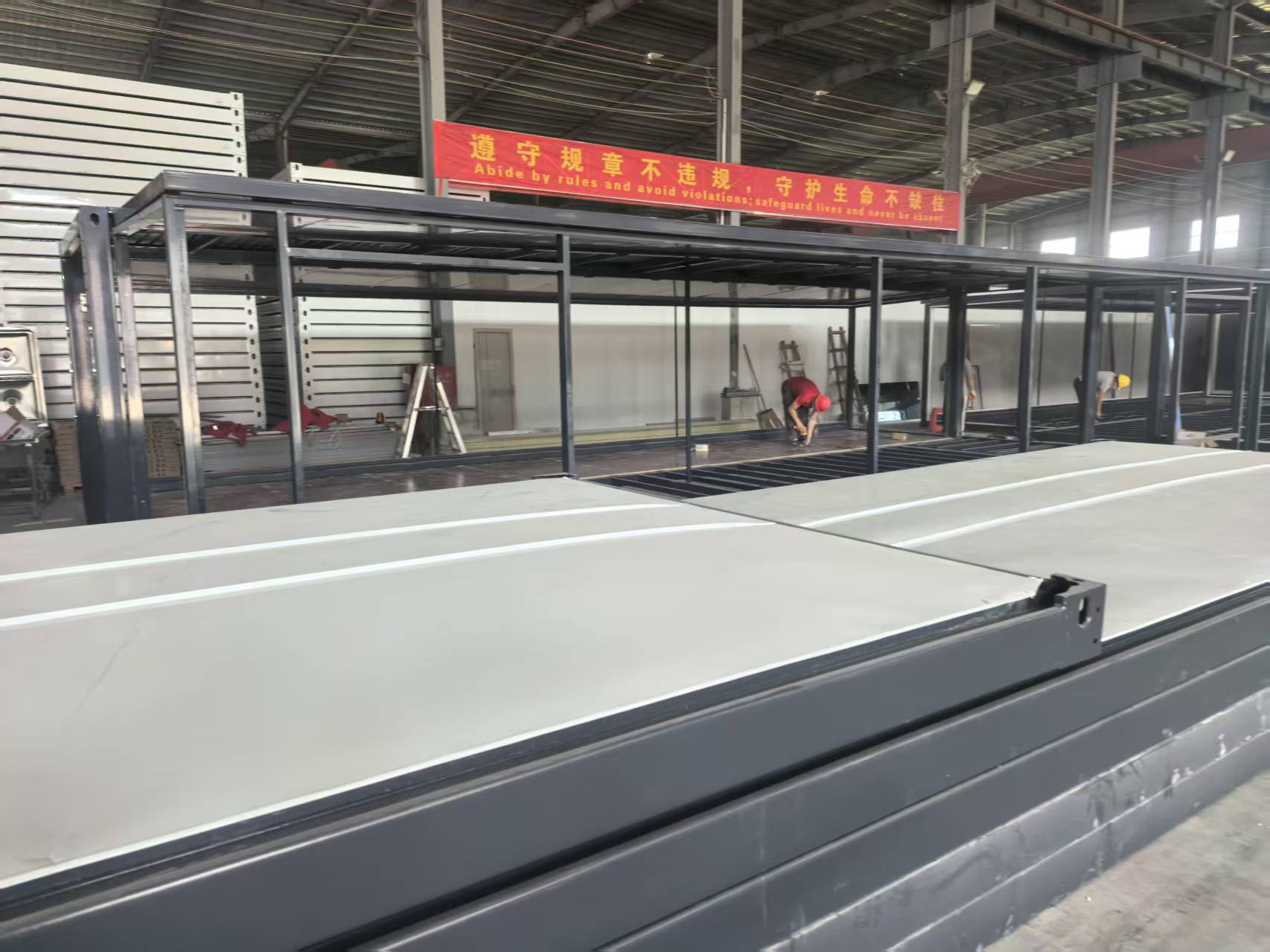
Structural engineering plays a decisive role in thermal performance. Guangdong Uni-House Technology Co., Ltd. utilizes advanced manufacturing processes, including CNC-controlled automated laser cutting and robotic welding, to guarantee tight structural tolerances. This precision prevents cold air infiltration at the folding hinges of 20FT, 30FT, and 40FT expandable container houses. With independent R-value testing and airtightness evaluations, these units are structurally optimized to withstand extreme high and low temperatures, high winds, and heavy snow loads.
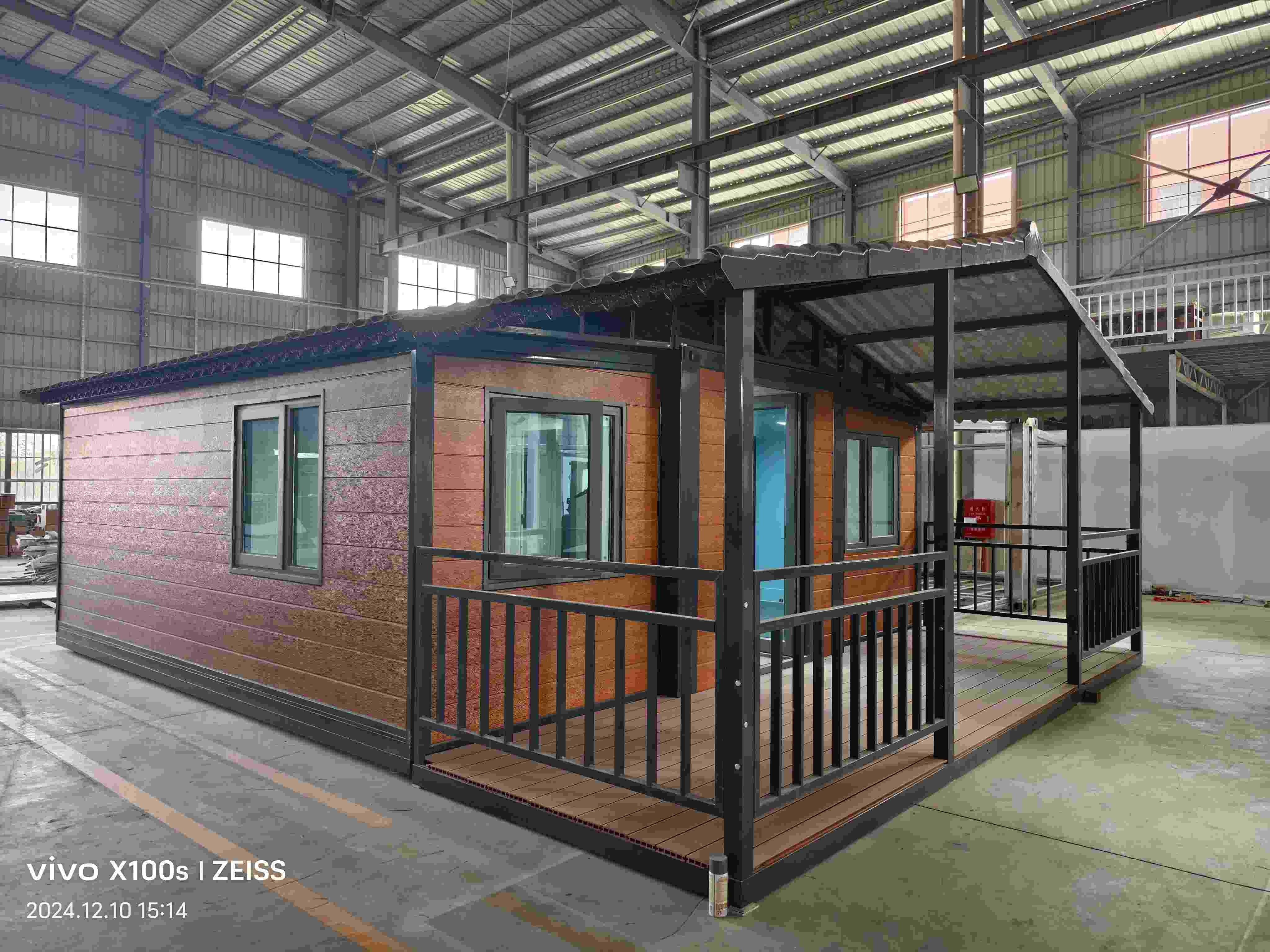
Field data from large-scale deployments demonstrates the importance of robust insulation. For example, in the Indonesian Coal Mine Living Area Project, 2000 sets of container houses were utilized as mining workers' dormitories. The combination of optimized panel thickness and tight structural seals ensured stable indoor temperatures, proving that pre-engineered modular units can maintain thermal comfort even under demanding environmental conditions. Additionally, the automated robotic spraying production lines ensure that the protective coatings on the structural steel frames prevent rust and degradation caused by winter condensation.
Data / Solution Comparison
The table below compares different insulation configurations for expandable container houses based on winter severity and structural requirements:
| Container Model / Size | Insulation Material | Recommended Thickness | Minimum Temperature Rating | Optimal Application Scenarios |
|---|---|---|---|---|
| 20FT Expandable | Polyurethane (PU) | 75mm | Down to -15°C | Temporary offices, field construction camps, guard posts |
| 30FT Expandable | Rock Wool (Fireproof) | 100mm | Down to -20°C | Worker dormitories, temporary classrooms, medical clinics |
| 40FT Expandable | High-Density PU | 120mm - 150mm | Down to -30°C | Residential villas, polar scientific research, extreme climate housing |
Frequently Asked Questions (FAQ)
How do the folding joints of an expandable container house stay insulated?
The folding joints are engineered with precision-fit structural hinges and sealed with heavy-duty, weather-resistant rubber gaskets. This design prevents cold drafts and water ingress, eliminating the thermal bridging typically associated with folding modular structures.
Are these expandable container houses certified for international safety and insulation standards?
Yes. The modular container houses hold official CE Certification (No. 3N240819.GUTQO66), verifying that they meet stringent structural, safety, and environmental standards required in the EU, Australia, North America, and other global markets.
How quickly can an expandable container house be deployed in cold weather?
Due to pre-engineered components and a high level of factory prefabrication, a single person can complete the enclosure space expansion within 10 minutes. This represents a 60% improvement in installation efficiency compared to the industry average, minimizing the time workers are exposed to harsh winter elements during setup.
Final Conclusion & Recommendations
Selecting the correct insulation thickness prevents condensation, lowers heating costs, and ensures structural longevity. For regions experiencing freezing winters, investing in at least 75mm to 100mm PU or Rock Wool insulation is highly recommended. Working with integrated industry-trade manufacturers ensures customized panel options, reliable quality control, and efficient logistics. Technical Support: guizugroup@outlook.com
About Us
Guangdong Uni-House Technology Co., Ltd. is a specialized foreign trade enterprise operating under the Guizu Group, providing one-stop services spanning design, R&D, production, and installation. Established in 2008, the company employs 200 professionals and features a single-plant production base covering 30,000 square meters with an annual production capacity of 10,000 sets. Our main product line includes detachable, expandable, and folding container houses engineered for extreme weather resistance and rapid deployment. The company holds CE certification (No. 3N240819.GUTQO66) and has served global clients across multiple industries, including mining, infrastructure, and commercial tourism.

REPORT