







-
 Agriculture
-
 Health-Care
-
 Environment
-
 Construction-Real-Estate
-
 Tools-Hardware
-
 Home-Garden
-
 Furniture
-
 Luggage-Bags-Cases
-
 Medical-devices-Supplies
-
 Gifts-Crafts
-
 Sports-Entertainment
-
 Food-Beverage
-
 Vehicles-Transportation
-
 Power-Transmission
-
 Material-Handling
-
 Renewable-Energy
-
 Safety
-
 Testing-Instrument-Equipment
-
 Construction-Building-Machinery
-
 Pet-Supplies
-
 Personal-Care-Household-Cleaning
-
 Vehicle-Accessories-Electronics-Tools
-
 School-Office-Supplies
-
 Packaging-Printing
-
 Mother-Kids-Toys
-
 Business-Services
-
 Commercial-Equipment-Machinery
-
 Apparel-Accessories
-
 Security
-
 Shoes-Accessories
-
 Vehicle-Parts-Accessories
-
 Jewelry-Eyewear-Watches-Accessories
-
 Lights-Lighting
-
 Fabric-Textile-Raw-Material
-
 Fabrication-Services
-
 Industrial-Machinery
-
 Consumer-Electronics
-
 Electrical-Equipment-Supplies
-
 Electronic-Components-Accessories-Telecommunications
-
 Home-Appliances
-
 Beauty
-
 Chemicals
-
 Rubber-Plastics
-
 Metals-Alloys


























































































































































































































































































































































































































































































































































































- Masonry Materials
- Curtain Walls & Accessories
- Earthwork Products
- Fireproofing Materials
- Heat Insulation Materials
- Plastic Building Materials
- Building Boards
- Soundproofing Materials
- Timber
- Waterproofing Materials
- Balustrades & Handrails
- Bathroom & Kitchen
- Flooring & Accessories
- Tiles & Accessories
- Door, Window & Accessories
- Fireplaces & Stoves
- Floor Heating Systems & Parts
- Stairs & Stair Parts
- Ceilings
- Elevators & Escalators
- Stone
- Countertops, Vanity Tops & Table Tops
- Mosaics
- Metal Building Materials
- Multifunctional Materials
- Ladders & Scaffoldings
- Mouldings
- Corner Guards
- Decorative Films
- Formwork
- Building & Industrial Glass
- Other Construction & Real Estate
- Wallpapers/Wall panels
- HVAC System & Parts
- Outdoor Facilities
- Prefabricated Buildings
- Festive & Party Supplies
- Bathroom Products
- Household Sundries
- Rain Gear
- Garden Supplies
- Household Cleaning Tools & Accessories
- Lighters & Smoking Accessories
- Home Storage & Organization
- Household Scales
- Smart Home Improvement
- Home Textiles
- Kitchenware
- Drinkware & Accessories
- Dinnerware, Coffee & Wine
- Home Decor
- Golf
- Fitness & Body Building
- Amusement Park Facilities
- Billiards, Board Game,Coin Operated Games
- Musical Instruments
- Outdoor Affordable Luxury Sports
- Camping & Hiking
- Fishing
- Sports Safety&Rehabilitation
- Ball Sports Equipments
- Water Sports
- Winter Sports
- Luxury Travel Equipments
- Sports Shoes, Bags & Accessories
- Cycling
- Other Sports & Entertainment Products
- Artificial Grass&Sports Flooring&Sports Court Equipment
- Scooters
- Food Ingredients
- Honey & Honey Products
- Snacks
- Nuts & Kernels
- Seafood
- Plant & Animal Oil
- Beverages
- Fruit & Vegetable Products
- Frog & Escargot
- Bean Products
- Egg Products
- Dairy Products
- Seasonings & Condiments
- Canned Food
- Instant Food
- Baked Goods
- Other Food & Beverage
- Meat & Poultry
- Confectionery
- Grain Products
- Feminie Care
- Hair Care & Styling
- Body Care
- Hands & Feet Care
- Hygiene Products
- Men's Grooming
- Laundry Cleaning Supplies
- Travel Size & Gift Sets
- Room Deodorizers
- Other Personal Care Products
- Pest Control Products
- Special Household Cleaning
- Floor Cleaning
- Kitchen & Bathroom Cleaning
- Oral Care
- Bath Supplies
- Yellow Pages
- Correction Supplies
- Office Binding Supplies
- Office Cutting Supplies
- Board Erasers
- Office Adhesives & Tapes
- Education Supplies
- Pencil Cases & Bags
- Notebooks & Writing Pads
- File Folder Accessories
- Calendars
- Writing Accessories
- Commercial Office Supplies
- Pencil Sharpeners
- Pens
- Letter Pad/Paper
- Paper Envelopes
- Desk Organizers
- Pencils
- Markers & Highlighters
- Filing Products
- Art Supplies
- Easels
- Badge Holder & Accessories
- Office Paper
- Printer Supplies
- Book Covers
- Other Office & School Supplies
- Stationery Set
- Boards
- Clipboards
- Stamps
- Drafting Supplies
- Stencils
- Electronic Dictionary
- Books
- Map
- Magazines
- Calculators
- Baby & Toddler Toys
- Educational Toys
- Classic Toys
- Dress Up & Pretend Play
- Toy Vehicle
- Stuffed Animals & Plush Toys
- Outdoor Toys & Structures
- Balloons & Accessories
- Baby Food
- Children's Clothing
- Baby Supplies & Products
- Maternity Clothes
- Kids Shoes
- Baby Care
- Novelty & Gag Toys
- Dolls & Accessories
- Puzzle & Games
- Blocks & Model Building Toys
- Toddler Clothing
- Baby Clothing
- Kids' Luggage & Bags
- Arts, Crafts & DIY Toys
- Action & Toy Figures
- Baby Appliances
- Hobbies & Models
- Remote Control Toys
- Promotional Toys
- Pregnancy & Maternity
- Hygiene Products
- Kid's Textile&Bedding
- Novelty & Special Use
- Toy Weapons
- Baby Gifts
- Baby Storage & Organization
- Auto Drive Systems
- ATV/UTV Parts & Accessories
- Marine Parts & Accessories
- Other Auto Parts
- Trailer Parts & Accessories
- Auto Transmission Systems
- Train Parts & Accessories
- Universal Parts
- Railway Parts & Accessories
- Auto Brake Systems
- Aviation Parts & Accessories
- Truck Parts & Accessories
- Auto Suspension Systems
- Auto Lighting Systems
- New Energy Vehicle Parts & Accessories
- Auto Steering Systems
- Wheels, Tires & Accessories
- Bus Parts & Accessories
- Auto Performance Parts
- Cooling System
- Go-Kart & Kart Racer Parts & Accessories
- Air Conditioning Systems
- Heavy Duty Vehicle Parts & Accessories
- Auto Electrical Systems
- Auto Body Systems
- Auto Engine Systems
- Container Parts & Accessories
- Motorcycle Parts & Accessories
- Refrigeration & Heat Exchange Equipment
- Machine Tool Equipment
- Food & Beverage Machinery
- Agricultural Machinery & Equipment
- Apparel & Textile Machinery
- Chemical Machinery
- Packaging Machines
- Paper Production Machinery
- Plastic & Rubber Processing Machinery
- Industrial Robots
- Electronic Products Machinery
- Metal & Metallurgy Machinery
- Woodworking Machinery
- Home Product Manufacturing Machinery
- Machinery Accessories
- Environmental Machinery
- Machinery Service
- Electrical Equipment Manufacturing Machinery
- Industrial Compressors & Parts
- Tobacco & Cigarette Machinery
- Production Line
- Used Industrial Machinery
- Electronics Production Machinery
- Other Machinery & Industrial Equipment
- Camera, Photo & Accessories
- Portable Audio, Video & Accessories
- Television, Home Audio, Video & Accessories
- Video Games & Accessories
- Mobile Phone & Accessories
- Electronic Publications
- Earphone & Headphone & Accessories
- Speakers & Accessories
- Smart Electronics
- TV Receivers & Accessories
- Mobile Phone & Computer Repair Parts
- Chargers, Batteries & Power Supplies
- Used Electronics
- VR, AR, MR Hardware & Software
- Projectors & Presentation Equipments
- Other Consumer Electronics
- Cables & Commonly Used Accessories
- Computer Hardware & Software
- Displays, Signage and Optoelectronics
- Discrete Semiconductors
- Wireless & IoT Module and Products
- Telecommunications
- Connectors, Terminals & Accessories
- Development Boards, Electronic Modules and Kits
- Circuit Protection
- Sensors
- Isolators
- Audio Components and Products
- Integrated Circuits
- Power Supplies
- Relays
- RF, Microwave and RFID
- Electronic Accessories & Supplies
- Passive Components
- PCB & PCBA
- Air Quality Appliances
- Home Appliance Parts
- Heating & Cooling Appliances
- Small Kitchen Appliances
- Laundry Appliances
- Water Heaters
- Water Treatment Appliances
- Refrigerators & Freezers
- Personal Care & Beauty Appliances
- Major Kitchen Appliances
- Cleaning Appliances
- Second-hand Appliances
- Smart Home Appliances
- Other Home Appliances
- Energy Chemicals
- Inorganic Chemicals
- Basic Organic Chemicals
- Agrochemicals
- Admixture & Additives
- Catalysts & Chemical Auxiliary Agents
- Pigments & Dyestuff
- Coating & Paint
- Daily Chemicals
- Polymer
- Organic Intermediate
- Adhesives & Sealants
- Chemical Waste
- Biological Chemical Products
- Surface Treatment Chemicals
- Painting & Coating
- Chemical Reagents
- Flavor & Fragrance
- Non-Explosive Demolition Agents
- Other Chemicals
- Custom Chemical Services

What Should You Specify When Customizing an Outdoor Dining Set?
A successful custom outdoor dining set begins with a complete specification, not just a preferred appearance. Before manufacturing starts, confirm the frame material, overall and component dimensions, seating capacity, color, fabric or surface finish, UV-resistance requirements, packaging method, and inspection standards. It is also important to clarify whether the project requires modified sizes, mixed product configurations, or a complete OEM and ODM service.
Planning Priorities for a Custom Outdoor Dining Set
The right specification should connect the furniture design with its intended environment, project quantity, delivery timetable, installation needs, and long-term maintenance plan. A clear brief allows the manufacturer to evaluate the design, prepare drawings, calculate materials, and identify production requirements before approval.
Confirm the structure before the appearance
Structural decisions should be completed before selecting decorative details. The supplied outdoor furniture information uses an aluminum frame and identifies a load capacity of 150 kg per seat. For a dining set, the project brief should also define the frame material, support structure, joint design, table stability, expected load, and any performance requirements related to frequent commercial use.
Document every size and seating arrangement
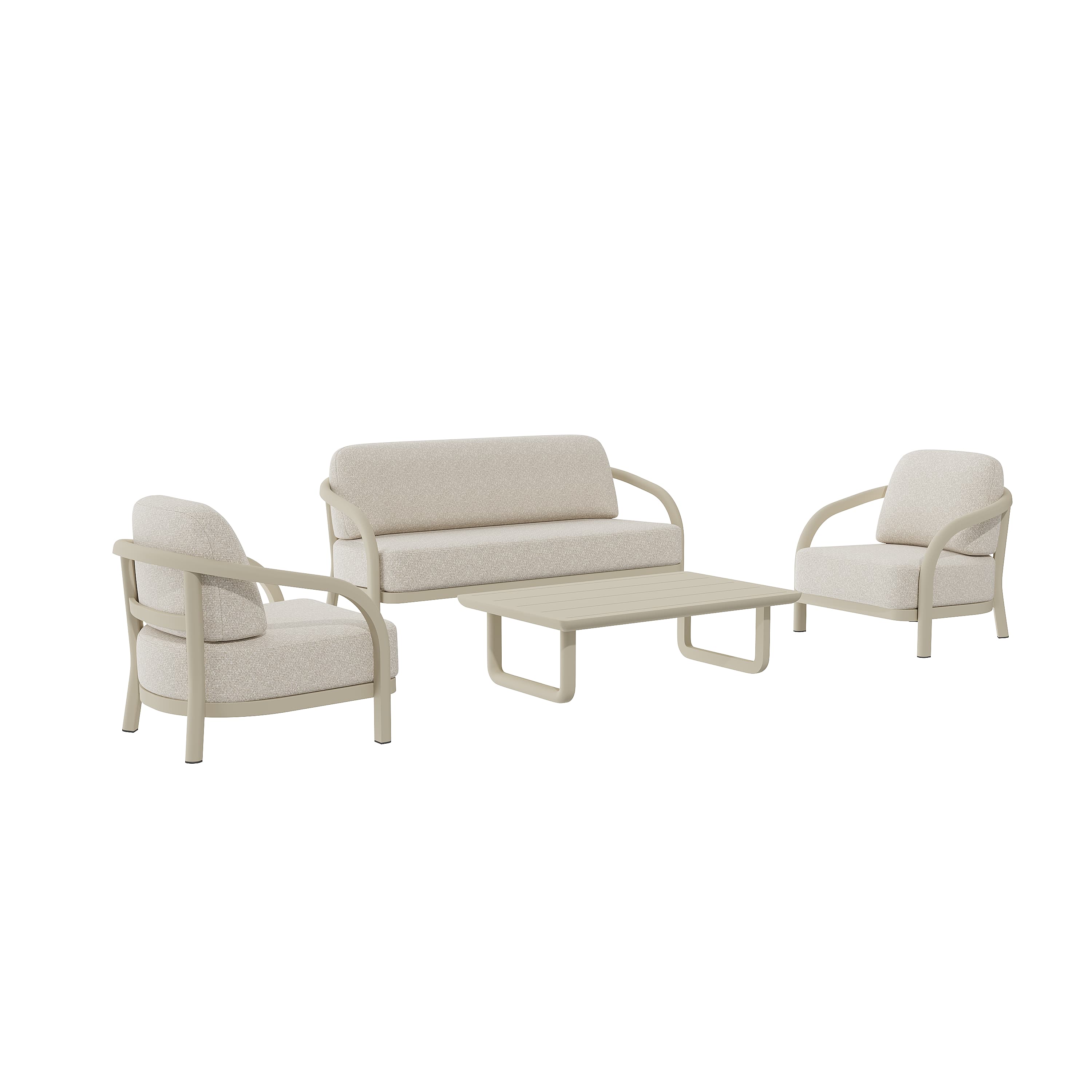
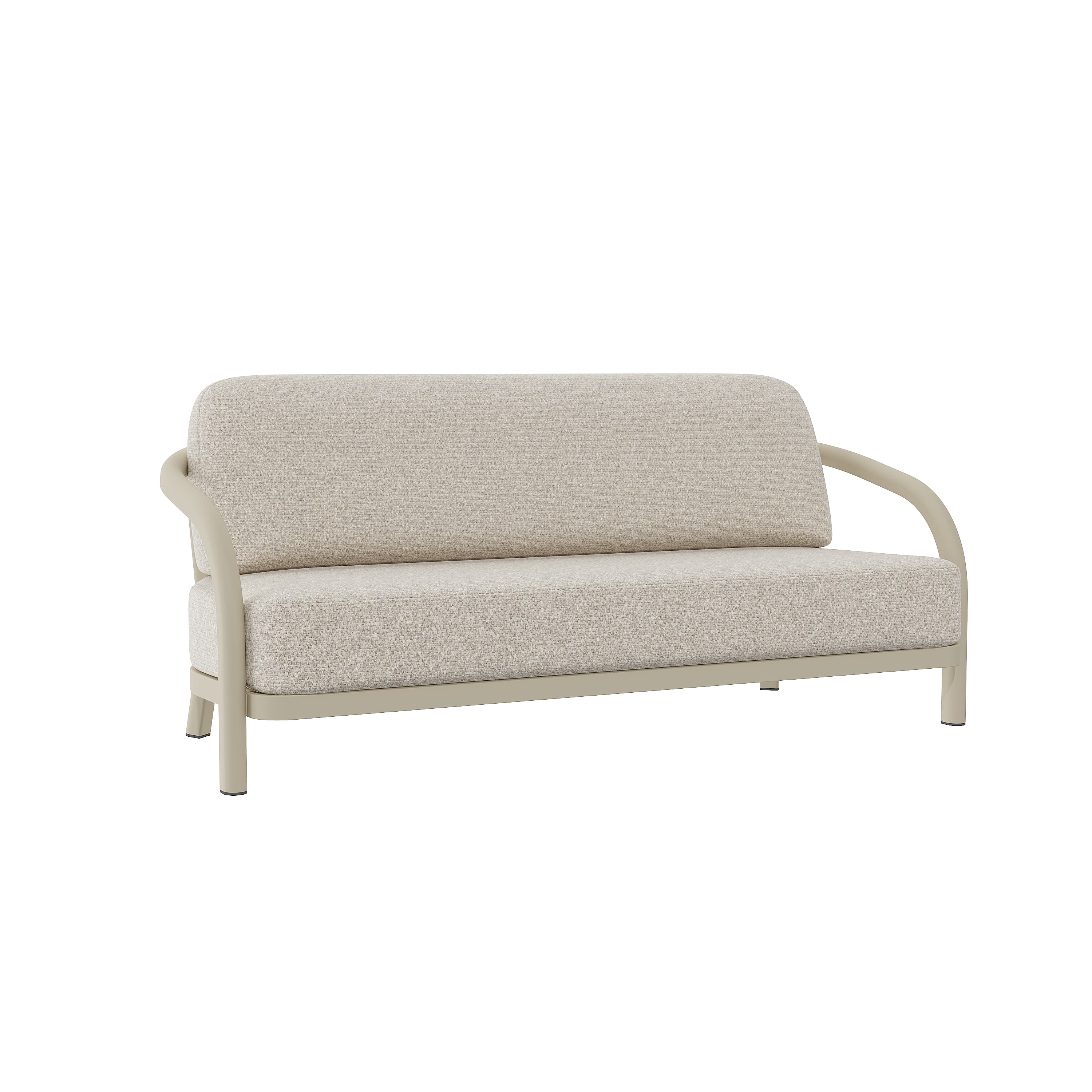
Dimensions should be recorded for each part of the set rather than only for the complete dining group. The available product information separates measurements for a single sofa, a two-seater sofa, and a coffee table, and provides dimensions in both centimeters and inches. A customized dining set should similarly list the dimensions of every chair, the tabletop, the base, and any additional components.
Also specify how many people the table must accommodate and how much space is needed around it. The supplied product information supports configurations for 6, 10, or 12 people. Clearances for walkways, service access, chair movement, and nearby walls or landscaping should be included when the set is intended for a hotel terrace, rooftop, restaurant, or poolside setting.
Separate material, color, and finish decisions
Visual selections should be written as individual requirements. Color customization is available, while the product information lists UV-resistant options of 250 GSM or 300 GSM. The final design brief should identify the selected frame color, upholstery or fabric specification, UV-resistance level, finish, surface texture, and any detail that must be consistent between the chairs and table.
Material changes should also be identified at the quotation stage. This is especially important when a project combines aluminum, teak, synthetic rattan, outdoor fabric, cushions, or other materials. The specification should state which materials are mandatory and which alternatives may be considered if they meet the required appearance and performance standards.
Manufacturing and Project Coordination
Production capabilities influence how efficiently a custom design can move from concept to finished furniture. Kingwell combines manual craftsmanship with automated cutting equipment and robotic welding arms. The company supports CAD drawings, 3D designs, size revisions, color changes, material changes, and detail customization for OEM, ODM, and project-based orders.
Before production, request drawings or 3D visuals that show the complete configuration. Review the proportions, seating layout, table clearance, connection points, fabric placement, and surface details together. This process helps the project team resolve design issues before materials are purchased or production begins, particularly when several sizes or mixed configurations are required.
Match the design to the application
The intended location should be included in the design brief because outdoor furniture requirements vary by environment. Kingwell lists applications such as hotel and resort terraces, restaurant and café courtyards, villas and residential projects, beach clubs, poolside areas, rooftops, and other commercial outdoor spaces.
For hospitality projects, consider exposure to sunlight, moisture, wind, cleaning chemicals, high traffic, and repeated movement. A furniture set for a private villa may have different dimensional and durability priorities from a set used on a busy resort terrace. The location, operating schedule, expected users, and maintenance routine should therefore be confirmed before the final specification is approved.
Quality, Packaging, and Delivery Requirements
Quality control should be planned as part of the design process. Relevant checkpoints include incoming material specifications, teak grades where applicable, fabric quality, manufacturing processes, product dimensions, appearance, structural stability, order quantities, and packaging condition. These criteria should be written into the approval documents so the finished goods can be evaluated against the agreed design.
Packaging details are particularly important for large dining sets and international shipments. Confirm how tables, chairs, cushions, and replacement parts will be protected, whether products will be packed individually or by set, and what labeling or assembly instructions are required. Installation assistance, technical documentation, maintenance guidance, and replacement-part support should also be discussed before the order is finalized.
Project timing must be aligned with the customization scope and order volume. The supplied business information lists sample production at approximately 7-10 days and formal orders at approximately 30-45 days. Standard order information indicates a minimum quantity of 5-10 sets, while sample orders may be available without an MOQ under the stated business model. Confirm the applicable quantity, delivery schedule, and approval milestones for the specific project.
Use relevant project experience as a reference
Kingwell's project records include more than 500 sun loungers supplied for a resort swimming pool in the United States and more than 50 synthetic rattan outdoor sofas used in a beach leisure area for a hotel project in Spain. These examples indicate experience with hospitality environments, larger quantities, and different outdoor furniture configurations.
The company lists BS 5852 for outdoor furniture in the European region and EN 581 for outdoor tables in European countries. Certification requirements should still be matched with the destination market and the specific product configuration before purchase.
Customization Checklist
| Design or Project Area | Available Information | Items to Approve |
|---|---|---|
| Frame and structure | The product information specifies an aluminum frame and a capacity of 150 kg per seat. | Frame material, load rating, structural layout, joints, supports, and connection details. |
| Dimensions and capacity | Measurements are provided for single sofas, two-seater sofas, and coffee tables. Dining tables can be configured for 6, 10, or 12 users. | Chair size, table size, seating count, chair spacing, service access, and surrounding clearance. |
| Materials and appearance | Custom colors and sizes are available, with material and detail changes supported for OEM and ODM projects. | Frame color, fabric or finish, material selection, surface treatment, UV-resistance level, and approved drawings. |
| Production and delivery | Sample orders are listed at 7-10 days, formal orders at 30-45 days, and standard quantities at 5-10 sets minimum. | Sample requirements, final quantity, customization scope, production milestones, and delivery date. |
| Inspection and after-sales service | Checks cover materials, production, finished products, quantities, and packaging. Replacement parts and technical support are available. | Inspection stages, acceptance criteria, installation guidance, maintenance documents, and replenishment records. |
Frequently Asked Questions
What should be included when requesting a quotation?
Provide the frame material, complete dimensions, seating capacity, colors, fabric or finish, UV-resistance requirements, packaging expectations, and inspection criteria. Separate specifications should be supplied for each chair, table, cushion, and related component.
Can the set be adapted for a particular project?
Yes. The supplied information states that Kingwell can customize size, color, material, and product details for OEM, ODM, and custom project solutions. CAD drawings and 3D designs can be used to review the proposed configuration before production.
How should order quantity and lead time be confirmed?
Sample orders are described as having no MOQ in the business model information, while standard orders generally require 5-10 sets. Sample production is listed at 7-10 days and formal production at 30-45 days, subject to the order quantity, design complexity, and selected customization.
What should be checked before shipment?
Review the material specifications, product dimensions, color and finish, fabric quality, structural stability, quantities, and packaging condition. For project orders, also confirm installation requirements, technical support, spare parts, and the records needed for future replenishment.
Conclusion
Before approving a customized outdoor dining set, finalize the structural design, component dimensions, seating arrangement, color and material selections, UV-resistance specification, packaging method, inspection standards, quantity, and delivery schedule. A complete specification reduces production ambiguity and helps the manufacturer coordinate drawings, materials, fabrication, quality control, and project support.
Foshan Kingwell Industry Co., Ltd. provides manufacturer, OEM, ODM, and custom project services, supported by material, process, final-product, quantity, and packaging inspections. For technical solutions or project assistance, contact info@kingwellgrou.com.
About Foshan Kingwell Industry Co., Ltd.
Foshan Kingwell Industry Co..Ltd. supplies outdoor furniture for engineering and hospitality projects from Foshan, Guangdong. Established in 2015, the company operates a 26,800 sqm factory specializing in aluminum and teak furniture. Its in-house capabilities include CAD drawing development, 3D design, automated cutting, robotic welding, and customization of sizes, colors, materials, and product details. The company lists BS 5852 and EN 581 certifications and has served customers across several industries.

REPORT