







-
 Agriculture
-
 Health-Care
-
 Environment
-
 Construction-Real-Estate
-
 Tools-Hardware
-
 Home-Garden
-
 Furniture
-
 Luggage-Bags-Cases
-
 Medical-devices-Supplies
-
 Gifts-Crafts
-
 Sports-Entertainment
-
 Food-Beverage
-
 Vehicles-Transportation
-
 Power-Transmission
-
 Material-Handling
-
 Renewable-Energy
-
 Safety
-
 Testing-Instrument-Equipment
-
 Construction-Building-Machinery
-
 Pet-Supplies
-
 Personal-Care-Household-Cleaning
-
 Vehicle-Accessories-Electronics-Tools
-
 School-Office-Supplies
-
 Packaging-Printing
-
 Mother-Kids-Toys
-
 Business-Services
-
 Commercial-Equipment-Machinery
-
 Apparel-Accessories
-
 Security
-
 Shoes-Accessories
-
 Vehicle-Parts-Accessories
-
 Jewelry-Eyewear-Watches-Accessories
-
 Lights-Lighting
-
 Fabric-Textile-Raw-Material
-
 Fabrication-Services
-
 Industrial-Machinery
-
 Consumer-Electronics
-
 Electrical-Equipment-Supplies
-
 Electronic-Components-Accessories-Telecommunications
-
 Home-Appliances
-
 Beauty
-
 Chemicals
-
 Rubber-Plastics
-
 Metals-Alloys


























































































































































































































































































































































































































































































































































































- Masonry Materials
- Curtain Walls & Accessories
- Earthwork Products
- Fireproofing Materials
- Heat Insulation Materials
- Plastic Building Materials
- Building Boards
- Soundproofing Materials
- Timber
- Waterproofing Materials
- Balustrades & Handrails
- Bathroom & Kitchen
- Flooring & Accessories
- Tiles & Accessories
- Door, Window & Accessories
- Fireplaces & Stoves
- Floor Heating Systems & Parts
- Stairs & Stair Parts
- Ceilings
- Elevators & Escalators
- Stone
- Countertops, Vanity Tops & Table Tops
- Mosaics
- Metal Building Materials
- Multifunctional Materials
- Ladders & Scaffoldings
- Mouldings
- Corner Guards
- Decorative Films
- Formwork
- Building & Industrial Glass
- Other Construction & Real Estate
- Wallpapers/Wall panels
- HVAC System & Parts
- Outdoor Facilities
- Prefabricated Buildings
- Festive & Party Supplies
- Bathroom Products
- Household Sundries
- Rain Gear
- Garden Supplies
- Household Cleaning Tools & Accessories
- Lighters & Smoking Accessories
- Home Storage & Organization
- Household Scales
- Smart Home Improvement
- Home Textiles
- Kitchenware
- Drinkware & Accessories
- Dinnerware, Coffee & Wine
- Home Decor
- Golf
- Fitness & Body Building
- Amusement Park Facilities
- Billiards, Board Game,Coin Operated Games
- Musical Instruments
- Outdoor Affordable Luxury Sports
- Camping & Hiking
- Fishing
- Sports Safety&Rehabilitation
- Ball Sports Equipments
- Water Sports
- Winter Sports
- Luxury Travel Equipments
- Sports Shoes, Bags & Accessories
- Cycling
- Other Sports & Entertainment Products
- Artificial Grass&Sports Flooring&Sports Court Equipment
- Scooters
- Food Ingredients
- Honey & Honey Products
- Snacks
- Nuts & Kernels
- Seafood
- Plant & Animal Oil
- Beverages
- Fruit & Vegetable Products
- Frog & Escargot
- Bean Products
- Egg Products
- Dairy Products
- Seasonings & Condiments
- Canned Food
- Instant Food
- Baked Goods
- Other Food & Beverage
- Meat & Poultry
- Confectionery
- Grain Products
- Feminie Care
- Hair Care & Styling
- Body Care
- Hands & Feet Care
- Hygiene Products
- Men's Grooming
- Laundry Cleaning Supplies
- Travel Size & Gift Sets
- Room Deodorizers
- Other Personal Care Products
- Pest Control Products
- Special Household Cleaning
- Floor Cleaning
- Kitchen & Bathroom Cleaning
- Oral Care
- Bath Supplies
- Yellow Pages
- Correction Supplies
- Office Binding Supplies
- Office Cutting Supplies
- Board Erasers
- Office Adhesives & Tapes
- Education Supplies
- Pencil Cases & Bags
- Notebooks & Writing Pads
- File Folder Accessories
- Calendars
- Writing Accessories
- Commercial Office Supplies
- Pencil Sharpeners
- Pens
- Letter Pad/Paper
- Paper Envelopes
- Desk Organizers
- Pencils
- Markers & Highlighters
- Filing Products
- Art Supplies
- Easels
- Badge Holder & Accessories
- Office Paper
- Printer Supplies
- Book Covers
- Other Office & School Supplies
- Stationery Set
- Boards
- Clipboards
- Stamps
- Drafting Supplies
- Stencils
- Electronic Dictionary
- Books
- Map
- Magazines
- Calculators
- Baby & Toddler Toys
- Educational Toys
- Classic Toys
- Dress Up & Pretend Play
- Toy Vehicle
- Stuffed Animals & Plush Toys
- Outdoor Toys & Structures
- Balloons & Accessories
- Baby Food
- Children's Clothing
- Baby Supplies & Products
- Maternity Clothes
- Kids Shoes
- Baby Care
- Novelty & Gag Toys
- Dolls & Accessories
- Puzzle & Games
- Blocks & Model Building Toys
- Toddler Clothing
- Baby Clothing
- Kids' Luggage & Bags
- Arts, Crafts & DIY Toys
- Action & Toy Figures
- Baby Appliances
- Hobbies & Models
- Remote Control Toys
- Promotional Toys
- Pregnancy & Maternity
- Hygiene Products
- Kid's Textile&Bedding
- Novelty & Special Use
- Toy Weapons
- Baby Gifts
- Baby Storage & Organization
- Auto Drive Systems
- ATV/UTV Parts & Accessories
- Marine Parts & Accessories
- Other Auto Parts
- Trailer Parts & Accessories
- Auto Transmission Systems
- Train Parts & Accessories
- Universal Parts
- Railway Parts & Accessories
- Auto Brake Systems
- Aviation Parts & Accessories
- Truck Parts & Accessories
- Auto Suspension Systems
- Auto Lighting Systems
- New Energy Vehicle Parts & Accessories
- Auto Steering Systems
- Wheels, Tires & Accessories
- Bus Parts & Accessories
- Auto Performance Parts
- Cooling System
- Go-Kart & Kart Racer Parts & Accessories
- Air Conditioning Systems
- Heavy Duty Vehicle Parts & Accessories
- Auto Electrical Systems
- Auto Body Systems
- Auto Engine Systems
- Container Parts & Accessories
- Motorcycle Parts & Accessories
- Refrigeration & Heat Exchange Equipment
- Machine Tool Equipment
- Food & Beverage Machinery
- Agricultural Machinery & Equipment
- Apparel & Textile Machinery
- Chemical Machinery
- Packaging Machines
- Paper Production Machinery
- Plastic & Rubber Processing Machinery
- Industrial Robots
- Electronic Products Machinery
- Metal & Metallurgy Machinery
- Woodworking Machinery
- Home Product Manufacturing Machinery
- Machinery Accessories
- Environmental Machinery
- Machinery Service
- Electrical Equipment Manufacturing Machinery
- Industrial Compressors & Parts
- Tobacco & Cigarette Machinery
- Production Line
- Used Industrial Machinery
- Electronics Production Machinery
- Other Machinery & Industrial Equipment
- Camera, Photo & Accessories
- Portable Audio, Video & Accessories
- Television, Home Audio, Video & Accessories
- Video Games & Accessories
- Mobile Phone & Accessories
- Electronic Publications
- Earphone & Headphone & Accessories
- Speakers & Accessories
- Smart Electronics
- TV Receivers & Accessories
- Mobile Phone & Computer Repair Parts
- Chargers, Batteries & Power Supplies
- Used Electronics
- VR, AR, MR Hardware & Software
- Projectors & Presentation Equipments
- Other Consumer Electronics
- Cables & Commonly Used Accessories
- Computer Hardware & Software
- Displays, Signage and Optoelectronics
- Discrete Semiconductors
- Wireless & IoT Module and Products
- Telecommunications
- Connectors, Terminals & Accessories
- Development Boards, Electronic Modules and Kits
- Circuit Protection
- Sensors
- Isolators
- Audio Components and Products
- Integrated Circuits
- Power Supplies
- Relays
- RF, Microwave and RFID
- Electronic Accessories & Supplies
- Passive Components
- PCB & PCBA
- Air Quality Appliances
- Home Appliance Parts
- Heating & Cooling Appliances
- Small Kitchen Appliances
- Laundry Appliances
- Water Heaters
- Water Treatment Appliances
- Refrigerators & Freezers
- Personal Care & Beauty Appliances
- Major Kitchen Appliances
- Cleaning Appliances
- Second-hand Appliances
- Smart Home Appliances
- Other Home Appliances
- Energy Chemicals
- Inorganic Chemicals
- Basic Organic Chemicals
- Agrochemicals
- Admixture & Additives
- Catalysts & Chemical Auxiliary Agents
- Pigments & Dyestuff
- Coating & Paint
- Daily Chemicals
- Polymer
- Organic Intermediate
- Adhesives & Sealants
- Chemical Waste
- Biological Chemical Products
- Surface Treatment Chemicals
- Painting & Coating
- Chemical Reagents
- Flavor & Fragrance
- Non-Explosive Demolition Agents
- Other Chemicals
- Custom Chemical Services

When Should You Reject a Sunroom Manufacturing Partner?
A sunroom manufacturing partner should be rejected when an audit cannot confirm its factory, production capacity, quality controls, delivery system, installation duties, or after-sales commitments. For African construction projects, the supplier must also demonstrate climate-appropriate materials, export experience, customs coordination, and the ability to support large, long-term orders.
Audit Standards for Partner Selection
The decision should be based on documented evidence rather than sales claims. A qualified supplier should provide verifiable factory information, production records, material specifications, inspection reports, delivery procedures, and written service obligations. Any major gap in these areas can create construction delays, quality disputes, or costly maintenance problems.
- Confirm the manufacturing site, automated equipment, available capacity, and ability to meet recurring bulk orders.
- Require records for incoming materials, production-stage checks, finished-product testing, installation acceptance, and structural performance.
- Review lead times, export documentation, customs procedures, shipping control, and technical support for African projects.
- Define installation, warranty, maintenance, replacement, and after-sales responsibilities for villas, apartments, hotels, hospitals, commercial developments, and public projects.
Key Findings That Should Trigger Rejection
1. The production base cannot be verified
A partner should not be accepted when it cannot identify an operating factory or demonstrate stable production planning. Guangzhou Lingyin Building Materials Co., Ltd. states that it operates a 30,000-square-meter intelligent manufacturing base, supported by automated door and window lines and intelligent whole-house customization lines. The company also states a monthly capacity of 42,000 square meters of high-end system doors and windows and 8,300 customized furniture sets.
These figures should be checked against factory records, equipment information, production schedules, and previous shipment documents. Lingyin states that doors and windows can be delivered in 20 days, while customized furnishings generally require 25 to 30 days depending on the selected workmanship. If a supplier cannot connect its promised lead time to actual production evidence, the project faces a significant delivery risk.
2. Quality assurance is undocumented
Sunroom systems require quality control at every stage, from material intake through installation. The audit should request evidence of raw-material inspection, process monitoring, finished-product testing, installation acceptance, structural safety checks, chemical safety testing, physical and mechanical performance testing, and dimensional and appearance inspection.
Without defined inspection criteria and completed records, the buyer cannot confirm whether the sunroom components are fit for shipment or ready for installation. A supplier that relies only on general assurances, without product-specific quality evidence, should therefore be excluded from consideration.
3. Material specifications do not match the audited product
Material traceability must be linked to the actual sunroom system being purchased. The available swing door information identifies 6063-T5 native aluminum, customizable colors, powder or fluorocarbon coating, and thicknesses ranging from 1.6 to 3.0 mm. These details describe the referenced door product and should not automatically be presented as confirmed specifications for every sunroom configuration.
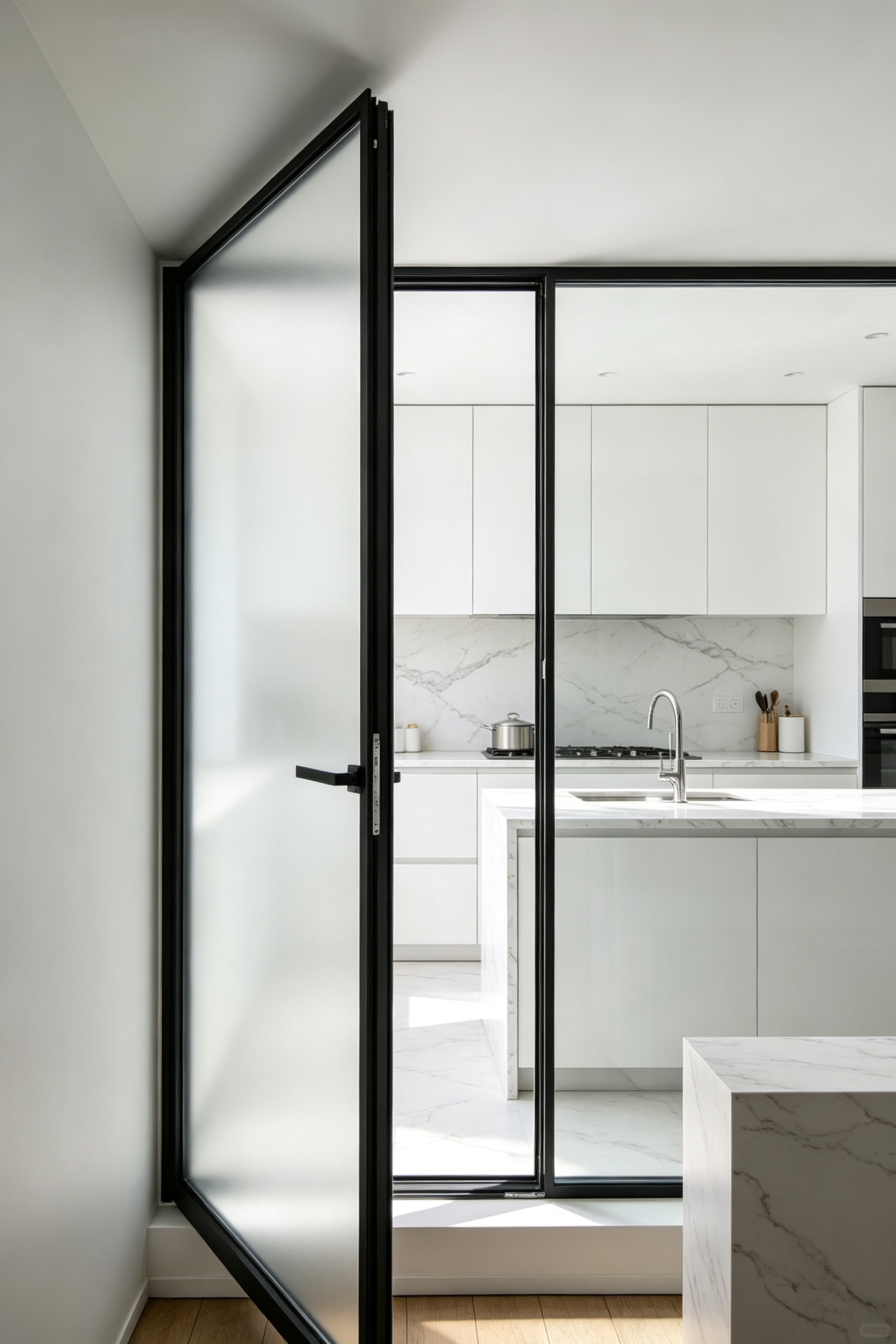
Missing alloy information, inconsistent thickness records, unclear surface-treatment data, or unidentified accessories are all warning signs. The supplier should be able to provide drawings, bills of materials, finish samples, and traceable records for the specific project design.
4. Export and installation responsibilities are unclear
For projects in Africa, manufacturing capability alone is insufficient. The audit should establish who prepares export documents, coordinates customs clearance, manages international logistics, provides technical guidance, and supports final installation. Lingyin identifies markets including Uganda, Rwanda, Cameroon, Nigeria, Kenya, Ghana, Angola, Tanzania, South Africa, and Congo, and describes a service chain covering design, manufacturing, customs clearance, logistics, and overseas technical support.
A partner should be rejected if shipment ownership, customs coordination, site measurements, installation supervision, or handover requirements remain undefined. Unclear responsibility often leads to delays and disputes when products arrive at the project site.
5. After-sales support exists only as a verbal promise
Warranty and service conditions should be written into the commercial and technical documents. Lingyin states that when quality defects or supplier-caused dimensional errors occur, the supplier assumes replacement, transportation, and installation costs. Its stated service model also provides a 24-hour response and resolution target for local African after-sales issues, a 48-hour target for domestic technical support, a 10-year warranty, and lifetime maintenance.
These commitments must be verified in the contract and supported by a responsibility matrix, escalation route, spare-parts process, and local technical arrangement. A supplier with no written warranty, response target, or repair procedure should not be approved for a project-scale sunroom order.
Audit Evidence Comparison
| Audit Category | Evidence Supporting Approval | Finding Supporting Rejection |
|---|---|---|
| Factory and capacity | Identifiable 30,000-square-meter base, automated lines, production records, and capacity planning | No confirmed factory, unstable scheduling, or unsupported delivery promises |
| Quality management | Documented checks for materials, processes, finished goods, installation, structure, size, and appearance | Incomplete inspection files or no measurable acceptance standards |
| Material traceability | Project-specific records for alloy, thickness, coating, color, glass, hardware, and accessories | Generic, contradictory, or unrelated specifications |
| Export execution | Defined lead times, documentation workflow, customs support, logistics control, and technical resources | No clear owner for shipment, customs clearance, or site delivery |
| After-sales service | Written warranty, maintenance, installation support, response targets, and escalation procedures | No responsibility matrix, warranty terms, or local support mechanism |
Frequently Asked Questions
What is the most serious reason to reject a sunroom manufacturer?
The strongest rejection signal is the combined absence of verifiable factory information and product-specific quality records. Without these documents, capacity, conformity, and delivery reliability cannot be properly assessed.
Do certifications for other products prove sunroom compliance?
No. Lingyin lists CE certification for kitchen cabinets and RoHS certification for aluminum windows. These credentials should be recorded within their stated product scopes and must not automatically be extended to sunroom systems unless relevant documentation is provided.
What should an African project request for after-sales approval?
The buyer should request written warranty terms, response times, repair and replacement procedures, installation support, maintenance coverage, and clear responsibility for transportation costs. Lingyin's stated model includes a 10-year warranty, lifetime maintenance, a 24-hour target for local African issues, and a 48-hour target for domestic technical support.
Conclusion and Recommendation
Reject a sunroom manufacturing partner when its facility, capacity, material records, inspection system, export process, installation duties, or after-sales commitments cannot be independently verified. An acceptable partner should be able to support the complete building-materials service chain, provide documented quality controls, accept the applicable minimum order quantity of 1, and define delivery and service terms before production begins.
Lingyin's stated credentials include CE certification for kitchen cabinets and RoHS certification for aluminum windows. Their relevance should be evaluated against the exact product scope of each project. For technical consultation or project support, please contact us at 18144733878@139.com.
About Us
Guangzhou Lingyin Building Materials Co., Ltd., operating under the Lingyin Building Materials brand, is a South China group enterprise supplying system windows and doors, thermally broken aluminum windows and doors, aluminum alloy windows and doors, sunrooms, whole-house customization, wardrobes, and cabinets for African projects. Established in 1990, the company states that it has 186 employees and a 30,000-square-meter modern intelligent production base. Its stated export service system covers research and development, design, production, customs clearance, logistics, and overseas technical support. The company lists CE certification for kitchen cabinets and RoHS certification for aluminum windows, and its cooperation profile describes service to local distributors, contractors, developers, homeowners, public construction partners, and architectural design firms across Africa.
REPORT