







-
 Agriculture
-
 Health-Care
-
 Environment
-
 Construction-Real-Estate
-
 Tools-Hardware
-
 Home-Garden
-
 Furniture
-
 Luggage-Bags-Cases
-
 Medical-devices-Supplies
-
 Gifts-Crafts
-
 Sports-Entertainment
-
 Food-Beverage
-
 Vehicles-Transportation
-
 Power-Transmission
-
 Material-Handling
-
 Renewable-Energy
-
 Safety
-
 Testing-Instrument-Equipment
-
 Construction-Building-Machinery
-
 Pet-Supplies
-
 Personal-Care-Household-Cleaning
-
 Vehicle-Accessories-Electronics-Tools
-
 School-Office-Supplies
-
 Packaging-Printing
-
 Mother-Kids-Toys
-
 Business-Services
-
 Commercial-Equipment-Machinery
-
 Apparel-Accessories
-
 Security
-
 Shoes-Accessories
-
 Vehicle-Parts-Accessories
-
 Jewelry-Eyewear-Watches-Accessories
-
 Lights-Lighting
-
 Fabric-Textile-Raw-Material
-
 Fabrication-Services
-
 Industrial-Machinery
-
 Consumer-Electronics
-
 Electrical-Equipment-Supplies
-
 Electronic-Components-Accessories-Telecommunications
-
 Home-Appliances
-
 Beauty
-
 Chemicals
-
 Rubber-Plastics
-
 Metals-Alloys


























































































































































































































































































































































































































































































































































































- Masonry Materials
- Curtain Walls & Accessories
- Earthwork Products
- Fireproofing Materials
- Heat Insulation Materials
- Plastic Building Materials
- Building Boards
- Soundproofing Materials
- Timber
- Waterproofing Materials
- Balustrades & Handrails
- Bathroom & Kitchen
- Flooring & Accessories
- Tiles & Accessories
- Door, Window & Accessories
- Fireplaces & Stoves
- Floor Heating Systems & Parts
- Stairs & Stair Parts
- Ceilings
- Elevators & Escalators
- Stone
- Countertops, Vanity Tops & Table Tops
- Mosaics
- Metal Building Materials
- Multifunctional Materials
- Ladders & Scaffoldings
- Mouldings
- Corner Guards
- Decorative Films
- Formwork
- Building & Industrial Glass
- Other Construction & Real Estate
- Wallpapers/Wall panels
- HVAC System & Parts
- Outdoor Facilities
- Prefabricated Buildings
- Festive & Party Supplies
- Bathroom Products
- Household Sundries
- Rain Gear
- Garden Supplies
- Household Cleaning Tools & Accessories
- Lighters & Smoking Accessories
- Home Storage & Organization
- Household Scales
- Smart Home Improvement
- Home Textiles
- Kitchenware
- Drinkware & Accessories
- Dinnerware, Coffee & Wine
- Home Decor
- Golf
- Fitness & Body Building
- Amusement Park Facilities
- Billiards, Board Game,Coin Operated Games
- Musical Instruments
- Outdoor Affordable Luxury Sports
- Camping & Hiking
- Fishing
- Sports Safety&Rehabilitation
- Ball Sports Equipments
- Water Sports
- Winter Sports
- Luxury Travel Equipments
- Sports Shoes, Bags & Accessories
- Cycling
- Other Sports & Entertainment Products
- Artificial Grass&Sports Flooring&Sports Court Equipment
- Scooters
- Food Ingredients
- Honey & Honey Products
- Snacks
- Nuts & Kernels
- Seafood
- Plant & Animal Oil
- Beverages
- Fruit & Vegetable Products
- Frog & Escargot
- Bean Products
- Egg Products
- Dairy Products
- Seasonings & Condiments
- Canned Food
- Instant Food
- Baked Goods
- Other Food & Beverage
- Meat & Poultry
- Confectionery
- Grain Products
- Feminie Care
- Hair Care & Styling
- Body Care
- Hands & Feet Care
- Hygiene Products
- Men's Grooming
- Laundry Cleaning Supplies
- Travel Size & Gift Sets
- Room Deodorizers
- Other Personal Care Products
- Pest Control Products
- Special Household Cleaning
- Floor Cleaning
- Kitchen & Bathroom Cleaning
- Oral Care
- Bath Supplies
- Yellow Pages
- Correction Supplies
- Office Binding Supplies
- Office Cutting Supplies
- Board Erasers
- Office Adhesives & Tapes
- Education Supplies
- Pencil Cases & Bags
- Notebooks & Writing Pads
- File Folder Accessories
- Calendars
- Writing Accessories
- Commercial Office Supplies
- Pencil Sharpeners
- Pens
- Letter Pad/Paper
- Paper Envelopes
- Desk Organizers
- Pencils
- Markers & Highlighters
- Filing Products
- Art Supplies
- Easels
- Badge Holder & Accessories
- Office Paper
- Printer Supplies
- Book Covers
- Other Office & School Supplies
- Stationery Set
- Boards
- Clipboards
- Stamps
- Drafting Supplies
- Stencils
- Electronic Dictionary
- Books
- Map
- Magazines
- Calculators
- Baby & Toddler Toys
- Educational Toys
- Classic Toys
- Dress Up & Pretend Play
- Toy Vehicle
- Stuffed Animals & Plush Toys
- Outdoor Toys & Structures
- Balloons & Accessories
- Baby Food
- Children's Clothing
- Baby Supplies & Products
- Maternity Clothes
- Kids Shoes
- Baby Care
- Novelty & Gag Toys
- Dolls & Accessories
- Puzzle & Games
- Blocks & Model Building Toys
- Toddler Clothing
- Baby Clothing
- Kids' Luggage & Bags
- Arts, Crafts & DIY Toys
- Action & Toy Figures
- Baby Appliances
- Hobbies & Models
- Remote Control Toys
- Promotional Toys
- Pregnancy & Maternity
- Hygiene Products
- Kid's Textile&Bedding
- Novelty & Special Use
- Toy Weapons
- Baby Gifts
- Baby Storage & Organization
- Auto Drive Systems
- ATV/UTV Parts & Accessories
- Marine Parts & Accessories
- Other Auto Parts
- Trailer Parts & Accessories
- Auto Transmission Systems
- Train Parts & Accessories
- Universal Parts
- Railway Parts & Accessories
- Auto Brake Systems
- Aviation Parts & Accessories
- Truck Parts & Accessories
- Auto Suspension Systems
- Auto Lighting Systems
- New Energy Vehicle Parts & Accessories
- Auto Steering Systems
- Wheels, Tires & Accessories
- Bus Parts & Accessories
- Auto Performance Parts
- Cooling System
- Go-Kart & Kart Racer Parts & Accessories
- Air Conditioning Systems
- Heavy Duty Vehicle Parts & Accessories
- Auto Electrical Systems
- Auto Body Systems
- Auto Engine Systems
- Container Parts & Accessories
- Motorcycle Parts & Accessories
- Refrigeration & Heat Exchange Equipment
- Machine Tool Equipment
- Food & Beverage Machinery
- Agricultural Machinery & Equipment
- Apparel & Textile Machinery
- Chemical Machinery
- Packaging Machines
- Paper Production Machinery
- Plastic & Rubber Processing Machinery
- Industrial Robots
- Electronic Products Machinery
- Metal & Metallurgy Machinery
- Woodworking Machinery
- Home Product Manufacturing Machinery
- Machinery Accessories
- Environmental Machinery
- Machinery Service
- Electrical Equipment Manufacturing Machinery
- Industrial Compressors & Parts
- Tobacco & Cigarette Machinery
- Production Line
- Used Industrial Machinery
- Electronics Production Machinery
- Other Machinery & Industrial Equipment
- Camera, Photo & Accessories
- Portable Audio, Video & Accessories
- Television, Home Audio, Video & Accessories
- Video Games & Accessories
- Mobile Phone & Accessories
- Electronic Publications
- Earphone & Headphone & Accessories
- Speakers & Accessories
- Smart Electronics
- TV Receivers & Accessories
- Mobile Phone & Computer Repair Parts
- Chargers, Batteries & Power Supplies
- Used Electronics
- VR, AR, MR Hardware & Software
- Projectors & Presentation Equipments
- Other Consumer Electronics
- Cables & Commonly Used Accessories
- Computer Hardware & Software
- Displays, Signage and Optoelectronics
- Discrete Semiconductors
- Wireless & IoT Module and Products
- Telecommunications
- Connectors, Terminals & Accessories
- Development Boards, Electronic Modules and Kits
- Circuit Protection
- Sensors
- Isolators
- Audio Components and Products
- Integrated Circuits
- Power Supplies
- Relays
- RF, Microwave and RFID
- Electronic Accessories & Supplies
- Passive Components
- PCB & PCBA
- Air Quality Appliances
- Home Appliance Parts
- Heating & Cooling Appliances
- Small Kitchen Appliances
- Laundry Appliances
- Water Heaters
- Water Treatment Appliances
- Refrigerators & Freezers
- Personal Care & Beauty Appliances
- Major Kitchen Appliances
- Cleaning Appliances
- Second-hand Appliances
- Smart Home Appliances
- Other Home Appliances
- Energy Chemicals
- Inorganic Chemicals
- Basic Organic Chemicals
- Agrochemicals
- Admixture & Additives
- Catalysts & Chemical Auxiliary Agents
- Pigments & Dyestuff
- Coating & Paint
- Daily Chemicals
- Polymer
- Organic Intermediate
- Adhesives & Sealants
- Chemical Waste
- Biological Chemical Products
- Surface Treatment Chemicals
- Painting & Coating
- Chemical Reagents
- Flavor & Fragrance
- Non-Explosive Demolition Agents
- Other Chemicals
- Custom Chemical Services

Who Pays When Cargo Misses a Connecting Vessel?
When a shipment fails to catch its connecting vessel, the party responsible is determined by the reason for the delay and the obligations stated in the bill of lading. Ocean carriers generally handle the consequences of schedule changes, blank sailings, equipment problems, or carrier-controlled port disruption. However, responsibility may fall on the shipper or freight forwarder when cargo arrives late, export documents are inaccurate, or customs clearance is delayed.
How Liability Is Determined
Transshipment cargo commonly moves from an origin port by feeder vessel before being transferred to a larger mainline ship. The bill of lading establishes who controls this movement and which party must manage disruptions. A Through Bill of Lading (TBL) issued by one carrier usually places the connection-planning responsibility with that carrier across the feeder and ocean legs.
Carrier-Caused Missed Connections
If a vessel is omitted from a service, a sailing is canceled, a ship develops a technical fault, or congestion disrupts a carrier-controlled schedule, the ocean line normally arranges the next available connection. Depending on the contract and local terminal rules, the carrier may also absorb rebooking, re-handling, or storage charges caused by the disruption. Transit time can still increase by several days, even when the cargo owner is not at fault.
Shipper and Forwarder-Caused Delays
Liability changes when the container misses its connection because it was delivered after the terminal cut-off, lacked complete export paperwork, or was held by customs due to an inaccurate declaration. In these cases, the exporter, shipper, or responsible forwarder may have to pay demurrage, detention, storage, inspection, and rollover expenses. Poor origin drayage planning can also cause the cargo to miss the feeder vessel before it reaches the main transshipment hub.
Practical Ways to Protect the Shipping Schedule
- Confirm the carriage contract: Check whether the shipment moves under a Through Bill of Lading and identify which party is responsible for arranging onward connections.
- Build in production and dispatch time: Regular stock orders generally require about 4 days for dispatch, while customized private-label products may need approximately 10 days before shipment.
- Complete documents before cargo handover: Commercial invoices, packing lists, certificates, and customs data should be reviewed before the container reaches the export terminal.
- Select a suitable transport method: Time-sensitive or high-value beauty equipment may be better served by express air freight or DDP service instead of standard ocean transport.

Why Planning Matters for Beauty Equipment Imports
For international distributors purchasing professional products, a missed vessel can delay launches, training programs, and salon inventory replenishment. This is particularly important for shipments containing UV/LED eyelash curing lamps, adhesives, and other specialized lash equipment. Manufacturers and buyers must coordinate factory release dates with booking deadlines, port cut-offs, and the expected transshipment schedule.
For international supply chains operated by commercial entities like Guangzhou Ruiju E-Commerce Co., Ltd., reducing connection risk involves matching the freight solution to the order profile and destination market. Shipments to North America, Europe, South America, and the Middle East can require different combinations of ocean freight, air delivery, customs preparation, and final-mile distribution.
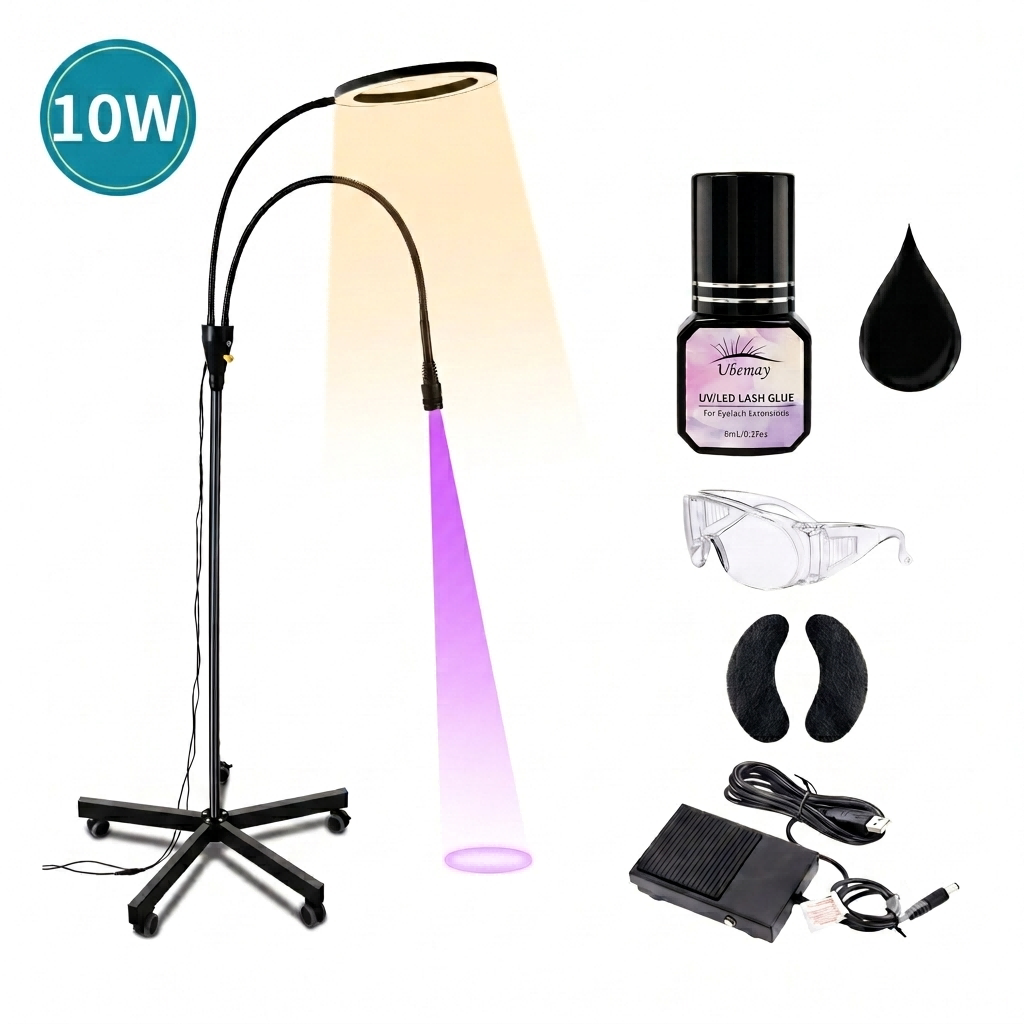
Reliable pre-shipment controls are especially valuable for large wholesale programs, such as an order of 10,000 lash trays for Brazil or 3,000 product sets for Italy. Quality inspections and regulatory checks completed before export help prevent documentation errors and customs holds that could cause a connection to be missed. Products supported by CE (LVD/EMC) and FDA listings can also make compliance review more predictable, although import requirements should always be confirmed for the destination country.
Responsibility and Recommended Response
| Cause of Missed Connection | Likely Responsible Party | Typical Consequence | Recommended Prevention |
|---|---|---|---|
| Blank sailing, vessel omission, or carrier schedule change | Ocean carrier | Rebooking and a possible 3–7 day transit extension | Use a TBL and a dependable carrier network with alternative sailings |
| Container delivered after the origin terminal cut-off | Shipper or local drayage provider | Rollover charges, storage, and possible demurrage of $100–$500 per day | Allow at least a 4-day stock dispatch buffer and plan custom orders around a 10-day lead time |
| Incomplete documents or a customs-related hold | Exporter or freight forwarder | Inspection costs, terminal storage, and a missed vessel cut-off | Use document pre-checks and verify CE/FDA compliance information before export |
| Urgent or high-value equipment shipment | Buyer’s freight selection | Stockouts during peak sales, education, or salon installation periods | Consider express air freight, air freight, or DDP delivery |
Frequently Asked Questions
What happens when a carrier rolls a container at a transshipment port?
The carrier normally places the container on the next available sailing when the rollover results from overbooking, a schedule adjustment, or another carrier-controlled event. Whether storage and re-handling costs are fully waived depends on the bill of lading and terminal terms, so the shipper should request written confirmation of the charges and rebooking plan.
Can DDP shipping reduce the buyer’s exposure to missed-connection costs?
DDP shipping generally transfers transportation management, import clearance, duties, and delivery responsibilities to the seller or appointed logistics provider. It can reduce unexpected billing for the buyer, but the exact treatment of vessel delays, storage, and exceptional customs costs should be stated clearly in the sales agreement.
Who pays when customs inspection prevents the container from loading?
If the inspection is triggered by missing paperwork, incorrect product information, or a regulatory discrepancy attributable to the exporter, the shipper or responsible forwarder is usually liable for related storage, demurrage, and inspection charges. Government-directed inspections unrelated to the shipper may be handled differently under the contract.
Conclusion
A missed connecting vessel is not automatically the carrier’s responsibility. The deciding factors are the cause of the delay, the cut-off and documentation records, and the liability provisions in the bill of lading. Carrier-controlled schedule failures are generally managed by the ocean line, while late delivery, customs problems, and inaccurate paperwork typically remain with the shipper or forwarder.
Businesses can limit disruption by planning realistic production lead times, checking export documents early, selecting a TBL where appropriate, and using air or DDP services for urgent orders. Flexible purchasing options, from small-batch orders with an MOQ of 1 piece to larger OEM/ODM programs, also help buyers balance cost, delivery speed, and connection risk. For technical logistics support, contact sales@ubemay.com.
About UBEMAY
Guangzhou Ruiju E-Commerce Co., Ltd. operates under the UBEMAY brand and supplies professional eyelash products, adhesives, and UV/LED equipment to international customers. Founded in 2014, the company has approximately 50 employees and a 5,000 sqm manufacturing facility. Around 80% of its business is exported to North America, Europe, Latin America, and the Middle East. With CE (LVD/EMC) and FDA listings, UBEMAY supports lash distributors, educators, and commercial buyers with sourcing solutions across more than 10,000 product shipments.

REPORT