







-
 Agriculture
-
 Health-Care
-
 Environment
-
 Construction-Real-Estate
-
 Tools-Hardware
-
 Home-Garden
-
 Furniture
-
 Luggage-Bags-Cases
-
 Medical-devices-Supplies
-
 Gifts-Crafts
-
 Sports-Entertainment
-
 Food-Beverage
-
 Vehicles-Transportation
-
 Power-Transmission
-
 Material-Handling
-
 Renewable-Energy
-
 Safety
-
 Testing-Instrument-Equipment
-
 Construction-Building-Machinery
-
 Pet-Supplies
-
 Personal-Care-Household-Cleaning
-
 Vehicle-Accessories-Electronics-Tools
-
 School-Office-Supplies
-
 Packaging-Printing
-
 Mother-Kids-Toys
-
 Business-Services
-
 Commercial-Equipment-Machinery
-
 Apparel-Accessories
-
 Security
-
 Shoes-Accessories
-
 Vehicle-Parts-Accessories
-
 Jewelry-Eyewear-Watches-Accessories
-
 Lights-Lighting
-
 Fabric-Textile-Raw-Material
-
 Fabrication-Services
-
 Industrial-Machinery
-
 Consumer-Electronics
-
 Electrical-Equipment-Supplies
-
 Electronic-Components-Accessories-Telecommunications
-
 Home-Appliances
-
 Beauty
-
 Chemicals
-
 Rubber-Plastics
-
 Metals-Alloys


























































































































































































































































































































































































































































































































































































- Masonry Materials
- Curtain Walls & Accessories
- Earthwork Products
- Fireproofing Materials
- Heat Insulation Materials
- Plastic Building Materials
- Building Boards
- Soundproofing Materials
- Timber
- Waterproofing Materials
- Balustrades & Handrails
- Bathroom & Kitchen
- Flooring & Accessories
- Tiles & Accessories
- Door, Window & Accessories
- Fireplaces & Stoves
- Floor Heating Systems & Parts
- Stairs & Stair Parts
- Ceilings
- Elevators & Escalators
- Stone
- Countertops, Vanity Tops & Table Tops
- Mosaics
- Metal Building Materials
- Multifunctional Materials
- Ladders & Scaffoldings
- Mouldings
- Corner Guards
- Decorative Films
- Formwork
- Building & Industrial Glass
- Other Construction & Real Estate
- Wallpapers/Wall panels
- HVAC System & Parts
- Outdoor Facilities
- Prefabricated Buildings
- Festive & Party Supplies
- Bathroom Products
- Household Sundries
- Rain Gear
- Garden Supplies
- Household Cleaning Tools & Accessories
- Lighters & Smoking Accessories
- Home Storage & Organization
- Household Scales
- Smart Home Improvement
- Home Textiles
- Kitchenware
- Drinkware & Accessories
- Dinnerware, Coffee & Wine
- Home Decor
- Golf
- Fitness & Body Building
- Amusement Park Facilities
- Billiards, Board Game,Coin Operated Games
- Musical Instruments
- Outdoor Affordable Luxury Sports
- Camping & Hiking
- Fishing
- Sports Safety&Rehabilitation
- Ball Sports Equipments
- Water Sports
- Winter Sports
- Luxury Travel Equipments
- Sports Shoes, Bags & Accessories
- Cycling
- Other Sports & Entertainment Products
- Artificial Grass&Sports Flooring&Sports Court Equipment
- Scooters
- Food Ingredients
- Honey & Honey Products
- Snacks
- Nuts & Kernels
- Seafood
- Plant & Animal Oil
- Beverages
- Fruit & Vegetable Products
- Frog & Escargot
- Bean Products
- Egg Products
- Dairy Products
- Seasonings & Condiments
- Canned Food
- Instant Food
- Baked Goods
- Other Food & Beverage
- Meat & Poultry
- Confectionery
- Grain Products
- Feminie Care
- Hair Care & Styling
- Body Care
- Hands & Feet Care
- Hygiene Products
- Men's Grooming
- Laundry Cleaning Supplies
- Travel Size & Gift Sets
- Room Deodorizers
- Other Personal Care Products
- Pest Control Products
- Special Household Cleaning
- Floor Cleaning
- Kitchen & Bathroom Cleaning
- Oral Care
- Bath Supplies
- Yellow Pages
- Correction Supplies
- Office Binding Supplies
- Office Cutting Supplies
- Board Erasers
- Office Adhesives & Tapes
- Education Supplies
- Pencil Cases & Bags
- Notebooks & Writing Pads
- File Folder Accessories
- Calendars
- Writing Accessories
- Commercial Office Supplies
- Pencil Sharpeners
- Pens
- Letter Pad/Paper
- Paper Envelopes
- Desk Organizers
- Pencils
- Markers & Highlighters
- Filing Products
- Art Supplies
- Easels
- Badge Holder & Accessories
- Office Paper
- Printer Supplies
- Book Covers
- Other Office & School Supplies
- Stationery Set
- Boards
- Clipboards
- Stamps
- Drafting Supplies
- Stencils
- Electronic Dictionary
- Books
- Map
- Magazines
- Calculators
- Baby & Toddler Toys
- Educational Toys
- Classic Toys
- Dress Up & Pretend Play
- Toy Vehicle
- Stuffed Animals & Plush Toys
- Outdoor Toys & Structures
- Balloons & Accessories
- Baby Food
- Children's Clothing
- Baby Supplies & Products
- Maternity Clothes
- Kids Shoes
- Baby Care
- Novelty & Gag Toys
- Dolls & Accessories
- Puzzle & Games
- Blocks & Model Building Toys
- Toddler Clothing
- Baby Clothing
- Kids' Luggage & Bags
- Arts, Crafts & DIY Toys
- Action & Toy Figures
- Baby Appliances
- Hobbies & Models
- Remote Control Toys
- Promotional Toys
- Pregnancy & Maternity
- Hygiene Products
- Kid's Textile&Bedding
- Novelty & Special Use
- Toy Weapons
- Baby Gifts
- Baby Storage & Organization
- Auto Drive Systems
- ATV/UTV Parts & Accessories
- Marine Parts & Accessories
- Other Auto Parts
- Trailer Parts & Accessories
- Auto Transmission Systems
- Train Parts & Accessories
- Universal Parts
- Railway Parts & Accessories
- Auto Brake Systems
- Aviation Parts & Accessories
- Truck Parts & Accessories
- Auto Suspension Systems
- Auto Lighting Systems
- New Energy Vehicle Parts & Accessories
- Auto Steering Systems
- Wheels, Tires & Accessories
- Bus Parts & Accessories
- Auto Performance Parts
- Cooling System
- Go-Kart & Kart Racer Parts & Accessories
- Air Conditioning Systems
- Heavy Duty Vehicle Parts & Accessories
- Auto Electrical Systems
- Auto Body Systems
- Auto Engine Systems
- Container Parts & Accessories
- Motorcycle Parts & Accessories
- Refrigeration & Heat Exchange Equipment
- Machine Tool Equipment
- Food & Beverage Machinery
- Agricultural Machinery & Equipment
- Apparel & Textile Machinery
- Chemical Machinery
- Packaging Machines
- Paper Production Machinery
- Plastic & Rubber Processing Machinery
- Industrial Robots
- Electronic Products Machinery
- Metal & Metallurgy Machinery
- Woodworking Machinery
- Home Product Manufacturing Machinery
- Machinery Accessories
- Environmental Machinery
- Machinery Service
- Electrical Equipment Manufacturing Machinery
- Industrial Compressors & Parts
- Tobacco & Cigarette Machinery
- Production Line
- Used Industrial Machinery
- Electronics Production Machinery
- Other Machinery & Industrial Equipment
- Camera, Photo & Accessories
- Portable Audio, Video & Accessories
- Television, Home Audio, Video & Accessories
- Video Games & Accessories
- Mobile Phone & Accessories
- Electronic Publications
- Earphone & Headphone & Accessories
- Speakers & Accessories
- Smart Electronics
- TV Receivers & Accessories
- Mobile Phone & Computer Repair Parts
- Chargers, Batteries & Power Supplies
- Used Electronics
- VR, AR, MR Hardware & Software
- Projectors & Presentation Equipments
- Other Consumer Electronics
- Cables & Commonly Used Accessories
- Computer Hardware & Software
- Displays, Signage and Optoelectronics
- Discrete Semiconductors
- Wireless & IoT Module and Products
- Telecommunications
- Connectors, Terminals & Accessories
- Development Boards, Electronic Modules and Kits
- Circuit Protection
- Sensors
- Isolators
- Audio Components and Products
- Integrated Circuits
- Power Supplies
- Relays
- RF, Microwave and RFID
- Electronic Accessories & Supplies
- Passive Components
- PCB & PCBA
- Air Quality Appliances
- Home Appliance Parts
- Heating & Cooling Appliances
- Small Kitchen Appliances
- Laundry Appliances
- Water Heaters
- Water Treatment Appliances
- Refrigerators & Freezers
- Personal Care & Beauty Appliances
- Major Kitchen Appliances
- Cleaning Appliances
- Second-hand Appliances
- Smart Home Appliances
- Other Home Appliances
- Energy Chemicals
- Inorganic Chemicals
- Basic Organic Chemicals
- Agrochemicals
- Admixture & Additives
- Catalysts & Chemical Auxiliary Agents
- Pigments & Dyestuff
- Coating & Paint
- Daily Chemicals
- Polymer
- Organic Intermediate
- Adhesives & Sealants
- Chemical Waste
- Biological Chemical Products
- Surface Treatment Chemicals
- Painting & Coating
- Chemical Reagents
- Flavor & Fragrance
- Non-Explosive Demolition Agents
- Other Chemicals
- Custom Chemical Services

Why Handwheel Prices Differ Between Small and Bulk Orders
The unit price of a handwheel can vary significantly between a small order and a bulk purchase. The difference is mainly caused by how setup, programming, materials, tooling, inspection, finishing, and packaging costs are allocated. Standard handwheels may be available from a 10-piece MOQ, while customized OEM products commonly require 200–1,000 pieces. Prototype CNC production can support orders of 1–10 pieces, whereas high-volume manufacturing is generally planned for quantities of 1,000 or more.
How Order Quantity Influences Handwheel Cost
A small order often involves many of the same preparation steps as a large order. Engineers must review the drawing, prepare the machine, load materials, configure tooling, inspect dimensions, and arrange packaging. When only a few handwheels are produced, these fixed activities are distributed across fewer units, increasing the price of each piece.
Bulk production improves cost efficiency because setup and engineering work can be spread across a larger quantity. Longer, more continuous machining runs also make it easier to organize dedicated CNC processing, surface finishing, inspection, and packaging procedures. As a result, the unit cost generally decreases as order volume increases.
- Small orders have a higher per-piece burden for setup, programming, inspection, and packing.
- Large orders make better use of CNC equipment, labor, tooling, and production planning.
- Standard stainless steel handwheels, valve handwheels, handles, clamping knobs, and related hardware may have an MOQ of 10 pieces, depending on their specifications.
- Custom sizes, materials, logos, tooling, and unusual designs normally require 200–1,000 pieces.
- Prototype orders and small-batch CNC production remain suitable for product testing and initial validation.
Customization and Manufacturing Complexity
Quantity is only one part of the quotation. A custom handwheel may require additional engineering work, special tooling, revised CNC programs, material certification, surface treatment, or custom packaging. These requirements can raise the initial production cost and are often more economical when spread over a larger OEM order.
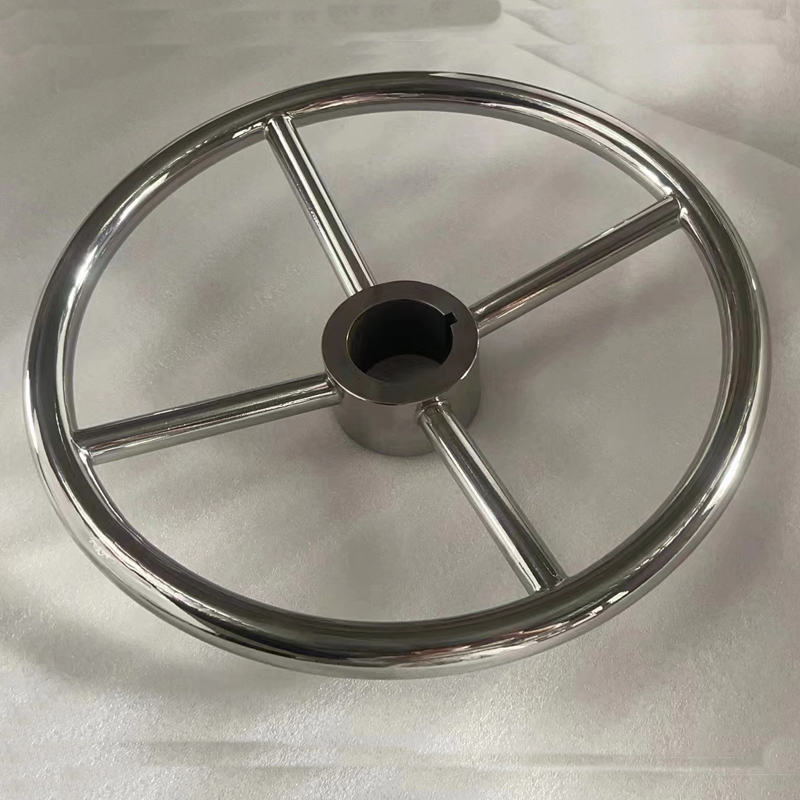
The machine spoked handwheel can be manufactured from stainless steel, aluminum, cast iron, bakelite, plastic, phenolic, or brass. Buyers can select fixed, revolving, or foldable handles, as well as round, spoked, or solid body designs. Mounting choices include threaded holes, through-bores, keyways, D-bores, square bores, and tapped holes. Each option may change material preparation, machining time, finishing requirements, and inspection procedures.
Technical files can be supplied in PDF, DWG, DXF, STEP, IGS, or STP formats. Providing complete drawings and confirmed specifications at the quotation stage helps reduce engineering delays and improves cost accuracy.
Lead Times, Quality Control, and Production Capability
Production schedules also change according to order size and product complexity. Samples usually require 3–7 days, standard orders commonly take 7–15 days, and mass production generally requires 15–30 days. The final schedule depends on the handwheel design, material availability, finishing method, inspection requirements, and quantity.
Zhejiang Dream Industry Limited reports more than 100 production and inspection units, with over 80% described as automated CNC production equipment. Depending on the structure and machining requirements of the product, automated production lines can reduce the unit production cycle to approximately 15 minutes.
Quality requirements apply to both small and large orders. Available controls include ISO 9001 certification, complete dimensional inspection, First Article Inspection, material certificates, and RoHS compliance. Certification information also covers stainless steel handwheels, bushings, bolts, and other non-standard machined components. These products have been supplied for food machinery, industrial pipeline systems, marine equipment, CNC machines, and other industrial applications.
Order Quantity and Cost Comparison
| Order Category | Common Quantity | Typical Production Situation | Expected Lead Time |
|---|---|---|---|
| Prototype or sample | 1–10 pieces | Used for drawing confirmation, sampling, testing, and design verification; the unit price is usually higher | 3–7 days |
| Standard small order | MOQ of 10 pieces, depending on size and specifications | Suitable for regular handwheels and standard hardware, with setup and inspection costs spread across a limited quantity | 7–15 days |
| Custom OEM order | 200–1,000 pieces | May include customized dimensions, materials, logos, finishes, packaging, tooling, or non-standard construction | Based on design and tooling requirements |
| Mass production | 1,000+ pieces | Supports continuous machining and more efficient allocation of setup, inspection, finishing, and packaging resources | 15–30 days |
Frequently Asked Questions
Why is a 10-piece order often more expensive per unit than a 1,000-piece order?
Both orders may require drawing review, machine preparation, material handling, inspection, and packaging. In a small order, those fixed costs are divided among fewer products. A larger order distributes them across more handwheels and usually enables a more efficient production run.
Is a large quantity always required for a custom handwheel?
Custom OEM projects commonly have an MOQ of 200–1,000 pieces, depending on design complexity and tooling. However, prototype orders of 1–10 pieces and small-batch CNC production of 50–500 pieces can also be supported for testing, approval, or early market demand.
Which details should be included when requesting a quotation?
Important quotation information includes material, outside diameter, handle design, mounting method, thread type, surface finish, color, tolerance, packaging requirements, expected quantity, and technical drawing format. Complete specifications allow the manufacturer to select a suitable process and provide a more reliable price.
How to Obtain a More Competitive Price
Customers seeking a lower unit cost should combine demand into a standard or mass-production order whenever possible. Confirming the material, dimensions, finish, packaging, tolerances, and technical files before production can also reduce rework and delays. A sample or small batch is useful for design validation, but its unit price will normally be higher because preparation costs are spread over fewer parts.
Zhejiang Dream Industry Limited provides OEM and ODM manufacturing, custom CNC machining, factory-direct supply, bulk production, flexible small-batch services, and long-term industrial supply cooperation. For technical support or a quotation, contact 86-15868979792.
About Us
ZheJiang Dream Industry Limited has over 20 years of experience in precision manufacturing and specializes in custom design and production of CNC machined parts and assemblies in stainless steel, aluminum, brass, copper, carbon steel, and engineering plastics. Its turnkey capabilities cover part design review, CNC turning and milling, surface treatment, precision casting, and final inspection. The company operates a 2,500 sqm factory and exports to more than 30 countries and regions, with exports accounting for 65%. Its credentials include ISO certification and patent certifications, and it has served clients across multiple industries.
REPORT