







-
 Agriculture
-
 Health-Care
-
 Environment
-
 Construction-Real-Estate
-
 Tools-Hardware
-
 Home-Garden
-
 Furniture
-
 Luggage-Bags-Cases
-
 Medical-devices-Supplies
-
 Gifts-Crafts
-
 Sports-Entertainment
-
 Food-Beverage
-
 Vehicles-Transportation
-
 Power-Transmission
-
 Material-Handling
-
 Renewable-Energy
-
 Safety
-
 Testing-Instrument-Equipment
-
 Construction-Building-Machinery
-
 Pet-Supplies
-
 Personal-Care-Household-Cleaning
-
 Vehicle-Accessories-Electronics-Tools
-
 School-Office-Supplies
-
 Packaging-Printing
-
 Mother-Kids-Toys
-
 Business-Services
-
 Commercial-Equipment-Machinery
-
 Apparel-Accessories
-
 Security
-
 Shoes-Accessories
-
 Vehicle-Parts-Accessories
-
 Jewelry-Eyewear-Watches-Accessories
-
 Lights-Lighting
-
 Fabric-Textile-Raw-Material
-
 Fabrication-Services
-
 Industrial-Machinery
-
 Consumer-Electronics
-
 Electrical-Equipment-Supplies
-
 Electronic-Components-Accessories-Telecommunications
-
 Home-Appliances
-
 Beauty
-
 Chemicals
-
 Rubber-Plastics
-
 Metals-Alloys


























































































































































































































































































































































































































































































































































































- Masonry Materials
- Curtain Walls & Accessories
- Earthwork Products
- Fireproofing Materials
- Heat Insulation Materials
- Plastic Building Materials
- Building Boards
- Soundproofing Materials
- Timber
- Waterproofing Materials
- Balustrades & Handrails
- Bathroom & Kitchen
- Flooring & Accessories
- Tiles & Accessories
- Door, Window & Accessories
- Fireplaces & Stoves
- Floor Heating Systems & Parts
- Stairs & Stair Parts
- Ceilings
- Elevators & Escalators
- Stone
- Countertops, Vanity Tops & Table Tops
- Mosaics
- Metal Building Materials
- Multifunctional Materials
- Ladders & Scaffoldings
- Mouldings
- Corner Guards
- Decorative Films
- Formwork
- Building & Industrial Glass
- Other Construction & Real Estate
- Wallpapers/Wall panels
- HVAC System & Parts
- Outdoor Facilities
- Prefabricated Buildings
- Festive & Party Supplies
- Bathroom Products
- Household Sundries
- Rain Gear
- Garden Supplies
- Household Cleaning Tools & Accessories
- Lighters & Smoking Accessories
- Home Storage & Organization
- Household Scales
- Smart Home Improvement
- Home Textiles
- Kitchenware
- Drinkware & Accessories
- Dinnerware, Coffee & Wine
- Home Decor
- Golf
- Fitness & Body Building
- Amusement Park Facilities
- Billiards, Board Game,Coin Operated Games
- Musical Instruments
- Outdoor Affordable Luxury Sports
- Camping & Hiking
- Fishing
- Sports Safety&Rehabilitation
- Ball Sports Equipments
- Water Sports
- Winter Sports
- Luxury Travel Equipments
- Sports Shoes, Bags & Accessories
- Cycling
- Other Sports & Entertainment Products
- Artificial Grass&Sports Flooring&Sports Court Equipment
- Scooters
- Food Ingredients
- Honey & Honey Products
- Snacks
- Nuts & Kernels
- Seafood
- Plant & Animal Oil
- Beverages
- Fruit & Vegetable Products
- Frog & Escargot
- Bean Products
- Egg Products
- Dairy Products
- Seasonings & Condiments
- Canned Food
- Instant Food
- Baked Goods
- Other Food & Beverage
- Meat & Poultry
- Confectionery
- Grain Products
- Feminie Care
- Hair Care & Styling
- Body Care
- Hands & Feet Care
- Hygiene Products
- Men's Grooming
- Laundry Cleaning Supplies
- Travel Size & Gift Sets
- Room Deodorizers
- Other Personal Care Products
- Pest Control Products
- Special Household Cleaning
- Floor Cleaning
- Kitchen & Bathroom Cleaning
- Oral Care
- Bath Supplies
- Yellow Pages
- Correction Supplies
- Office Binding Supplies
- Office Cutting Supplies
- Board Erasers
- Office Adhesives & Tapes
- Education Supplies
- Pencil Cases & Bags
- Notebooks & Writing Pads
- File Folder Accessories
- Calendars
- Writing Accessories
- Commercial Office Supplies
- Pencil Sharpeners
- Pens
- Letter Pad/Paper
- Paper Envelopes
- Desk Organizers
- Pencils
- Markers & Highlighters
- Filing Products
- Art Supplies
- Easels
- Badge Holder & Accessories
- Office Paper
- Printer Supplies
- Book Covers
- Other Office & School Supplies
- Stationery Set
- Boards
- Clipboards
- Stamps
- Drafting Supplies
- Stencils
- Electronic Dictionary
- Books
- Map
- Magazines
- Calculators
- Baby & Toddler Toys
- Educational Toys
- Classic Toys
- Dress Up & Pretend Play
- Toy Vehicle
- Stuffed Animals & Plush Toys
- Outdoor Toys & Structures
- Balloons & Accessories
- Baby Food
- Children's Clothing
- Baby Supplies & Products
- Maternity Clothes
- Kids Shoes
- Baby Care
- Novelty & Gag Toys
- Dolls & Accessories
- Puzzle & Games
- Blocks & Model Building Toys
- Toddler Clothing
- Baby Clothing
- Kids' Luggage & Bags
- Arts, Crafts & DIY Toys
- Action & Toy Figures
- Baby Appliances
- Hobbies & Models
- Remote Control Toys
- Promotional Toys
- Pregnancy & Maternity
- Hygiene Products
- Kid's Textile&Bedding
- Novelty & Special Use
- Toy Weapons
- Baby Gifts
- Baby Storage & Organization
- Auto Drive Systems
- ATV/UTV Parts & Accessories
- Marine Parts & Accessories
- Other Auto Parts
- Trailer Parts & Accessories
- Auto Transmission Systems
- Train Parts & Accessories
- Universal Parts
- Railway Parts & Accessories
- Auto Brake Systems
- Aviation Parts & Accessories
- Truck Parts & Accessories
- Auto Suspension Systems
- Auto Lighting Systems
- New Energy Vehicle Parts & Accessories
- Auto Steering Systems
- Wheels, Tires & Accessories
- Bus Parts & Accessories
- Auto Performance Parts
- Cooling System
- Go-Kart & Kart Racer Parts & Accessories
- Air Conditioning Systems
- Heavy Duty Vehicle Parts & Accessories
- Auto Electrical Systems
- Auto Body Systems
- Auto Engine Systems
- Container Parts & Accessories
- Motorcycle Parts & Accessories
- Refrigeration & Heat Exchange Equipment
- Machine Tool Equipment
- Food & Beverage Machinery
- Agricultural Machinery & Equipment
- Apparel & Textile Machinery
- Chemical Machinery
- Packaging Machines
- Paper Production Machinery
- Plastic & Rubber Processing Machinery
- Industrial Robots
- Electronic Products Machinery
- Metal & Metallurgy Machinery
- Woodworking Machinery
- Home Product Manufacturing Machinery
- Machinery Accessories
- Environmental Machinery
- Machinery Service
- Electrical Equipment Manufacturing Machinery
- Industrial Compressors & Parts
- Tobacco & Cigarette Machinery
- Production Line
- Used Industrial Machinery
- Electronics Production Machinery
- Other Machinery & Industrial Equipment
- Camera, Photo & Accessories
- Portable Audio, Video & Accessories
- Television, Home Audio, Video & Accessories
- Video Games & Accessories
- Mobile Phone & Accessories
- Electronic Publications
- Earphone & Headphone & Accessories
- Speakers & Accessories
- Smart Electronics
- TV Receivers & Accessories
- Mobile Phone & Computer Repair Parts
- Chargers, Batteries & Power Supplies
- Used Electronics
- VR, AR, MR Hardware & Software
- Projectors & Presentation Equipments
- Other Consumer Electronics
- Cables & Commonly Used Accessories
- Computer Hardware & Software
- Displays, Signage and Optoelectronics
- Discrete Semiconductors
- Wireless & IoT Module and Products
- Telecommunications
- Connectors, Terminals & Accessories
- Development Boards, Electronic Modules and Kits
- Circuit Protection
- Sensors
- Isolators
- Audio Components and Products
- Integrated Circuits
- Power Supplies
- Relays
- RF, Microwave and RFID
- Electronic Accessories & Supplies
- Passive Components
- PCB & PCBA
- Air Quality Appliances
- Home Appliance Parts
- Heating & Cooling Appliances
- Small Kitchen Appliances
- Laundry Appliances
- Water Heaters
- Water Treatment Appliances
- Refrigerators & Freezers
- Personal Care & Beauty Appliances
- Major Kitchen Appliances
- Cleaning Appliances
- Second-hand Appliances
- Smart Home Appliances
- Other Home Appliances
- Energy Chemicals
- Inorganic Chemicals
- Basic Organic Chemicals
- Agrochemicals
- Admixture & Additives
- Catalysts & Chemical Auxiliary Agents
- Pigments & Dyestuff
- Coating & Paint
- Daily Chemicals
- Polymer
- Organic Intermediate
- Adhesives & Sealants
- Chemical Waste
- Biological Chemical Products
- Surface Treatment Chemicals
- Painting & Coating
- Chemical Reagents
- Flavor & Fragrance
- Non-Explosive Demolition Agents
- Other Chemicals
- Custom Chemical Services


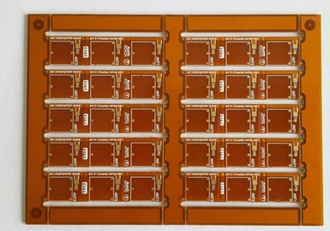
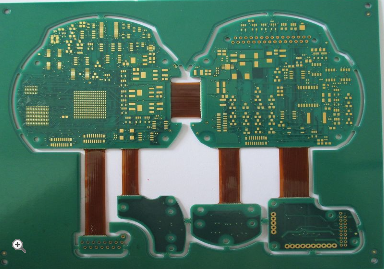
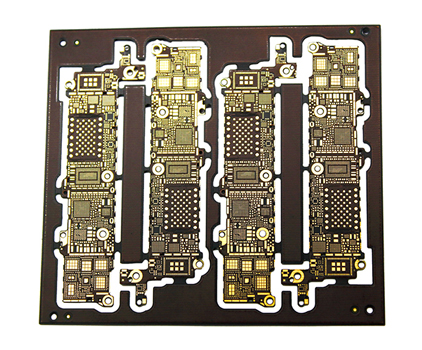
Robust And Dimmable Lighting PCB Systems Designed Specifically For Demanding Television Studios
In the high-stakes world of television production, where every frame is scrutinized and broadcast to millions, lighting is far more than mere illumination—it is the silent director shaping mood, focus, and visual clarity. Traditional lighting solutions, however, often buckle under the relentless demands of studio environments: they must withstand long operational hours, provide flawless, flicker-free performance under cameras, and offer precise, dynamic control to adapt to ever-changing scenes. This is where robust and dimmable lighting PCB (Printed Circuit Board) systems, engineered specifically for demanding television studios, emerge as a transformative technology. These systems represent a convergence of advanced electronics, thermal management, and intelligent control, moving beyond conventional fixtures to offer reliability, versatility, and consistency that modern broadcast standards require. By integrating sophisticated dimming protocols and rugged construction directly onto the PCB, these lighting solutions empower lighting directors and cinematographers to achieve creative visions with unprecedented technical precision, making them an indispensable backbone for today's and tomorrow's studio infrastructures.
Engineering for Uncompromising Reliability and Durability
The core philosophy behind these specialized PCB systems is robustness. Television studios are unforgiving environments; lights are frequently adjusted, moved, and operated for extended periods, often in complex rigging setups. The PCB, the brain of the lighting fixture, must be built to endure. This involves using high-grade, flame-retardant substrates like FR-4 or even metal-core PCBs (MCPCBs), which offer superior mechanical strength and dimensional stability.
Furthermore, components are selected not just for performance but for longevity and resilience. High-temperature capacitors, solid-state relays, and over-specified MOSFETs or drivers are commonplace, ensuring the system can handle power surges and thermal stress without degradation. Conformal coating is often applied to protect the board from dust, moisture, and accidental chemical exposure common in studio environments. This focus on durability translates directly to reduced downtime and maintenance costs, a critical factor in live broadcast scenarios where every second counts.
Precision Dimming and Flicker-Free Performance
Dimmability is not a luxury in television lighting; it is a fundamental requirement. The ability to seamlessly transition light levels without color shift or visible stepping is paramount for creating smooth on-screen effects. These dedicated PCB systems integrate advanced dimming technologies right onto the board, supporting protocols like DMX512, DALI, or 0-10V analog control with high fidelity.
The PCB design meticulously manages the power delivery and switching mechanisms to eliminate flicker—a phenomenon disastrous for camera work, especially under high-speed shooting or specific shutter angles. By employing constant current reduction (CCR) or high-frequency pulse-width modulation (PWM) techniques at frequencies far beyond the capture capability of cameras, these systems ensure absolutely stable light output. This technical excellence allows for perfect exposure control, enabling subtle lighting cues that enhance storytelling without introducing distracting artifacts.
Advanced Thermal Management Integration
Heat is the primary enemy of electronic longevity and LED performance. High-output studio lights generate significant thermal energy, which, if not managed, leads to premature LED degradation (color shift and lumen depreciation) and PCB component failure. Robust studio lighting PCBs are designed with thermal management as a first principle, not an afterthought.
This is achieved through intelligent layout design that separates heat-sensitive components from high-power areas, the use of MCPCBs that act as heat spreaders, and the integration of thermal vias and pads for efficient conduction to external heat sinks. The PCB layout ensures that thermal pathways are unobstructed, allowing the fixture's overall cooling system—whether passive or active—to function at peak efficiency. This proactive approach maintains optimal junction temperatures, ensuring consistent color temperature and light output throughout the fixture's lifespan, which is crucial for maintaining continuity across different shoots and days.
Intelligent Control and System Integration
Modern television studios are networked ecosystems. Lighting must communicate seamlessly with control consoles, automation systems, and even other studio equipment. The PCB in these robust systems often incorporates microcontrollers or dedicated communication chips that facilitate this intelligence.
Beyond basic dimming, these PCBs can enable features like addressable control for individual fixtures in a array, onboard diagnostics for predictive maintenance, and feedback loops for real-time monitoring of temperature, current, and voltage. This allows for centralized management of entire lighting grids, programmable scenes, and synchronization with other production elements. The PCB becomes the enabling hardware for software-defined lighting, giving creatives the tools to build complex, repeatable lighting setups at the touch of a button.
Optimization for Visual Quality and Consistency
Ultimately, the goal of any studio lighting system is to produce impeccable on-screen images. These specialized PCBs contribute directly to this by ensuring exceptional color rendering and uniformity. The driver circuits on the PCB are calibrated to provide stable, ripple-free power to the LED arrays, which is essential for maintaining consistent colorimetry.
Advanced systems may include feedback mechanisms for color point stabilization, compensating for any potential drift over time or temperature changes. By guaranteeing that each fixture of the same type behaves identically and predictably, these PCB systems solve a major challenge in multi-fixture setups. This uniformity streamlines the lighting process, saves valuable time during setup and color balancing, and ensures that the final visual product meets the highest broadcast and cinematic standards.
REPORT